
Truemag

  • Newsletters
  • Thought Leadership
  • Mobility
  • Safety
  • Work Trucks
  • Videos
  • Home
  • Subscribe
  • Contact Us
  • Media Kit
  • Who We Are

Routes Diverge in the Race to Remove the Fallible Driver

Automotive News

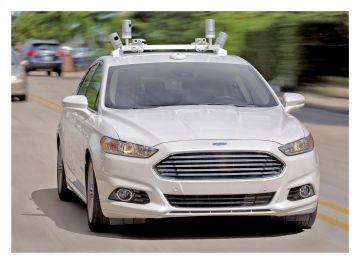
Ford Motor Co. last week said it would put driverless cars on the road for ride-hailing and ride-sharing fleets in just five years.

Then Uber said it would start ferrying passengers with autonomous Ford sedans and Volvo SUVs in a matter of weeks.

In between, General Motors, Tesla, Google, Nissan Motor and possibly Apple are among those aiming to roll out self-driving vehicles as well.

It has become a race in which every contender is aiming for a different finish line.

For the legacy automakers, falling too far behind raises the specter of a Kodak-like obsolescence.

“It’s now clear that the next decade is going to be defined by the automation of the automobile,” Ford CEO Mark Fields said. “If somebody would have told you 10 years ago, or even five years ago, that the CEO of a major American car company is going to be up here announcing the mass production of a vehicle without a steering wheel, they would have told you you’re pretty crazy.”

All autonomous-car projects ultimately have the same goal — remove the fallible human driver — but the paths they’re blazing to get there diverge widely.

Ford has staked its future on a grandiose moonshot, taking more time to test exhaustively before making one giant leap to full automation. Meanwhile, Uber, GM and Tesla are more gradually shifting responsibility from the driver to the vehicle, essentially putting customers in the midst of their development processes.

Another big difference: Ford and Google are getting rid of the steering wheels and pedals as they focus on full autonomy, while GM CEO Mary Barra says those controls should stay for the foreseeable future to provide an added layer of safety. And GM already has its ride-hailing partner lined up whereas it appears that Ford will fill in that part of the equation later.

Tesla, which has said its cars will be able to drive themselves across the country by 2018, already offers a driver-assist feature it calls Autopilot. But that has come under fire after a fatal crash in May, when a Model S operating in Autopilot mode failed to identify and stop for a tractor-trailer turning in front of it.

Uber and Volvo Cars last week announced a $300 million deal that will deploy a fleet of 100 self-driving XC90 plug-in hybrid crossovers this fall in Pittsburgh. Two Uber employees will sit in the front, one ready to take control of the vehicle if needed and a passenger taking notes. Uber also said it would start using autonomous Ford Fusions in Pittsburgh, the home of its self-driving research lab, though it has no formal partnership with Ford.

“This alliance places Volvo at the heart of the current technological revolution in the automotive industry,” Volvo Cars CEO Hakan Samuelsson said in a statement.

Read more of the original article at Automotive News.

Aug 22, 2016connieshedron
Tesla Owner in Autopilot Crash Won't Sue, But Car Insurer MightDrive Safely Work Week™ 2016 Toolkit Launched
Recent Posts
  • IMPROVLearning: How Comedy, Behavioral Science and AI Improve Fleet Safety
  • Improving Productivity with AI: Turning Fleet Data into Faster Decisions
  • National Safety Council Projects Increased Traffic Crash Risk during Fourth of July Weekend
  • Keep Every Heavy-Duty Maintenance Inspection on Track — Free Fullbay Checklist
  • Gain Data-Driven Insights into Commercial Vehicle Market Trends at Executive Leadership Summit
  • Last Chance to Save: Register for NAFA’s Maintenance Workshop
  • License Plate Cameras Are About to Start Tracking a Lot More Than Just Your Car
  • America’s Heavy EV Problem May End with Drivers Paying More
  • Trends in U.S. Drivers’ Perceptions and Attitudes Toward Vehicle Automation, 2019–2025
  • 2026 NETS Strength IN Numbers Conference: Early Bird Rates!
ASSOCIATION NEWS
Last Chance to Save: Register for NAFA’s Maintenance Workshop
How AFLA Is Positioning Itself for the Future of Fleet Mobility
‘Raise Your Hand and Get Involved’
NAFA Names 2026 Class of Fellows, Honoring Leaders in Fleet Management
Award Winners Honored at NAFA I&E
2026 NAFA I&E Seeks to Change Perceptions, Invigorate Fleets
NAFA Announces Lineup for Media Day at I&E 2026: Industry Leaders to Showcase the Latest Innovations
TECHNOLOGY
Improving Productivity with AI: Turning Fleet Data into Faster Decisions
Fleet Operations Are Changing – The Industry Needs to Evolve With Them
AI-Powered Vehicle Inspections Move Beyond the Checklist
Motive’s New Workforce Capabilities Aim to Improve Performance, Automate Rewards
AI + Human Insight: Why Fleet Leaders Need Both to Win in 2026
NTSB Finds Automation Overreliance Contributed to Two Fatal Ford BlueCruise Crashes
New AI Assistants Automate Fleet Data Analysis, Decision Making and More
CONFERENCES & WEBINARS
2026 NETS Strength IN Numbers Conference: Early Bird Rates!
AFLA 2026 – Keynotes Announced!
Private Fleets Flex at National Private Truck Council Conference
Free NAFA Webinar: Manage Your Fuel Cost Volatility
Registration Now Open for NETS Annual Conference
Early Bird Pricing for AFLA 2026 – Ending June 1
NAFA Online Seminar: Essentials of Fleet Management
INDUSTRY ANNOUNCEMENTS
Union Leasing Becomes Moventum Fleet Management as 70-Year Company Accelerates into Next Phase
Fleetio Wins Innovations Award at NAFA’s 2026 Institute & Expo
WIFM is heading to NAFA!
Cox Automotive Unveils Cox Fleet, Setting a New Standard for Fleet Uptime Nationwide
AFLA Canadian Fleet Professional of the Year Award: Nominations Open!
NAFA Webinar: Kickoff the 2026 100 Best Fleets Contest on December 4!
Join NAFA’s Free Fleet 101 Live Course

Fleet Management Weekly Newsletter Archive
Access to back issues of the FMW newsletter.

FMW Mobility
How mobility is rapidly changing the fleet management landscape.

Newsletter

Subscribe

FMW Fleet Videos
Video clips of industry leaders speaking on a variety of engaging hot topics in fleet.

2014-2020 © Fleet Management Weekly