Truemag

  • Newsletters
  • Thought Leadership
  • Mobility
  • Safety
  • Work Trucks
  • Videos
  • Home
  • Subscribe
  • Contact Us
  • Media Kit
  • Who We Are

The Pros and Cons of a Driverless Future

It may seem as if the only arguments against self-driving cars come from two kinds of people – those fearful of any scenario where they might have to forgo control behind the wheel and those who distrust all technology out of hand.

There has been little discussion about the potential downsides of a driverless future, but a new study has pointed out some potential flaws in this looming auto utopia.

The upsides seem pretty self-evident.

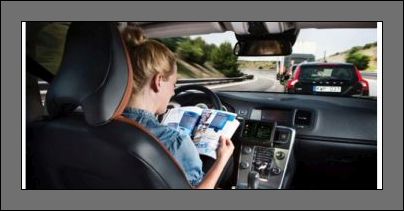
♦ Multitasking. While being taken from here to there in a driverless car, you can do anything you want. Eat, sleep, work, chat with relatives – commute time is no longer down time.

♦ Safety. Although this has yet to be born out, the theory goes that people, on the whole, are not the best drivers out there. We might all think we’re Mario Andretti behind the wheel, but sadly and all too obviously, we are not. By leaving the driving to a whole slew of computers, sensors, servos and software, getting from home to office should be rendered accident free.

♦ Efficiency. While a driverless car is using its digital prowess to whisk you to the store, it can, and will, be talking to all the other driverless cars out there. And not only chatting with them, but talking back and forth with smart roadways. This will allow all sorts of efficiencies to be realized.

The researchers from the Department of Geography at SUNY in New Paltz, New York and at the Centre for Transport Studies, Department of Civil and Environmental Engineering, Imperial College London, have recently published a study that, while not slamming on the brakes for self-driving cars, does point out that it might not all be a smooth road ahead.

The study examined how two of the three stated benefits – more comfort and less traffic – can live together by running a computer simulation of how driverless cars would work in practice, and comparing that to trains.

♦ If driverless cars do a lot of stop/start work like normal cars, even at a reduced velocity, they will become a less workable environment. But, if they speed up and slow down more smoothly for the passenger’s sake, essentially mimicking the acceleration and deceleration of trains, then self driving cars would forfeit much of their capacity to alleviate congestion in the process.

♦ The team replicated traffic at a run of the mill four-way urban intersection where 25 percent of the vehicles were driverless. In some simulations, the driverless cars traveled the way that light rail trains do, gently on the gas then gently on the brakes. In other words more comfortable than a normal car, but still herky-jerky at times. In other scenarios, the driverless rides started and stopped like a high-speed rail train: smoothness in all things.

It is also worth pointing out that these simulations just involved normal cars and driverless cars. There were no trucks, buses or, that even more chaotic element, pedestrians.

As a single simulation-based study, the research may not add up to a crippling blow for driverless car advocates, but it shows that there’s work to be done in order find a liveable recipe for the coming mix of autonomous and conventional vehicles on our roads.

To see the original article, go to gizmag.
Feb 2, 2015connieshedron
Register Now for NAFA Education SeminarsSeven Reasons Cheap Oil Can't Stop Renewables Now
Recent Posts
  • IMPROVLearning: How Comedy, Behavioral Science and AI Improve Fleet Safety
  • Improving Productivity with AI: Turning Fleet Data into Faster Decisions
  • National Safety Council Projects Increased Traffic Crash Risk during Fourth of July Weekend
  • Keep Every Heavy-Duty Maintenance Inspection on Track — Free Fullbay Checklist
  • Gain Data-Driven Insights into Commercial Vehicle Market Trends at Executive Leadership Summit
  • Last Chance to Save: Register for NAFA’s Maintenance Workshop
  • License Plate Cameras Are About to Start Tracking a Lot More Than Just Your Car
  • America’s Heavy EV Problem May End with Drivers Paying More
  • Trends in U.S. Drivers’ Perceptions and Attitudes Toward Vehicle Automation, 2019–2025
  • 2026 NETS Strength IN Numbers Conference: Early Bird Rates!
ASSOCIATION NEWS
Last Chance to Save: Register for NAFA’s Maintenance Workshop
How AFLA Is Positioning Itself for the Future of Fleet Mobility
‘Raise Your Hand and Get Involved’
NAFA Names 2026 Class of Fellows, Honoring Leaders in Fleet Management
Award Winners Honored at NAFA I&E
2026 NAFA I&E Seeks to Change Perceptions, Invigorate Fleets
NAFA Announces Lineup for Media Day at I&E 2026: Industry Leaders to Showcase the Latest Innovations
TECHNOLOGY
Improving Productivity with AI: Turning Fleet Data into Faster Decisions
Fleet Operations Are Changing – The Industry Needs to Evolve With Them
AI-Powered Vehicle Inspections Move Beyond the Checklist
Motive’s New Workforce Capabilities Aim to Improve Performance, Automate Rewards
AI + Human Insight: Why Fleet Leaders Need Both to Win in 2026
NTSB Finds Automation Overreliance Contributed to Two Fatal Ford BlueCruise Crashes
New AI Assistants Automate Fleet Data Analysis, Decision Making and More
CONFERENCES & WEBINARS
2026 NETS Strength IN Numbers Conference: Early Bird Rates!
AFLA 2026 – Keynotes Announced!
Private Fleets Flex at National Private Truck Council Conference
Free NAFA Webinar: Manage Your Fuel Cost Volatility
Registration Now Open for NETS Annual Conference
Early Bird Pricing for AFLA 2026 – Ending June 1
NAFA Online Seminar: Essentials of Fleet Management
INDUSTRY ANNOUNCEMENTS
Union Leasing Becomes Moventum Fleet Management as 70-Year Company Accelerates into Next Phase
Fleetio Wins Innovations Award at NAFA’s 2026 Institute & Expo
WIFM is heading to NAFA!
Cox Automotive Unveils Cox Fleet, Setting a New Standard for Fleet Uptime Nationwide
AFLA Canadian Fleet Professional of the Year Award: Nominations Open!
NAFA Webinar: Kickoff the 2026 100 Best Fleets Contest on December 4!
Join NAFA’s Free Fleet 101 Live Course

Fleet Management Weekly Newsletter Archive
Access to back issues of the FMW newsletter.

FMW Mobility
How mobility is rapidly changing the fleet management landscape.

Newsletter

Subscribe

FMW Fleet Videos
Video clips of industry leaders speaking on a variety of engaging hot topics in fleet.

2014-2020 © Fleet Management Weekly