Fleet and mobility leaders across North America are entering 2026 with a clear priority: reduce costs, maintain operational stability, and make smarter, data-driven decisions in an increasingly complex environment.
This marks a shift from recent years. Since 2022, when fleets were navigating supply chain disruption and uncertainty, organizations have moved from reactive crisis management to disciplined, cost-focused optimization—where efficiency, resilience, and measurable value now define strategy.
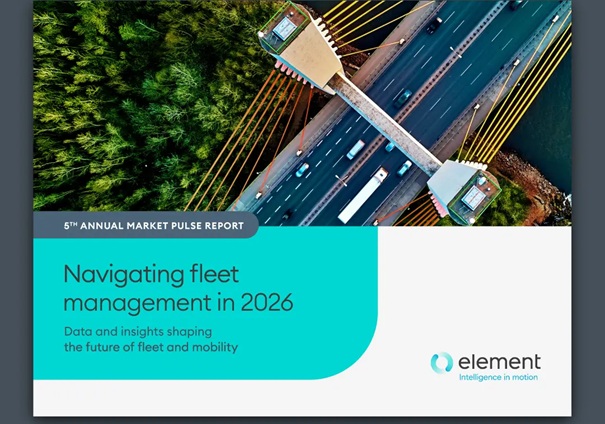
 That’s according to Element Fleet Management’s 2026 Market Pulse Report. Now in its fifth year, the report captures insights from organizations across the U.S., Canada, and Mexico, offering a real-world view into how leaders are optimizing fleet and mobility operations while balancing immediate pressures with long-term transformation.
Element Fleet Management Corp. is a global fleet management and mobility solutions provider that helps organizations reduce total cost of ownership, improve efficiency, and navigate the shift toward more connected and sustainable mobility.
Cost discipline takes the lead
- 78 per cent of leaders prioritize cost savings, making it the top focus for 2026
- 54 per cent report moderate to significant impact from tariffs and economic factors
- 50 per cent expect to maintain fleet size, signaling a stability-first approach
Together, these trends point to a broader shift across the industry from reactive decision-making to intentional, cost-focused optimization.
 “Clients are operating in an environment where every decision must deliver measurable value,” said David Madrigal, EVP and Chief Commercial Officer at Element. “They’re focused on reducing total cost of ownership while maintaining performance — and increasingly turning to data and strategic insights to guide those decisions.”
Targeted investment in technology, AI, and future mobility
Even as cost control dominates, leaders are continuing to invest selectively in areas that drive efficiency and long-term value:
- 53 per cent are exploring AI and digital tools, primarily to improve safety and reduce costs
- 19 per cent are in early stages of EV transition, with many taking a phased, practical approach
- 31 per cent are exploring or using alternative mobility solutions, with short-term rentals leading adoption
This reflects a pragmatic approach to innovation, where organizations are prioritizing solutions that deliver immediate impact, while building toward a more connected, flexible mobility future.
“For most organizations, progress isn’t about making bold, immediate shifts; it’s about taking practical steps that align with operational realities,” said Avninder Buttar, SVP and Head of Electrification at Element. “That’s especially true as fleets balance sustainability goals with cost, infrastructure, and performance considerations.”
About the 2026 Market Pulse Report
 Now in its fifth year, Element’s Market Pulse Report is based on a two-month survey and ongoing advisory conversations with fleet and mobility leaders across North America, representing a broad cross-section of industries and roles.
The 2026 edition expands its perspective with new insights from Mexico, alongside the U.S. and Canada, and combines quantitative data with real-world client experience to provide a grounded view of how organizations are:
- Responding to economic and operational pressures
- Prioritizing safety, efficiency, and cost control
- Investing in technology and future mobility solutions
- Balancing immediate priorities with long-term transformation
Access the full 2026 Market Pulse Report: Here