|
|
 |
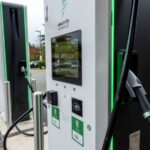
Charger access has been a sore point among EV owners for years. But it’s becoming a more critical issue because, even though the rate of EV sales growth is tapering off, the number of EVs on the road that need charging is still increasing.
Electrify America, one of America’s biggest charging companies, is experimenting with a solution to the problem of charger hogs who can make it slow and unpleasant to travel in an EV. At 10 of the busiest EV fast charging stations in California, Electrify America has enacted a strict limit. Once a car’s batteries are 85% charged, charging will automatically stop and the driver will be told to unplug and leave or face additional 40-cent-per-minute “idle time” fees for taking the space.
via WRAL News
|
Over three days last week, Secretary Buttigieg was in three different Midwest states highlighting the Biden-Harris Administration’s Investing in America agenda.
He saw projects receiving funding from the Bipartisan Infrastructure Law, met with agriculture producers, port leaders, and workers at small and mid-sized ports in Michigan and Wisconsin, as well as in facilities in Kokomo, Indiana, including a new EV battery manufacturing facility that is fueling a construction boom and adding thousands of jobs to the region.
Detailed coverage of Secretary Buttigieg’s port and auto factory visits can be found on the US DOT website.
|
The higher cost of owning an electric versus a gas-powered vehicle is a sticking point for many would-be buyers of EVs. Now, the price of a key EV component is falling, raising hopes that automakers could close the gap as they grapple with waning demand.
Batteries make up about one-third to one-fourth of the cost of producing an electric vehicle, according to Goldman Sachs analysts. The firm predicts the global average cost to automakers for batteries in 2024 will average about $115 per kilowatt hours, about 23% lower than last year. Prices are expected fall another 20% in 2025. Lithium, the essential mineral used to make current EV batteries has plunged more than 70% over the past year.
via Autoblog
|
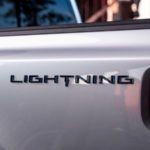
This month, the 2025 Ford F-150 Lightning and Mustang Mach-E gained a new United Auto Workers (UAW) discount. Ford reintroduced the discount on new EV purchases, which can be stacked with other savings offers.
The memo, sent to dealers on July 30, 2024, says most 2025 Ford models, including the F-150 Lightning and Mustang Mach-E, are eligible.
The offer is still good for $1,500 off the purchase of a new 2025 Ford model just as they begin hitting dealerships. It’s available nationwide until December 31, 2025.
via Electrek
|
|
|
|
|
By Pablo Ormachea, Vice President of Data, Motus
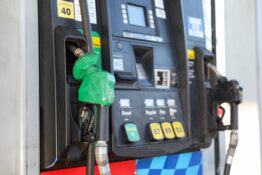
Steady as she goes: July’s fuel prices dipped a touch below last month’s, holding at $3.41 nationally. Taking a break: The South’s high mileage streak has cooled off along with all U.S. regions due to holidays and summer vacations.
Data from Motus shows that national fuel prices stayed near consistent at $3.43 in July compared to 3.46 June, and was lower than last year in July 2023 when it was at $3.60. Looking regionally, fuel prices in July were highest in the western US at $4.14 and lowest in the Southern US at $3.18.
When looking at July mileage trends by region in the US, the south has vastly more miles driven at 101.6M compared to 57.65M in the Midwest, 44.3M in the West, and 30.69M in the Northeast.
READ MORE
|
|

Dealer transport services can provide a reliable, cost-effective solution to manage your inventory and keep your customers happy.
These companies oversee the pick-up, tracking, and delivery of vehicles. Car dealerships use transport companies for various services, such as replenishing their inventories, moving cars to different lots, or delivering vehicles to customers. These service providers are also known as vehicle logistics or vehicle fleet management companies.
A dealership’s inventory volume can make transporting vehicles a time-consuming and costly process. Working with a dealer transport company can take the stress and hassle out of car shipping.
READ MORE
|
|

By Daniel Simon, CEO and Founder, Coast
Traditional fuel cards have been a mainstay in fleet management for decades, but they come with significant drawbacks. They often don’t connect to other fleet tools, like telematics systems. Designed to meet the needs of modern fleet management, smart fuel cards are an innovative alternative to traditional cards.
Smart fuel cards incorporate advanced technologies that streamline expense tracking and enhance security while allowing technicians the independence they need to work efficiently.
With advanced features, smart fuel cards reduce costs, simplify reporting, and enable better decision-making. Even better, they save time and make life easier for fleet managers.
READ MORE
|
|
|
|