By Ed Pierce, Fleet Management Weekly Contributing Editor
May 13, 2026
Trade Uncertainty, Energy Volatility, AI, and Electrification Are Reshaping Fleet Strategy

Photo credit: NAFA
The modern fleet industry no longer operates within the confines of vehicle procurement, maintenance schedules, and fuel cards. Today’s fleet leaders are navigating a far more complex operating environment shaped by global trade disputes, volatile energy markets, evolving EV policies, AI-driven technologies, supply chain instability, and mounting organizational expectations.
At the recent NAFA I&E conference, one message stood out during a panel discussion among fleet experts, policy advisors, and enterprise fleet leaders. Fleet management has become a strategic business discipline that requires flexibility, cross-functional leadership, and data-driven decision-making.
Trade Policy and Tariffs Continue to Create Uncertainty
One of the most immediate concerns facing fleet operators remains global trade policy and tariffs. Industry policy experts described a landscape in which tariffs continue to shift rapidly in response to geopolitical and economic priorities rather than to long-term market stability.
The North American automotive supply chain remains deeply interconnected under the United States-Mexico-Canada Agreement (USMCA), with vehicles and components often crossing borders multiple times during production. Any disruption to these trade relationships could significantly affect vehicle pricing, availability, parts sourcing, and production schedules.
Industry leaders noted that although tariffs have not reached worst-case levels, the uncertainty alone complicates fleet planning cycles and vehicle acquisition strategies.
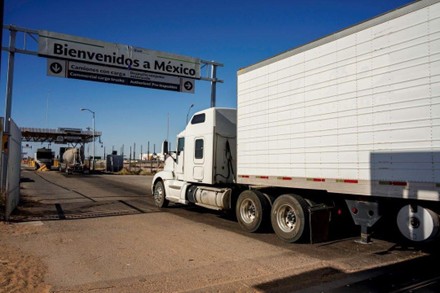
For fleet managers, the takeaway is less about predicting political outcomes and more about building flexible procurement strategies to withstand sudden cost fluctuations.
Energy Markets Are Driving Fleet Costs Higher
Global instability in energy markets is also reshaping operational costs across the fleet industry. Experts cited geopolitical tensions around the Strait of Hormuz — one of the world’s most important shipping corridors — as a key driver of rising oil and diesel prices.
 Because oil is traded globally, even increased domestic production cannot fully shield fleets from international price shocks. Rising fuel costs ripple through virtually every aspect of fleet operations, including transportation, maintenance, shipping, and supply chains.
One panelist emphasized that fleet leaders should expect persistently elevated fuel prices for the foreseeable future and proactively prepare finance teams and executive leadership for the budgetary implications.
For many organizations, that means reassessing:
- 2027 fuel budgets
- Vehicle replacement timing
- Alternative fuel strategies
- Route optimization initiatives
- Vehicle utilization policies
EV Adoption Is Becoming Market-Driven Rather Than Policy-Driven
The conversation about electrification has shifted dramatically over the past two years.
 While previous federal policies aggressively accelerated EV adoption through incentives and emissions regulations, recent policy reversals and reduced federal support have slowed the transition. Tax incentives have been reduced or eliminated in some areas, and funding for parts of the public charging infrastructure remains uncertain.
Yet despite policy fluctuations, the global automotive market continues to move toward electrification.
Fleet leaders now face a more complicated balancing act:
- Continue supporting internal combustion engine (ICE) operations
- Maintain flexibility for future EV adoption
- Avoid overcommitting too quickly
- Respond to actual operational and market realities rather than political pressure.

Industry experts suggested that the fleet sector is shifting from a policy-driven EV timeline to a market-driven adoption model centered on total cost of ownership, infrastructure readiness, operational fit, and customer demand.
Fleet Strategy Requires Flexibility and Scenario Planning
Perhaps the strongest theme throughout the discussion was the need for adaptable fleet strategies.
 Rather than chasing headlines or reacting emotionally to global developments, fleet leaders were encouraged to focus on flexible, scenario-based planning.
“Expect the unexpected,” one executive advised, emphasizing that fleet operations must increasingly collaborate with finance, sustainability, procurement, HR, and executive leadership.
Fleet management is no longer a siloed operational department. It now sits at the intersection of:
- Corporate strategy
- Sustainability goals
- Workforce productivity
- Technology adoption
- Risk management
- Regulatory compliance
Experts stressed that successful fleet leaders must understand not only vehicles but also the broader business objectives that their fleets support.
AI and Data Analytics Are Becoming Core Fleet Tools
Artificial intelligence continues to emerge as one of the most transformative forces shaping fleet operations.
But experts cautioned against viewing AI as a standalone “solution.” Instead, AI is gradually becoming embedded in modern mobility operations through telematics, predictive maintenance, routing optimization, driver behavior analysis, safety monitoring, and utilization analytics.
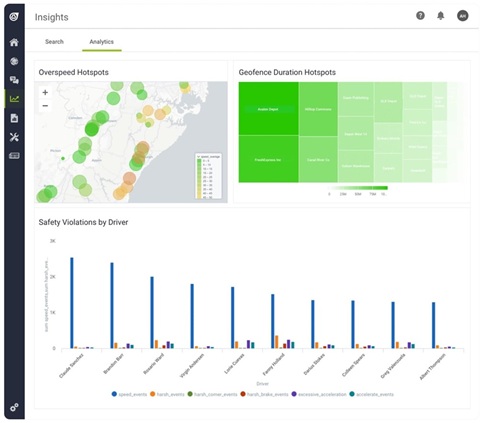 Key applications already gaining traction include:
- Predictive maintenance to reduce downtime
- Driver safety coaching
- Route optimization
- Vehicle utilization analysis
- Fuel efficiency improvements
- Proactive replacement planning
One of the most important warnings focused on data quality. Industry leaders repeatedly emphasized that AI is only as effective as the data it relies on.
 “Garbage in, garbage out,” one panelist noted, emphasizing the importance of clean, connected fleet data systems.
As vehicles become increasingly connected, a major issue is emerging: data ownership.
Industry organizations are now pushing for legislation that ensures fleets retain rights to operational vehicle data rather than paying OEMs for access to information generated by their own vehicles.
Scaling Fleets Requires New Leadership Skills
 Growth remains a positive challenge for many fleet organizations, but scaling operations adds complexity.
As fleets expand across multiple states, regions, and countries, leaders must rethink logistics, procurement partnerships, compliance structures, telematics management, and internal stakeholder engagement.
The modern fleet team is also evolving. Today’s fleet departments increasingly require specialists in:
- Data analytics
- Telematics
- Compliance
- Delivery and disposal logistics
- Safety analytics
- Technology integration
Fleet leadership is becoming more strategic and consultative, requiring stronger cross-departmental collaboration and closer alignment with enterprise goals.
The Road Ahead
The fleet industry is entering a period when global events can affect fleet operations almost overnight. Energy disruptions, trade disputes, regulatory changes, AI advancements, and economic pressures are converging.
Yet amid the uncertainty, industry leaders remain optimistic.
The consensus from the discussion was not that fleet professionals need to predict every global development, but that they must build resilient, flexible operations capable of adapting quickly.
The fleets that succeed in the coming years will likely be those that:
- Prioritize business alignment
- Use data strategically
- Build adaptable procurement plans
- Invest in technology thoughtfully
- Strengthen internal collaboration
- Focus on operational fundamentals
In a rapidly shifting environment, flexibility may be the fleet industry’s most valuable asset.
 About the author
Fleet marketing expert and consultant Ed Pierce is a contributing editor at Fleet Management Weekly. He can be reached at 484-957-1246 or [email protected].