By Fleet Management Weekly Staff
February 18, 2026
Editor’s Note: Founded in 1952, Smith System is a global leader in driver risk management and safety training, best known for its Five Keys® to Space Cushion Driving methodology, which has been adopted by fleets, government agencies, and commercial organizations worldwide. Smith’s solutions span classroom training, e-learning, microlearning, and technology-enabled driver risk management tools that build lasting safety cultures. We spoke with Derek Dunaway, CEO of Smith System, about the company’s newly launched Trainer Center platform and how it modernizes trainer-led safety programs while strengthening the role of behavior-based training in today’s increasingly technology-driven fleet environment.

Derek Dunaway, CEO of Smith System
You’ve recently launched something called Trainer Center. What is it, and why should fleet operators be paying attention?
Trainer Center is a new platform designed to support customers who use a train-the-trainer methodology for Five Keys® instruction within their driver risk management and safety programs. Many fleets have relied on classroom-based training for years, but managing those programs has often required paper records, spreadsheets, or homegrown systems.
Trainer Center was built directly from customer feedback on how to make these programs easier to operate, easier to scale, and far less administratively burdensome. The platform digitizes training records, assessments, and scheduling, and it provides a centralized place to manage courses, content, attendance, and results. Beyond that, Trainer Center integrates with our e-learning and driver monitoring solutions, allowing fleets to operate an integrated driver risk management program within a single software ecosystem where data flows across all components.
How does Trainer Center make trainer-led programs easier to run, scale, and measure?
The benefits are multifaceted. First, everything lives in one system rather than across paper files or in disconnected tools. Fleets can schedule classes, assign courses, track attendance, and store presentations and videos within the platform.
A major advancement is digital assessments. Historically, driver assessments were completed on paper or in printed study guides. Now, assessments are completed digitally and automatically attached to each driver’s record. Managers can see who has been trained, how they performed, and where coaching may be needed.
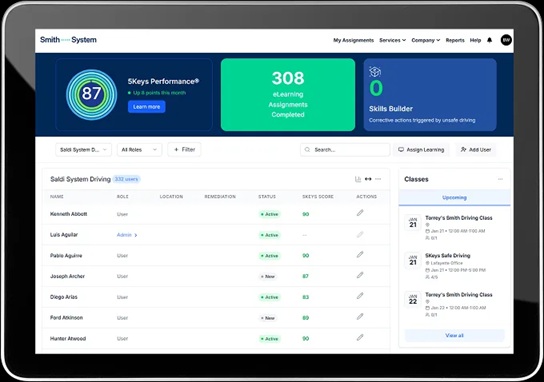
This creates a true closed-loop training environment. Fleets gain transparency into program status, individual driver performance, and even trainer effectiveness. For organizations with dozens or hundreds of trainers across multiple locations, Trainer Center also ensures consistency. Everyone uses the same content, tools, and process, resulting in a more standardized and effective safety program.
For readers who may not be familiar, can you give a high-level overview of the Five Keys® and their role in driver safety?
The Five Keys® are the foundation of Smith System and have been for more than seven decades. They are: Aim High in Steering, Get the Big Picture, Keep Your Eyes Moving, Leave Yourself an Out, and Make Sure They See You.
The Five Keys® focus on driving behavior, not just rule compliance. They do not merely tell drivers what not to do; they reinforce how drivers should think and behave behind the wheel. This behavioral focus translates into reduced risk, fewer incidents, and safer overall driving.
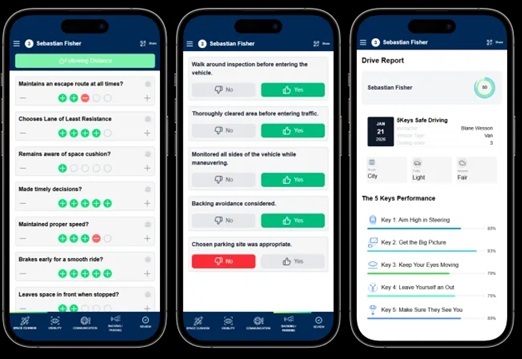
We view the Five Keys® as the foundation of any driver risk management program. They provide a common language that supports a safety culture. Many of our customers display the Five Keys® in facilities, include them in onboarding, and use them in ongoing coaching. Trainer Center carries that language throughout the entire training lifecycle, from classroom instruction to digital assessments to e-learning and microlearning.
How does Trainer Center connect the Five Keys® to modern data and technology?
 When drivers are assessed through Trainer Center, their scores are tied directly to the Five Keys®. Feedback and coaching are delivered within that framework. We have also aligned our e-learning and microlearning content with the Five Keys®, and microlearning modules can be automatically assigned based on observed driver behavior.
Rather than reacting only to events such as speeding or harsh braking, fleets can address the underlying behaviors that lead to those outcomes. This approach turns the Five Keys® from a training methodology into an operating system for driver risk management.
Some technology providers suggest that cameras and telematics can replace training. How do you view that idea?
 Technology is extremely valuable, but it does not replace training or a safety culture. Cameras and telematics can tell you what happened. Training explains why it happened.
Safety culture requires a shared understanding of expectations and a common language for safe behavior. The Five Keys® provide that foundation. Technology should support and reinforce training, not replace it. When behavior-based training and technology work together, fleets achieve the greatest improvements in risk reduction and driver performance.
What does Trainer Center say about Smith System’s broader direction?
 Our focus is on helping fleets build sustainable safety cultures supported by modern tools. Trainer Center reflects that commitment. It modernizes a proven training approach, reduces administrative burden, improves measurement, and strengthens integration between training and technology.
Ultimately, we want fleets to move beyond isolated tactics toward holistic driver risk management programs that integrate behavior-based training, digital tools, and consistent reinforcement. Trainer Center is a major step in that direction.
To learn how Smith System’s Trainer Center can help your fleet reduce driver risk, click here.