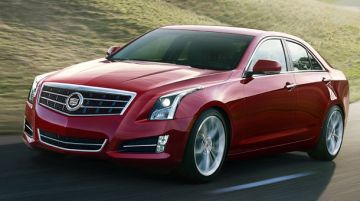
Once upon a time, frugal four-cylinder engines were to be found only in the most modest of motor cars. Today, they are being fitted to even luxury models.
The big difference, of course, is that present four-bangers are turbocharged—that is, they are force-fed more air than normal, allowing them to burn proportionally more fuel. The result is a compact power unit that punches over its weight, yet gets good miles to the gallon while emitting less in the way of pollution.
A turbocharger works by tapping the hot exhaust gas from the engine to spin a small turbine which, in turn, drives an equally small air compressor housed in the same compact casing. Air sucked into the turbocharger is compressed, so more oxygen molecules can be packed into each cylinder’s fixed volume. For higher performance, an intercooler is sometimes placed between the compressor and the inlet manifold. This lowers the temperature of the compressed air and raises its density still further.
Packing a greater mass of air into the cylinders allows more fuel to be added and burned, boosting the amount of power produced. In general, a turbocharged 1.8-litre four-cylinder petrol engine can deliver the power of a naturally aspirated 3-litre six-cylinder unit. By the same token, a turbocharged V-6 can be more than a match for a conventional V-8.
Turbochargers are not to be confused with superchargers. While they serve broadly the same purpose—to cram more air into an engine, so more fuel can be burned—they function differently.
• Superchargers are better in only one respect: they do not suffer from “turbo lag” (the time taken for a turbocharger to spool up to speed) for the simple reason that they have no turbine.
• The compressor in a supercharger is driven directly by the engine, rather than by “free” exhaust gases.
•That is the problem: it robs the engine of too much power. In thermodynamic terms, superchargers are also nowhere near as efficient as turbochargers. Hence the preference these days for the latter.
That said, turbochargers are not exactly new. General Motors fitted one to an Oldsmobile back in 1962. BMW made a turbo version of its classic 2002 model in the early 1970s. Later that decade, the turbocharged Saab 99 was one of the fastest family cars around. Others followed, including most notably the Lotus Esprit from 1980 onwards. Practically all of the early turbocharged cars used four-cylinder engines.
It is not just the power density and compactness of turbocharged four-cylinder engines that has made them attractive to motor manufacturers. In general, a turbocharged-four consumes around 15% less fuel than a larger, naturally aspirated, six-cylinder motor of comparable output. Also, with the compressed air supplying plenty of oxygen to support combustion, the mixture in the cylinders tends to get more thoroughly burned. The result is a cleaner exhaust.
Detroit started to take turbocharging more seriously in 2010, after the federal government announced that the CAFE (corporate average fuel economy) target would be 35.5 miles per US gallon (6.63 litres/100km) by the 2016 model year. It has taken the past five years to get the new turbocharged models into the showrooms. J.D. Power and Associates, a market research firm based in Westlake Village, California, expects 25% of light vehicles sold in America in 2015 to be turbocharged, up from 8% in 2010.
To see the original article, go to The Economist.