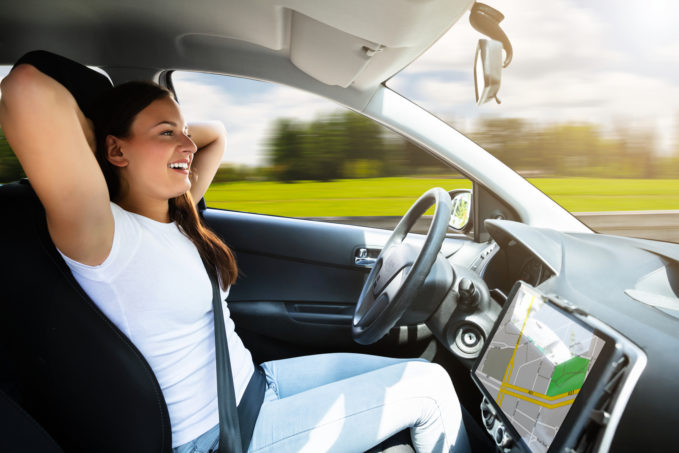
Drivers who use partial automation on a regular basis often treat their vehicles as fully self-driving despite widespread warnings and numerous high-profile crash reports, a new study from the Insurance Institute for Highway Safety shows.
Regular users of Cadillac Super Cruise, Nissan/Infiniti ProPILOT Assist and Tesla Autopilot said they were more likely to perform non-driving-related activities like eating or texting while using their partial automation systems than while driving unassisted. More worrying, 53 percent of Super Cruise users, 42 percent of Autopilot users and 12 percent of ProPILOT Assist users said that they were comfortable treating their vehicles as fully self-driving.
“The big-picture message here is that the early adopters of these systems still have a poor understanding of the technology’s limits,” said IIHS President David Harkey. “But we also see clear differences among the three owner populations. It’s possible that system design and marketing are adding to these misconceptions.”
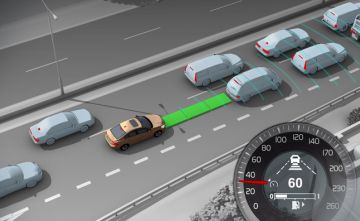 Most of today’s partial automation systems consist of two main features that are designed to assist in highway driving. Adaptive cruise control keeps the vehicle traveling at a set speed, slowing and accelerating automatically to maintain a set following distance from the vehicles ahead. At the same time, lane centering provides continuous steering support to help keep the vehicle in the middle of the travel lane. Some systems are also capable of performing lane changes and other advanced maneuvers.
None of the current systems is designed to replace a human driver or to make it safe for a driver to perform other activities that take their focus away from the road. Track tests and real-world crashes have provided ample evidence that today’s partial automation systems struggle to recognize and react to many common driving situations and road features. Previous research has also shown that the high level of assistance they provide makes it hard for drivers to remain engaged and tempts them to turn their attention to other things.
To determine how frequent users view this budding technology, IIHS researchers surveyed around 600 Cadillac, Nissan/Infiniti and Tesla owners (about 200 each) who routinely use their vehicle’s partial automation system. These systems were selected because they reflect the diversity of designs on the market.
Although all three systems use sensors in the steering wheel to detect when the driver’s hands are on it, Cadillac’s Super Cruise is designed to allow drivers to take their hands off the wheel for extended periods, whereas the other two systems require drivers to keep their hands on the wheel essentially all the time. Super Cruise uses a driver-facing camera to monitor whether the driver is looking at the road, and as of 2021 Tesla’s Autopilot does as well.
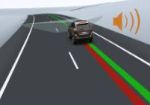 The three systems use different methods to recall the attention of the driver when it strays as well as different escalation sequences and fail-safe measures. Only Autopilot and Super Cruise include a lockout feature that disables the system and prevents drivers from immediately restarting it as a final step in their escalation sequences.
ProPILOT Assist allows the driver to make manual steering adjustments without automatically suspending the lane centering feature, while Autopilot’s lane centering feature deactivates and Super Cruise’s temporarily suspends operation until the driver has stopped steering.
The survey responses illustrated some striking differences in how the systems’ owners use them, too. Super Cruise and Autopilot users are more likely than ProPILOT users to do things that involve taking their hands off the wheel or their eyes off the road. They’re also more likely than ProPILOT users to say they can do nondriving activities better and more often while using their partial automation systems. Similarly, Super Cruise users are the most likely and ProPILOT users the least likely to say that an activity they think is unsafe to do when the system is switched off is safe to do when the system is switched on.
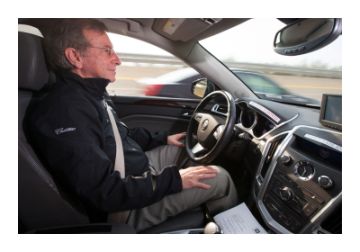 System design and marketing likely contributed to those differences. TV commercials for Super Cruise focus on its hands-free capabilities by depicting drivers patting their laps and clapping their hands along with a song, for instance. Evoking the systems used by commercial airplanes, the name Autopilot implies Tesla’s system is more capable than it really is. In contrast, the name ProPILOT Assist suggests that it’s an assistance feature, rather than a replacement for the driver.
Demographics may also have influenced the survey responses. The majority of Super Cruise and Autopilot owners were male, while both sexes were more or less equally represented among ProPILOT owners. Most Super Cruise owners were over 50, Autopilot owners tended to be younger (a quarter of them were under 35), and ProPILOT Assist owners were more evenly distributed across the age range.
“These results from frequent users of three different partial automation systems once again drive home the need for robust, multifaceted safeguards,” said IIHS Research Scientist Alexandra Mueller, the lead author of the study and main architect of the Institute’s upcoming safeguards rating program. “Many of these drivers said they had experiences where they had to suddenly take over the driving because the automation did something unexpected, sometimes while they were doing something they were not supposed to.”
 Around 40 percent of users of Autopilot and Super Cruise, the two systems with lockout features, reported that their systems had at some point switched off while they were driving and would not reactivate. Some of those drivers confused a temporary suspension of the feature with the lockout procedure. But those high percentages nevertheless suggest that many drivers failed to respond to warnings intended to ensure they were paying attention to the road or that they repeatedly violated the operating parameters often enough to trigger the lockout. On the other end of the spectrum, a substantial portion of ProPILOT Assist users reported that they had never even received an attention reminder.
Although a portion of drivers who’d received attention reminders said the alerts were at least somewhat annoying, the vast majority said they thought they were helpful and made them feel safer using the technology. Similarly, while a slim majority of the Autopilot and Super Cruise owners who experienced system lockouts said they found them irritating, most of the survey respondents agreed that lockouts would also make them feel safer once the purpose of the feature was explained to them.
“The broad acceptance of attention reminders and system lockouts suggests not only that they have the potential to make it safer to use partial automation, but also that they could be implemented more widely to help combat driver distraction in general,” said Mueller.
For more information, go to iihs.org