Truemag

  • Newsletters
  • Thought Leadership
  • Mobility
  • Safety
  • Work Trucks
  • Videos
  • Home
  • Subscribe
  • Contact Us
  • Media Kit
  • Who We Are

Detroit Auto Show: Dude, Where’s My Pickup Truck?

For decades, the American truck has been untouchable—as much a quirk of international tax law as anything the automakers did right. In 1962, frustrated by a glut of U.S. poultry, the European Economic Community began taxing chicken imports.

The U.S., in turn, levied a 25 percent tariff on a wide range of European imports, including potato starch, brandy, and—you guessed it—light trucks. The “chicken tax,” as it’s called, persists to this day, and it has kept foreign car companies largely out of the truck market.

The economic disadvantage is significant. A company such as Kia or BMW would have to charge $56,000 for a truck in order to make $42,000 (the average sticker price on a Ford F-150 last month). That’s a $14,000 handicap before anyone even kicks the tires.

Rather than fight this uphill battle, foreign carmakers have focused on expanding their product lines into every other available segment, from tiny compacts to slick sports cars. Mercedes added its sixth different kind of SUV this week, bringing its family tree to 17 branches—and it still doesn’t make a pickup.

John Krafcik, president of the digital car-shopping platform TrueCar, argues that there would be more, better pickups without the tariff. “Most of the U.S. car segments have 20 brands competing for your dollars,” he says. “If there wasn’t the chicken tax, you’d see so much more innovation. You’d see every brand rushing in and you’d see a vast increase in choice.”

• Some companies have tried to dodge the rules with design. The 1978 Subaru BRAT was a small car with a tiny truck bed that had carpeting and two plastic seats to appease U.S. trade officials but no one else. Subaru did not stamp “Bad Idea” on the side of the vehicle, but it might as well have.

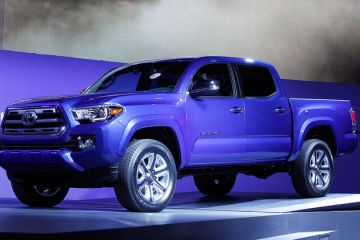
• Other Japanese brands have established North American plants to get around the tax. Toyota’s Tacoma and Tundra models are made in San Antonio and Tijuana, Mexico. Nissan, builds its Frontier and Titan models in central Mississippi.

• The Japanese brands sell less than one pickup for every four American models sold. Toyota has had the most success, capturing 12 percent of the U.S. pickup market mostly with small trucks, a market Ford and General Motors have long neglected.

• Think tanks such as the libertarian Cato Institute have been calling for the repeal of the chicken tax for more than a decade, to no avail.

The truck market is about to get more interesting. At the North American International Auto Show this week, Toyota unveiled a new Tacoma that will compete with the Chevrolet Colorado and

“I don’t remember a time when all the trucks have been redone as close together,” Michelle Krebs, an analyst for AutoTrader.com, told Bloomberg. “It’s true across the whole industry, and it’s spreading to the truck business: New is not what it used to be. The bloom is off the rose a lot sooner.”


Jan 19, 2015connieshedron
The Unwritten Rules Of BusinessFord Won’t be Rolling Out Aluminum Passenger Cars
Recent Posts
  • Why Case Studies Close More Deals Than Product Brochures
  • California Just Became the Best Place to Buy a Brand-New EV
  • AFLA Membership Growth: Mary Saunders on Engagement, Volunteerism, and the Value of Connection
  • The Fleet Manager’s Breaking Point: Why AI Must Do More Than Advise
  • Four More Models Take Home Top Safety Pick+ Awards in Latest IIHS Ratings
  • Ford Can Now Stop Some Vehicles Starting, Even with the Key
  • All New Cars in the EU Now Need to Have a Camera Aimed at the Driver’s Face in the Latest Privacy Nightmare
  • WEX Grows EV Charging Network with Greenlane, Synop, and QuickCharge CPO Integrations
  • Moventum Fleet Management is Here!
  • WEX DriverDash Adds CITGO to Mobile Fuel Payments for Fleets
ASSOCIATION NEWS
AFLA Membership Growth: Mary Saunders on Engagement, Volunteerism, and the Value of Connection
How AFLA Is Positioning Itself for the Future of Fleet Mobility
Last Chance to Save: Register for NAFA’s Maintenance Workshop
‘Raise Your Hand and Get Involved’
NAFA Names 2026 Class of Fellows, Honoring Leaders in Fleet Management
Award Winners Honored at NAFA I&E
2026 NAFA I&E Seeks to Change Perceptions, Invigorate Fleets
TECHNOLOGY
The Fleet Manager’s Breaking Point: Why AI Must Do More Than Advise
All New Cars in the EU Now Need to Have a Camera Aimed at the Driver’s Face in the Latest Privacy Nightmare
The Grid Was Melting Down in Last Week’s Heat – Until EVs Came to the Rescue
Improving Productivity with AI: Turning Fleet Data into Faster Decisions
Hyundai Unveils New ‘Plasma Care UVC’ Cabin Sanitizer
Fleet Operations Are Changing – The Industry Needs to Evolve With Them
AI-Powered Vehicle Inspections Move Beyond the Checklist
CONFERENCES & WEBINARS
For The Leaders In The Room
2026 NETS Strength IN Numbers Conference: Early Bird Rates!
AFLA 2026 – Keynotes Announced!
Private Fleets Flex at National Private Truck Council Conference
Free NAFA Webinar: Manage Your Fuel Cost Volatility
Registration Now Open for NETS Annual Conference
Early Bird Pricing for AFLA 2026 – Ending June 1
INDUSTRY ANNOUNCEMENTS
Fleets: Preparing for Natural Disasters
Union Leasing Becomes Moventum Fleet Management as 70-Year Company Accelerates into Next Phase
Fleetio Wins Innovations Award at NAFA’s 2026 Institute & Expo
WIFM is heading to NAFA!
Cox Automotive Unveils Cox Fleet, Setting a New Standard for Fleet Uptime Nationwide
AFLA Canadian Fleet Professional of the Year Award: Nominations Open!
NAFA Webinar: Kickoff the 2026 100 Best Fleets Contest on December 4!

Fleet Management Weekly Newsletter Archive
Access to back issues of the FMW newsletter.

FMW Mobility
How mobility is rapidly changing the fleet management landscape.

Newsletter

Subscribe

FMW Fleet Videos
Video clips of industry leaders speaking on a variety of engaging hot topics in fleet.

2014-2020 © Fleet Management Weekly