Truemag

  • Newsletters
  • Thought Leadership
  • Mobility
  • Safety
  • Work Trucks
  • Videos
  • Home
  • Subscribe
  • Contact Us
  • Media Kit
  • Who We Are

Despite Plenty of Anti-Sleep Gadgets, Truckers Still Fall Asleep at the Wheel

Motherboard

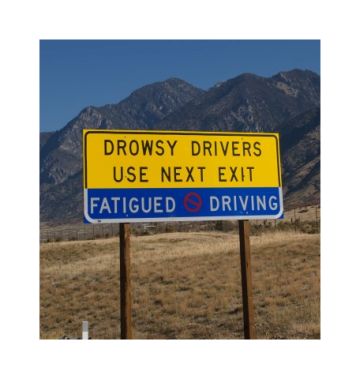
In the middle of the night in June, 2011, Anthony Dedrick could barely keep awake while driving his freight truck from South Dakota to Los Angeles.

He worried about meeting his fast-approaching deadline. He drove 11 hours straight the day before, and though he tried to sleep he managed only to get in a few hours. He finished his last cup of coffee, kept the air conditioning on and bought No-Doz—anything that would keep him awake. He was tired, and he knew it.

Next thing Dedrick knew, he blew through a stop sign, jumped the interstate and wound up in a ditch. It was the scariest moment of his life, he told me.

“Just thinking about it makes me feel sick to my stomach,” he said. “I had to call my company and had to have them call a big-rig to get me out of the ditch. It was terrifying. It was easily one of the worst nights of my life.”

I’ve known Dedrick for almost five years. I met him when he started driving trucks, before he married one of my childhood friends. The man is an inked giant; he’s well over 6 feet tall, covered in tattoos and sports a dark ZZ Top beard. He doesn’t scare easily, so when he says something was terrifying, I take him at his word.

Trucking fleets have installed technology that monitors speed and automatically applies the brakes if a trucker isn’t paying attention or nods off

But Dedrick’s experience pales in comparison to other truckers who get drowsy behind the wheel and end up in a fatal accident, such as the accident that injured comedian Tracy Morgan and killed writer James McNair off the New Jersey Turnpike on June 7, 2014.

Though fatalities involving freight trucks in the United States have decreased over the last 20 years, the average number of deaths between 2003 and 2013 hovers around 4,300 per year, according to statistics from the Federal Motor Carrier Safety Administration. A third of those crashes were caused by truckers falling asleep behind the wheel.

There are a few gadgets on the market to wake up drivers, such as phone apps that detect when drivers’ eyes are closed and earpieces that sound off an alarm when the head dips forward too far. For the commercial freight truck driver, trucking fleets have installed technology that monitors speed and automatically applies the brakes if a trucker isn’t paying attention or nods off.

“The whole goal is to get the driver back engaged,” said Alan Korn, director of advanced braking systems integration at Meritor Wabco. The company has outfitted thousands of trucks with its Onguard system, which uses radars mounted on the front bumper of a truck to recognize obstructions in the road. It also can spot other cars in front of the truck and the truck’s positioning between the lanes. If the truck, for example, approaches a car in front of it too fast, it will sound off two alarms to let the driver take action before applying the brakes.

Read more of the original article in Motherboard.

Jan 24, 2016connieshedron
Toyota Eyes Satellite Antennas for Data-Hungry Connected CarsNAFA’s EFMS Seminar Touts Powerful All-New Format and Features
Recent Posts
  • Why Case Studies Close More Deals Than Product Brochures
  • California Just Became the Best Place to Buy a Brand-New EV
  • AFLA Membership Growth: Mary Saunders on Engagement, Volunteerism, and the Value of Connection
  • The Fleet Manager’s Breaking Point: Why AI Must Do More Than Advise
  • Four More Models Take Home Top Safety Pick+ Awards in Latest IIHS Ratings
  • Ford Can Now Stop Some Vehicles Starting, Even with the Key
  • All New Cars in the EU Now Need to Have a Camera Aimed at the Driver’s Face in the Latest Privacy Nightmare
  • WEX Grows EV Charging Network with Greenlane, Synop, and QuickCharge CPO Integrations
  • Moventum Fleet Management is Here!
  • WEX DriverDash Adds CITGO to Mobile Fuel Payments for Fleets
ASSOCIATION NEWS
AFLA Membership Growth: Mary Saunders on Engagement, Volunteerism, and the Value of Connection
How AFLA Is Positioning Itself for the Future of Fleet Mobility
Last Chance to Save: Register for NAFA’s Maintenance Workshop
‘Raise Your Hand and Get Involved’
NAFA Names 2026 Class of Fellows, Honoring Leaders in Fleet Management
Award Winners Honored at NAFA I&E
2026 NAFA I&E Seeks to Change Perceptions, Invigorate Fleets
TECHNOLOGY
The Fleet Manager’s Breaking Point: Why AI Must Do More Than Advise
All New Cars in the EU Now Need to Have a Camera Aimed at the Driver’s Face in the Latest Privacy Nightmare
The Grid Was Melting Down in Last Week’s Heat – Until EVs Came to the Rescue
Improving Productivity with AI: Turning Fleet Data into Faster Decisions
Hyundai Unveils New ‘Plasma Care UVC’ Cabin Sanitizer
Fleet Operations Are Changing – The Industry Needs to Evolve With Them
AI-Powered Vehicle Inspections Move Beyond the Checklist
CONFERENCES & WEBINARS
For The Leaders In The Room
2026 NETS Strength IN Numbers Conference: Early Bird Rates!
AFLA 2026 – Keynotes Announced!
Private Fleets Flex at National Private Truck Council Conference
Free NAFA Webinar: Manage Your Fuel Cost Volatility
Registration Now Open for NETS Annual Conference
Early Bird Pricing for AFLA 2026 – Ending June 1
INDUSTRY ANNOUNCEMENTS
Fleets: Preparing for Natural Disasters
Union Leasing Becomes Moventum Fleet Management as 70-Year Company Accelerates into Next Phase
Fleetio Wins Innovations Award at NAFA’s 2026 Institute & Expo
WIFM is heading to NAFA!
Cox Automotive Unveils Cox Fleet, Setting a New Standard for Fleet Uptime Nationwide
AFLA Canadian Fleet Professional of the Year Award: Nominations Open!
NAFA Webinar: Kickoff the 2026 100 Best Fleets Contest on December 4!

Fleet Management Weekly Newsletter Archive
Access to back issues of the FMW newsletter.

FMW Mobility
How mobility is rapidly changing the fleet management landscape.

Newsletter

Subscribe

FMW Fleet Videos
Video clips of industry leaders speaking on a variety of engaging hot topics in fleet.

2014-2020 © Fleet Management Weekly