By Lisa Drake, P.E., Director, Fleet Electrification at Merchants Fleet
July 9, 2025
The fleet industry is approaching a pivotal juncture, with electrification increasingly positioned as a potential path forward for businesses working to reduce emissions and operating costs. Yet, during this period with evolving expectations and uncertain environmental regulations, the direction and pace of this transition remain fluid. While momentum is building around the shift from traditional combustion engine vehicles to electric vehicles (EVs), it’s clear that this evolution involves far more than just replacing engines. As fleets venture into this complex landscape, one constant emerges: data will be essential in guiding strategic decisions and shaping the future of fleet management using advanced telematics.
 Historically, telematics has been a powerful tool for fleet operators, enabling them to streamline operations with insights into routing, fuel usage, maintenance schedules, and driver behavior. But as the industry embraces electrification, the telematics capabilities are expanding to offer a more nuanced view, not only of energy consumption and vehicle deployment, but also where and how EVs are charged, and what that means for operational costs and efficiency. In essence, data is becoming the new diesel.
The EV Adoption Slowdown, but still the Need for Transition Planning
While EV adoption has made significant strides in recent years, it’s no secret that progress has slowed, particularly over the past year. Battery electric vehicles (BEVs) made up 8.9% of U.S. light-duty vehicle sales in Q3 2024, but that share slipped to 7.5% in Q1 2025—reflecting a plateau in consumer uptake despite year-over-year gains [CSE; CarEdge].
Several factors have contributed to this slowdown, with economic pressures and regulatory uncertainty playing the most significant roles. Additional challenge lies in the difficulty of accessing EV incentives, infrastructure readiness and availability, and long-term return on investment driven by unpredictable residual values. That said, there are clear areas where EVs are already proving to be cost-effective—such as in urban delivery fleets and predictable regional routes—offering lower total cost of ownership and measurable ROI.
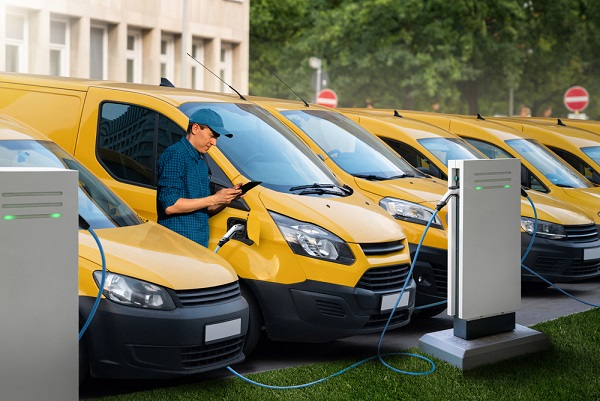 In this context, fleet operators cannot afford to sit on the sidelines waiting for EV adoption to accelerate. While the transition may take longer than initially expected, having a well-thought-out transition plan is crucial. Fleet managers must begin preparing their fleets for electrification, even if full adoption is still years away. This is where data and telematics become essential.
As fleet operators start thinking about electricity not just as a fuel source but as a managed resource, they will need to adopt new strategies for energy usage.
Telematics and the EV Shift: Data as a Managed Resource
Managing EVs is not simply about replacing diesel- or gasoline-powered trucks with electric ones; it’s about thinking differently about how energy is consumed. Telematics data from traditional fleet vehicles can be the baseline for identifying when and where EV replacements can be successful and effecting. Telematic systems used in EVs can then help fleet operators track energy usage in real-time, match EV capability to route planning, identify periods of high electricity demand or peak energy usage based on operational schedules, and predict future energy needs based on vehicle deployment patterns. Telematics platforms, which have traditionally focused on managing diesel or gasoline vehicles, are now being enhanced to track electricity consumption, charging behavior, and vehicle deployment strategies, thus giving fleet operators the tools they need to optimize their transition toward electrification. In doing so, they provide a comprehensive approach to managing energy consumption and vehicle performance, two critical areas for effective fleet management and cost control.
 Fleet operators are beginning to realize that electricity, like diesel or gasoline, needs to be managed, particularly with the complexities of charging and electricity pricing. Telematics tools that monitor charging behavior and provide charging data can help fleet managers direct effective charging practices and can also identify the best times to charge vehicles to ensure cost reductions and vehicle readiness, ensuring the fleet remains operational while optimizing energy costs.
By integrating energy usage data with operational data, telematics can provide fleet operators with insights that can help them balance energy demand and vehicle deployment, reducing operational costs in the long run. As fleets scale up their adoption of EVs, the ability to manage this transition effectively will be key to their long-term success.
Addressing Key Challenges in the Telematics Landscape
While telematics holds immense promise in facilitating the electrification transition, there are still significant hurdles to overcome. One of the main challenges is the lack of interoperability across different telematics, fleet management and EV charging platforms. A siloed approach to various sources of data can limit a fleet managers’ ability to make data-driven decisions across all areas of their operations.
The Path Forward: Data-Driven EV Fleets
Despite the current slowdown in EV adoption, there is no denying the long-term benefits of transitioning to electric fleets. As fleet managers continue to explore ways to optimize their operations, data-driven solutions will be integral to their success. Telematics, which has already revolutionized traditional fleet management, is set to play an even larger role in guiding fleet operators through the complexities of electrification.
 For fleet managers, now is the time to start gathering data, analyzing energy consumption patterns, and exploring the evolving tools that will help them manage the next phase of their fleet’s transition. By understanding the capabilities of telematics today and preparing for what’s to come, fleet managers can make informed decisions that will help them achieve a successful transition, no matter how long the road to full electrification may be.
Merchants Fleet is actively monitoring these trends and staying ahead of the curve and can help support fleet operators through this pivotal transition. The evolution of telematics and the data-driven tools supporting fleet electrification will ensure that, regardless of the challenges ahead, fleet operators are prepared for a more sustainable, cost-efficient future.