Truemag

  • Newsletters
  • Thought Leadership
  • Mobility
  • Safety
  • Work Trucks
  • Videos
  • Home
  • Subscribe
  • Contact Us
  • Media Kit
  • Who We Are

Connected Vehicles: Wireless Control for Safer Stops and Crash-Free Travel

Engineering&Technology

Wireless control techniques will cut accidents on the road and in the air – but can connected vehicles be safe from hackers?

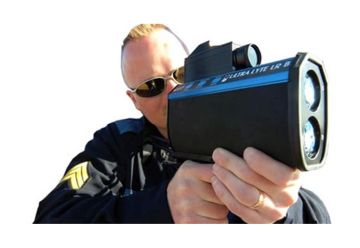
For police trying to stop offenders in stolen cars the weapon of choice has become the ‘stinger’ – a simple chain of spikes designed to blow out the tyres of the oncoming vehicles. But they take time to deploy and lead to risks for the police stretching them across the road.

In the attempt to avoid a stinger spread across half of the road in a high-speed chase, a teenage vehicle thief mowed down Merseyside police constable Dave Phillips in October 2015.

The European Union-funded SAVELEC project was set up to find a safer way of bringing offenders to a halt. The researchers borrowed an idea from electronic warfare that uses a sudden electromagnetic pulse (EMP) to disable the circuitry in the car that controls the engine.

“The aim is to create a disturbance that causes a temporal malfunction in the logic operation of the vehicle,” says Dr Marta Martínez-Vázquez, SAVELEC co-ordinator and senior researcher at IMST, an industrial research, engineering and design company based in Germany.

“The most common situations are escapes from police controls, with too much speed leading eventually to loss of control of a car,” Martínez-Vázquez adds. She says based on data from the past three years in Saxony-Anhalt in Germany, “we identified about two cases per week where an EMP safe-stop of a car would have saved at least the health or even one or more lives”.

The effect of the EMP on the vehicle is akin to someone pointing an electromagnetic pulse close to your PC and forcing the operating system to a halt or to bring up the “blue screen of death”.

UK-based electronics company e2v is developing an electromagnetic pulse generator called RF Safe-Stop, designed to be used not just against road vehicles at ranges of up to 50m but also boats and unmanned aerial vehicles (UAVs).

“We are currently working in partnership with a customer to counter UAVs. UAVs, for example, can be stopped at up to 400 metres,” says Andy Wood, product manager at e2v.

A vehicle-stopping EMP cannot be as indiscriminate as one used in electronic warfare, where the sole intention is to disable everything in range. In these devices, the pulse’s energy is generally confined to specific parts of the RF or microwave spectrum. The RF Safe-Stop, for instance, can generate directed beams of RF in the S and L bands, which reach from 1GHz up to 4GHz.

“It is important to maintain a final level of control via human intervention,” Wood says.

Read more of the original article at Engineering&Technology.

Oct 2, 2016connieshedron
Helicopter Parents Might be Creating Hazards for Teen Drivers, Survey Finds. Turns Out They Can’t Resist Texting Them.How Not to Be a Networking Leech: Tips for Seeking Professional Advice
Recent Posts
  • IMPROVLearning: How Comedy, Behavioral Science and AI Improve Fleet Safety
  • Improving Productivity with AI: Turning Fleet Data into Faster Decisions
  • National Safety Council Projects Increased Traffic Crash Risk during Fourth of July Weekend
  • Keep Every Heavy-Duty Maintenance Inspection on Track — Free Fullbay Checklist
  • Gain Data-Driven Insights into Commercial Vehicle Market Trends at Executive Leadership Summit
  • Last Chance to Save: Register for NAFA’s Maintenance Workshop
  • License Plate Cameras Are About to Start Tracking a Lot More Than Just Your Car
  • America’s Heavy EV Problem May End with Drivers Paying More
  • Trends in U.S. Drivers’ Perceptions and Attitudes Toward Vehicle Automation, 2019–2025
  • 2026 NETS Strength IN Numbers Conference: Early Bird Rates!
ASSOCIATION NEWS
Last Chance to Save: Register for NAFA’s Maintenance Workshop
How AFLA Is Positioning Itself for the Future of Fleet Mobility
‘Raise Your Hand and Get Involved’
NAFA Names 2026 Class of Fellows, Honoring Leaders in Fleet Management
Award Winners Honored at NAFA I&E
2026 NAFA I&E Seeks to Change Perceptions, Invigorate Fleets
NAFA Announces Lineup for Media Day at I&E 2026: Industry Leaders to Showcase the Latest Innovations
TECHNOLOGY
Improving Productivity with AI: Turning Fleet Data into Faster Decisions
Fleet Operations Are Changing – The Industry Needs to Evolve With Them
AI-Powered Vehicle Inspections Move Beyond the Checklist
Motive’s New Workforce Capabilities Aim to Improve Performance, Automate Rewards
AI + Human Insight: Why Fleet Leaders Need Both to Win in 2026
NTSB Finds Automation Overreliance Contributed to Two Fatal Ford BlueCruise Crashes
New AI Assistants Automate Fleet Data Analysis, Decision Making and More
CONFERENCES & WEBINARS
2026 NETS Strength IN Numbers Conference: Early Bird Rates!
AFLA 2026 – Keynotes Announced!
Private Fleets Flex at National Private Truck Council Conference
Free NAFA Webinar: Manage Your Fuel Cost Volatility
Registration Now Open for NETS Annual Conference
Early Bird Pricing for AFLA 2026 – Ending June 1
NAFA Online Seminar: Essentials of Fleet Management
INDUSTRY ANNOUNCEMENTS
Union Leasing Becomes Moventum Fleet Management as 70-Year Company Accelerates into Next Phase
Fleetio Wins Innovations Award at NAFA’s 2026 Institute & Expo
WIFM is heading to NAFA!
Cox Automotive Unveils Cox Fleet, Setting a New Standard for Fleet Uptime Nationwide
AFLA Canadian Fleet Professional of the Year Award: Nominations Open!
NAFA Webinar: Kickoff the 2026 100 Best Fleets Contest on December 4!
Join NAFA’s Free Fleet 101 Live Course

Fleet Management Weekly Newsletter Archive
Access to back issues of the FMW newsletter.

FMW Mobility
How mobility is rapidly changing the fleet management landscape.

Newsletter

Subscribe

FMW Fleet Videos
Video clips of industry leaders speaking on a variety of engaging hot topics in fleet.

2014-2020 © Fleet Management Weekly