Truemag

  • Newsletters
  • Thought Leadership
  • Mobility
  • Safety
  • Work Trucks
  • Videos
  • Home
  • Subscribe
  • Contact Us
  • Media Kit
  • Who We Are

Some Cities are Taking Another Look at LED Lighting After AMA Warning

The Washington Post

If people are sleepless in Seattle, it may not be only because they have broken hearts.

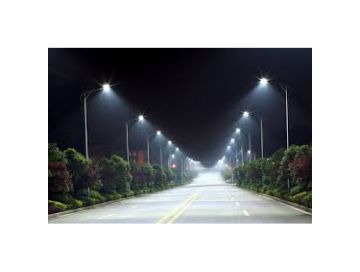
The American Medical Association issued a warning in June that high-intensity LED streetlights — such as those in Seattle, Los Angeles, New York, Houston and elsewhere — emit unseen blue light that can disturb sleep rhythms and possibly increase the risk of serious health conditions, including cancer and cardiovascular disease.

The AMA also cautioned that those light-emitting-diode lights can impair nighttime driving vision.

Similar concerns have been raised over the past few years, but the AMA report adds credence to the issue and is likely to prompt cities and states to reevaluate the intensity of LED lights they install.

Nearly 13 percent of area/roadway lighting is now LED, according to a report prepared last year for the Department of Energy, and many communities that haven’t yet made the switch plan to do so. LEDs are up to 50 percent more energy-efficient than the yellow-orange high-pressure sodium lights they typically replace. They last for 15 to 20 years, instead of two to five. And unlike sodium lights, the LEDs spread illumination evenly.

Some cities say the health concerns are not convincing enough to override the benefits of the first-generation bright LED lights that they installed in the past three to eight years. New York is one of them, although it has responded to resident complaints by replacing the high-intensity, white LED bulbs with a lower-intensity bulb that the AMA considers safe.

Scott Thomsen, a spokesman for Seattle City Lights, which is responsible for the city’s exterior illumination, dismissed the health concerns about bright-white LED lights, noting that they emit less of the problematic blue wavelengths than most computers and televisions.

After a year and a half of discussion and sampling, Lake Worth, Fla., is replacing its sodium streetlights with about 4,150 LED lights with an amber glow. “We found a color that made sense for the health of our city, and we’re proud of the choice we’ve made,” Michael Bornstein, the city manager, said.

Mark Hartman, Phoenix’s chief sustainability officer, said the city might go with a mix of the intense lights for major intersections and ballpark areas that need very bright light and a softer light for residential areas. He said the city would consider the health arguments, although he too mentioned the glow from computers and televisions. “Nobody says don’t watch television or use your computer after 9 p.m. because of blue lights,” he said.

Almost as soon as outdoor LEDs were made available, the federal government encouraged states and municipalities to use them, calling LEDs highly efficient for applications such as traffic lights and exit signs. But critics say federal authorities were too quick to endorse LEDs.

Read more of the original article at The Washington Post.

Sep 26, 2016connieshedron
Advancing Driver Safety: Benefits of Simulation Safety TrainingStaying Safe on Your Smartphone
Recent Posts
  • IMPROVLearning: How Comedy, Behavioral Science and AI Improve Fleet Safety
  • Improving Productivity with AI: Turning Fleet Data into Faster Decisions
  • National Safety Council Projects Increased Traffic Crash Risk during Fourth of July Weekend
  • Keep Every Heavy-Duty Maintenance Inspection on Track — Free Fullbay Checklist
  • Gain Data-Driven Insights into Commercial Vehicle Market Trends at Executive Leadership Summit
  • Last Chance to Save: Register for NAFA’s Maintenance Workshop
  • License Plate Cameras Are About to Start Tracking a Lot More Than Just Your Car
  • America’s Heavy EV Problem May End with Drivers Paying More
  • Trends in U.S. Drivers’ Perceptions and Attitudes Toward Vehicle Automation, 2019–2025
  • 2026 NETS Strength IN Numbers Conference: Early Bird Rates!
ASSOCIATION NEWS
Last Chance to Save: Register for NAFA’s Maintenance Workshop
How AFLA Is Positioning Itself for the Future of Fleet Mobility
‘Raise Your Hand and Get Involved’
NAFA Names 2026 Class of Fellows, Honoring Leaders in Fleet Management
Award Winners Honored at NAFA I&E
2026 NAFA I&E Seeks to Change Perceptions, Invigorate Fleets
NAFA Announces Lineup for Media Day at I&E 2026: Industry Leaders to Showcase the Latest Innovations
TECHNOLOGY
Improving Productivity with AI: Turning Fleet Data into Faster Decisions
Fleet Operations Are Changing – The Industry Needs to Evolve With Them
AI-Powered Vehicle Inspections Move Beyond the Checklist
Motive’s New Workforce Capabilities Aim to Improve Performance, Automate Rewards
AI + Human Insight: Why Fleet Leaders Need Both to Win in 2026
NTSB Finds Automation Overreliance Contributed to Two Fatal Ford BlueCruise Crashes
New AI Assistants Automate Fleet Data Analysis, Decision Making and More
CONFERENCES & WEBINARS
2026 NETS Strength IN Numbers Conference: Early Bird Rates!
AFLA 2026 – Keynotes Announced!
Private Fleets Flex at National Private Truck Council Conference
Free NAFA Webinar: Manage Your Fuel Cost Volatility
Registration Now Open for NETS Annual Conference
Early Bird Pricing for AFLA 2026 – Ending June 1
NAFA Online Seminar: Essentials of Fleet Management
INDUSTRY ANNOUNCEMENTS
Union Leasing Becomes Moventum Fleet Management as 70-Year Company Accelerates into Next Phase
Fleetio Wins Innovations Award at NAFA’s 2026 Institute & Expo
WIFM is heading to NAFA!
Cox Automotive Unveils Cox Fleet, Setting a New Standard for Fleet Uptime Nationwide
AFLA Canadian Fleet Professional of the Year Award: Nominations Open!
NAFA Webinar: Kickoff the 2026 100 Best Fleets Contest on December 4!
Join NAFA’s Free Fleet 101 Live Course

Fleet Management Weekly Newsletter Archive
Access to back issues of the FMW newsletter.

FMW Mobility
How mobility is rapidly changing the fleet management landscape.

Newsletter

Subscribe

FMW Fleet Videos
Video clips of industry leaders speaking on a variety of engaging hot topics in fleet.

2014-2020 © Fleet Management Weekly