Truemag

  • Newsletters
  • Thought Leadership
  • Mobility
  • Safety
  • Work Trucks
  • Videos
  • Home
  • Subscribe
  • Contact Us
  • Media Kit
  • Who We Are

Building a Road Map for the Self-Driving Car

The New York Times

How do you create a map showing every road in the United States, with the precise location of every stop sign, all the lane markings, every exit ramp and every traffic light — and update it in real time as traffic is rerouted around construction and accidents?

That’s a challenge that automakers and technology companies are confronting in their race to develop self-driving cars, the kind that someday will let you sit back and read or watch TV on the way to work each morning.

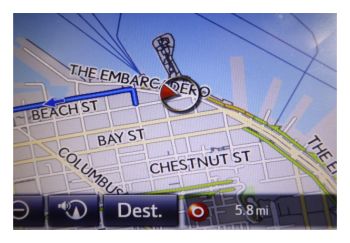
The need for highly detailed, three-dimensional, computerized maps — which pinpoint a car’s location and understand its surroundings — is often overlooked amid all the hype about autonomous vehicles.

The chatter tends to focus more on the various sensors that enable cars to “see” the road and any obstacles in front of them. Those sensors include radar, cameras and a laser-based kind of radar known as lidar.

But digital maps are an equally critical piece of the puzzle.

“If we want to have autonomous cars everywhere, we have to have digital maps everywhere,” said Amnon Shashua, chief technology officer at Mobileye, an Israeli company that makes advanced vision systems for automobiles.

Creating them, however, is a monumental task. There are more than four million miles of roads in the United States. And compared with the maps used by GPS and navigation systems, the level of precision must be much greater. Navigational maps typically locate a car’s position within several yards. Digital maps for autonomous cars must know the locations of cars, curbs and other objects within about four inches.

So far the drive to create digital maps has been slow. Google’s former self-driving car division — now a company called Waymo — has created maps for roads around its headquarters in Mountain View, Calif., and a handful of other cities, including Austin, Tex., and Kirkland, Wash.

Waymo creates the maps by driving around cars equipped with spinning lidar units mounted on their roofs that shoot out laser beams, creating images of the road and the surroundings. Human engineers, in a time-consuming process, then go over the images and tag the objects that are found, like stop signs, buildings, stoplights and do-not-enter signs. The laser equipment needed to do this scanning is expensive — it can cost $100,000 or more to outfit just one car to do this job.

Another company, Here, which was started by Nokia and then acquired by the German automakers BMW, Daimler and Audi, is also mapping roads in the United States and Europe. It is drawing on data scooped up by scanning systems that trucking companies have agreed to install on their vehicles. Here also has its own fleet of cars collecting images, and is working on algorithms to enable computers to annotate the maps.

The effort may soon shift into higher gear, thanks to an idea borrowed from the internet that has helped in other fields: crowdsourcing.

Read more of the original article at The New York Times.
Mar 5, 2017connieshedron
Lukas Neckermann to Keynote at NAFA International Fleet AcademyMore Cars, Less Gas? U.S. Set to Hit Peak of Oil Consumption
Recent Posts
  • Why Case Studies Close More Deals Than Product Brochures
  • California Just Became the Best Place to Buy a Brand-New EV
  • AFLA Membership Growth: Mary Saunders on Engagement, Volunteerism, and the Value of Connection
  • The Fleet Manager’s Breaking Point: Why AI Must Do More Than Advise
  • Four More Models Take Home Top Safety Pick+ Awards in Latest IIHS Ratings
  • Ford Can Now Stop Some Vehicles Starting, Even with the Key
  • All New Cars in the EU Now Need to Have a Camera Aimed at the Driver’s Face in the Latest Privacy Nightmare
  • WEX Grows EV Charging Network with Greenlane, Synop, and QuickCharge CPO Integrations
  • Moventum Fleet Management is Here!
  • WEX DriverDash Adds CITGO to Mobile Fuel Payments for Fleets
ASSOCIATION NEWS
AFLA Membership Growth: Mary Saunders on Engagement, Volunteerism, and the Value of Connection
How AFLA Is Positioning Itself for the Future of Fleet Mobility
Last Chance to Save: Register for NAFA’s Maintenance Workshop
‘Raise Your Hand and Get Involved’
NAFA Names 2026 Class of Fellows, Honoring Leaders in Fleet Management
Award Winners Honored at NAFA I&E
2026 NAFA I&E Seeks to Change Perceptions, Invigorate Fleets
TECHNOLOGY
The Fleet Manager’s Breaking Point: Why AI Must Do More Than Advise
All New Cars in the EU Now Need to Have a Camera Aimed at the Driver’s Face in the Latest Privacy Nightmare
The Grid Was Melting Down in Last Week’s Heat – Until EVs Came to the Rescue
Improving Productivity with AI: Turning Fleet Data into Faster Decisions
Hyundai Unveils New ‘Plasma Care UVC’ Cabin Sanitizer
Fleet Operations Are Changing – The Industry Needs to Evolve With Them
AI-Powered Vehicle Inspections Move Beyond the Checklist
CONFERENCES & WEBINARS
For The Leaders In The Room
2026 NETS Strength IN Numbers Conference: Early Bird Rates!
AFLA 2026 – Keynotes Announced!
Private Fleets Flex at National Private Truck Council Conference
Free NAFA Webinar: Manage Your Fuel Cost Volatility
Registration Now Open for NETS Annual Conference
Early Bird Pricing for AFLA 2026 – Ending June 1
INDUSTRY ANNOUNCEMENTS
Union Leasing Becomes Moventum Fleet Management as 70-Year Company Accelerates into Next Phase
Fleetio Wins Innovations Award at NAFA’s 2026 Institute & Expo
WIFM is heading to NAFA!
Cox Automotive Unveils Cox Fleet, Setting a New Standard for Fleet Uptime Nationwide
AFLA Canadian Fleet Professional of the Year Award: Nominations Open!
NAFA Webinar: Kickoff the 2026 100 Best Fleets Contest on December 4!
Join NAFA’s Free Fleet 101 Live Course

Fleet Management Weekly Newsletter Archive
Access to back issues of the FMW newsletter.

FMW Mobility
How mobility is rapidly changing the fleet management landscape.

Newsletter

Subscribe

FMW Fleet Videos
Video clips of industry leaders speaking on a variety of engaging hot topics in fleet.

2014-2020 © Fleet Management Weekly