
Truemag

  • Newsletters
  • Thought Leadership
  • Mobility
  • Safety
  • Work Trucks
  • Videos
  • Home
  • Subscribe
  • Contact Us
  • Media Kit
  • Who We Are

Autonomous Vehicles Involved in High Number of Crashes

The Detroit Bureau

Proponents have promised a world in which crashes, injuries and fatalities are virtually absent, but a new study warns that, at least for now, autonomous vehicles aren’t coming close to meeting those expectations.

The limited number of test vehicles now on the road have been involved in crashes at five times the rate of conventional vehicles, according to an analysis by the University of Michigan’s Transportations Research Institute, or UMTRI. But the news wasn’t entirely bad.

“Self-driving vehicles were not at fault in any crashes they were involved in,” wrote researchers Brandon Schoettle and Michael Sivak. And, they added, “the overall severity of crash-related injuries involving self-driving vehicles has been lower than for conventional vehicles.

Autonomous vehicle technology is rapidly moving from the realm of science fiction to the real world. Tesla Motors has now released a software update for its Model S sedan, dubbed AutoPilot, that allows a vehicle to operate hands-free on well-market, limited-access freeways. Cadillac, Mercedes-Benz, Nissan and several other makers plan to launch similar systems over the next few years.

Nissan intends to go even further, promising to put into production by 2020a fully autonomous vehicle, able to handle even complicated urban roads. It previewed what that might look like during a news conference last week marking the opening of the Tokyo Motor Show.

The IDS – short Intelligent Driving System – prototype would be able to “compensate for human error which causes more than 90% of accidents,” said Nissan CEO Carlos Ghosn.

The problem appears to be that, at least for now, humans and autonomous vehicles may not mix.

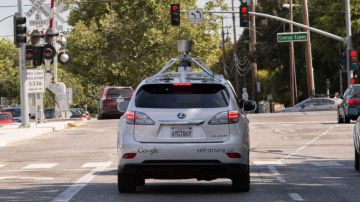
So far, the vast majority of accidents involving self-driving vehicles have been reported by Google, the tech giant already clocking hundreds of thousands of miles of testing in conventional vehicles converted for autonomous use, and now rolling out a fleet of specially designed self-driving “Google cars.” But a number of other manufacturers are now testing the technology on public roads – even truckmaker Freightliner.

For the purposes of the study, UMTRI researchers looked at 11 crashes involving self-driving cars – a figure that’s now gone higher.  But that’s among a relatively miniscule fleet that have, according to the study, clocked barely 1.2 million miles, all told.

When you work out the numbers, UMTRI determined the autonomous vehicles were five times as likely to be involved in a crash as conventional vehicles. But they added a number of significant caveats. For one, thing: the number of accidents involving human drivers is probably quite a bit higher than what police reports would indicate. So, the real ratio is likely a good bit narrower.


Nov 4, 2015connieshedron
NAFA's CAFM®/CAFS Boot Camp is Going High-tech and is Now Available Online!Autonomous Cars Will Need To Interact With Pedestrians: Here's How
Recent Posts
  • Why the Traditional Vehicle Ordering Cycle No Longer Works
  • DASH Breaks Ground on DC Metro Region’s First On-Route Electric Bus Chargers
  • IMPROVLearning: How Comedy, Behavioral Science and AI Improve Fleet Safety
  • Improving Productivity with AI: Turning Fleet Data into Faster Decisions
  • National Safety Council Projects Increased Traffic Crash Risk during Fourth of July Weekend
  • Keep Every Heavy-Duty Maintenance Inspection on Track — Free Fullbay Checklist
  • Gain Data-Driven Insights into Commercial Vehicle Market Trends at Executive Leadership Summit
  • Last Chance to Save: Register for NAFA’s Maintenance Workshop
  • License Plate Cameras Are About to Start Tracking a Lot More Than Just Your Car
  • America’s Heavy EV Problem May End with Drivers Paying More
ASSOCIATION NEWS
Last Chance to Save: Register for NAFA’s Maintenance Workshop
How AFLA Is Positioning Itself for the Future of Fleet Mobility
‘Raise Your Hand and Get Involved’
NAFA Names 2026 Class of Fellows, Honoring Leaders in Fleet Management
Award Winners Honored at NAFA I&E
2026 NAFA I&E Seeks to Change Perceptions, Invigorate Fleets
NAFA Announces Lineup for Media Day at I&E 2026: Industry Leaders to Showcase the Latest Innovations
TECHNOLOGY
Improving Productivity with AI: Turning Fleet Data into Faster Decisions
Fleet Operations Are Changing – The Industry Needs to Evolve With Them
AI-Powered Vehicle Inspections Move Beyond the Checklist
Motive’s New Workforce Capabilities Aim to Improve Performance, Automate Rewards
AI + Human Insight: Why Fleet Leaders Need Both to Win in 2026
NTSB Finds Automation Overreliance Contributed to Two Fatal Ford BlueCruise Crashes
New AI Assistants Automate Fleet Data Analysis, Decision Making and More
CONFERENCES & WEBINARS
2026 NETS Strength IN Numbers Conference: Early Bird Rates!
AFLA 2026 – Keynotes Announced!
Private Fleets Flex at National Private Truck Council Conference
Free NAFA Webinar: Manage Your Fuel Cost Volatility
Registration Now Open for NETS Annual Conference
Early Bird Pricing for AFLA 2026 – Ending June 1
NAFA Online Seminar: Essentials of Fleet Management
INDUSTRY ANNOUNCEMENTS
Union Leasing Becomes Moventum Fleet Management as 70-Year Company Accelerates into Next Phase
Fleetio Wins Innovations Award at NAFA’s 2026 Institute & Expo
WIFM is heading to NAFA!
Cox Automotive Unveils Cox Fleet, Setting a New Standard for Fleet Uptime Nationwide
AFLA Canadian Fleet Professional of the Year Award: Nominations Open!
NAFA Webinar: Kickoff the 2026 100 Best Fleets Contest on December 4!
Join NAFA’s Free Fleet 101 Live Course

Fleet Management Weekly Newsletter Archive
Access to back issues of the FMW newsletter.

FMW Mobility
How mobility is rapidly changing the fleet management landscape.

Newsletter

Subscribe

FMW Fleet Videos
Video clips of industry leaders speaking on a variety of engaging hot topics in fleet.

2014-2020 © Fleet Management Weekly