Truemag

  • Newsletters
  • Thought Leadership
  • Mobility
  • Safety
  • Work Trucks
  • Videos
  • Home
  • Subscribe
  • Contact Us
  • Media Kit
  • Who We Are

Autonomous Driving May Help Save Fuel

The Detroit Bureau

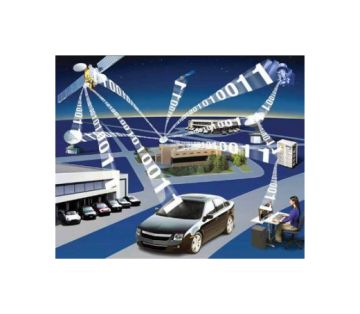
Adding autonomous driving and vehicle-to-vehicle communication capability is expected to make driving safer and shorten commuting times.

But now the University of Michigan and the Argonne National Laboratories outside of Chicago and Idaho National Laboratory are teaming up to see if the V2V technology also can help motorists save fuel.

Reuben Sarkar, U.S. Department of Energy (DOE) deputy assistant secretary for transportation, announced the department will finance the research through a $2.7 million grant that he described as an “incubator award” to help DOE learn more about connected and automated vehicles, which are a growing focus for the agency.

University of Michigan’s team of researchers is drawn from the U-M Mobility Transformation Center, U-M Transportation Research Institute and College of Engineering. “Nobody knows the magnitude of what the energy savings of connected and automated vehicles will be,” said MTC Director Peter Sweatman. “We’re going to actively collect the data to do that.”

U-M will recruit 500 volunteers in the Ann Arbor area to participate in the project. Their personal vehicles will be equipped to collect energy consumption data, in addition to information about vehicle motion, such as speed and location, as the volunteers go about their daily routines. Some of the vehicles could belong to fleet or commercial users.

The project also plans to study how drivers react to various functions in connected and automated vehicles, and whether any resulting change in behavior affects energy consumption.

“Reducing emissions and saving fuel are expected to be significant benefits once connected and automated vehicles are on the road in large numbers,” said Huei Peng, MTC associate director and a principal investigator on the DOE project.

The majority of vehicles in the study will be hybrid-electric vehicles, plug-in hybrid-electric vehicles and battery electric vehicles, with only a small number expected to be traditional cars or trucks. Peng said there is a clear relationship between vehicle motion and energy consumption in conventional vehicles, but that relationship can vary widely in hybrid-electric and plug-in vehicles.

Argonne will contribute modeling and simulation expertise in transportation system and vehicle energy consumption, as well as development of a display module to better understand drivers’ behaviors.

By combining the vehicle motion and energy consumption data generated by U-M’s 500-vehicle fleet with Argonne’s modeling and simulation capabilities, new insights will be generated into the energy impact of connected vehicles that can communicate with the world around them.

Read more of the original article in Detroit Bureau.

Nov 22, 2015connieshedron
Personal Safety Training Module Now Available in DriverCareGary Mott Named President at FLD, COO Laurie Conn Retires
Recent Posts
  • IMPROVLearning: How Comedy, Behavioral Science and AI Improve Fleet Safety
  • Improving Productivity with AI: Turning Fleet Data into Faster Decisions
  • National Safety Council Projects Increased Traffic Crash Risk during Fourth of July Weekend
  • Keep Every Heavy-Duty Maintenance Inspection on Track — Free Fullbay Checklist
  • Gain Data-Driven Insights into Commercial Vehicle Market Trends at Executive Leadership Summit
  • Last Chance to Save: Register for NAFA’s Maintenance Workshop
  • License Plate Cameras Are About to Start Tracking a Lot More Than Just Your Car
  • America’s Heavy EV Problem May End with Drivers Paying More
  • Trends in U.S. Drivers’ Perceptions and Attitudes Toward Vehicle Automation, 2019–2025
  • 2026 NETS Strength IN Numbers Conference: Early Bird Rates!
ASSOCIATION NEWS
Last Chance to Save: Register for NAFA’s Maintenance Workshop
How AFLA Is Positioning Itself for the Future of Fleet Mobility
‘Raise Your Hand and Get Involved’
NAFA Names 2026 Class of Fellows, Honoring Leaders in Fleet Management
Award Winners Honored at NAFA I&E
2026 NAFA I&E Seeks to Change Perceptions, Invigorate Fleets
NAFA Announces Lineup for Media Day at I&E 2026: Industry Leaders to Showcase the Latest Innovations
TECHNOLOGY
Improving Productivity with AI: Turning Fleet Data into Faster Decisions
Fleet Operations Are Changing – The Industry Needs to Evolve With Them
AI-Powered Vehicle Inspections Move Beyond the Checklist
Motive’s New Workforce Capabilities Aim to Improve Performance, Automate Rewards
AI + Human Insight: Why Fleet Leaders Need Both to Win in 2026
NTSB Finds Automation Overreliance Contributed to Two Fatal Ford BlueCruise Crashes
New AI Assistants Automate Fleet Data Analysis, Decision Making and More
CONFERENCES & WEBINARS
2026 NETS Strength IN Numbers Conference: Early Bird Rates!
AFLA 2026 – Keynotes Announced!
Private Fleets Flex at National Private Truck Council Conference
Free NAFA Webinar: Manage Your Fuel Cost Volatility
Registration Now Open for NETS Annual Conference
Early Bird Pricing for AFLA 2026 – Ending June 1
NAFA Online Seminar: Essentials of Fleet Management
INDUSTRY ANNOUNCEMENTS
Union Leasing Becomes Moventum Fleet Management as 70-Year Company Accelerates into Next Phase
Fleetio Wins Innovations Award at NAFA’s 2026 Institute & Expo
WIFM is heading to NAFA!
Cox Automotive Unveils Cox Fleet, Setting a New Standard for Fleet Uptime Nationwide
AFLA Canadian Fleet Professional of the Year Award: Nominations Open!
NAFA Webinar: Kickoff the 2026 100 Best Fleets Contest on December 4!
Join NAFA’s Free Fleet 101 Live Course

Fleet Management Weekly Newsletter Archive
Access to back issues of the FMW newsletter.

FMW Mobility
How mobility is rapidly changing the fleet management landscape.

Newsletter

Subscribe

FMW Fleet Videos
Video clips of industry leaders speaking on a variety of engaging hot topics in fleet.

2014-2020 © Fleet Management Weekly