Truemag

  • Newsletters
  • Thought Leadership
  • Mobility
  • Safety
  • Work Trucks
  • Videos
  • Home
  • Subscribe
  • Contact Us
  • Media Kit
  • Who We Are

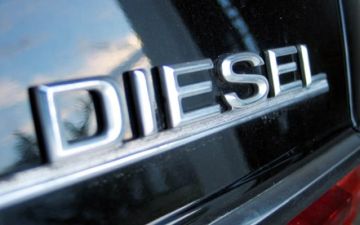
Automakers struggle to bring affordable diesel cars to U.S. market

Los Angeles Times

In hindsight, it’s clear how Volkswagen, in the 2009 model year, seemed to have nailed the elusive formula for affordable, sporty diesel cars — when none of its competitors could crack the code.

At the time, U.S. regulators had been tightening pollution controls on diesels and diesel fuel for years, culminating with the demand to cut smog-forming nitrogen oxide emissions 90% by 2010.

Other automakers, including Honda and Nissan, had tried and failed to pull off what regulators now know that VW accomplished only by cheating — an affordable and fun-to-drive car, with fuel mileage rivaling that of hybrids. The automaker passed U.S. emissions tests with illegal software.

The difficulty and expense in producing a legitimate “clean diesel” raises the question of whether the technology is viable at all for affordable cars.

Currently, only Chevrolet offers a relatively inexpensive alternative to VW’s now-disgraced diesels. And the brand’s Cruze starts at a not-so-cheap $25,660 — a big premium over the gasoline version of the same small sedan. Its sales are a tiny fraction of those of its gasoline-powered counterpart.

The rest of the market is limited to pricey pickup trucks as well as luxury sedans and SUVs from Audi, BMW, Mercedes-Benz and Porsche. Their sticker prices can more easily absorb the high cost of diesel engines and emissions-control equipment.

Mazda is the sole remaining automaker talking about bringing an affordable diesel passenger car to the U.S. market, but the project has run into years of delays as the Japanese company struggles to make a U.S.-compliant vehicle that blends efficiency with the zippy performance that is the brand’s hallmark.

Mazda’s experience illustrates why so few automakers have challenged Volkswagen’s diesel dominance in the U.S.

The small Japanese automaker likes diesels since they are quick from a stop — because of ample torque, the same quality that makes them attractive in trucks towing big loads. More than 4 in 10 of Mazdas sold in Japan are diesels, as well as about a third of sales in Europe.

Even before VW’s problems, consumer demand was low.

“I don’t think this will help,” said Jeff Hill, an auto industry expert at Boston Consulting Group. “There will be some percentage of the people who have an affinity for diesel and German cars, but it will be a sliver of the market.”

The hurdle is U.S. emissions standards.

Although diesel cars are profitable elsewhere, most automakers don’t see the payback in the U.S., said Mark Wakefield, head of the automotive practice at consulting firm AlixPartners.

“The EPA goes after soot and smog more aggressively than regulators in Europe,” Wakefield said. It about 40% more stringent on nitrogen oxide and particulate emissions, and that’s expensive to control, he said.

Read more of the original article at the Los Angeles Times.

Nov 2, 2015connieshedron
Can Detroit Beat Google to the Self-Driving Car?Raynald Thibaudeau Named Senior Associate at Mercury Associates
Recent Posts
  • IMPROVLearning: How Comedy, Behavioral Science and AI Improve Fleet Safety
  • Improving Productivity with AI: Turning Fleet Data into Faster Decisions
  • National Safety Council Projects Increased Traffic Crash Risk during Fourth of July Weekend
  • Keep Every Heavy-Duty Maintenance Inspection on Track — Free Fullbay Checklist
  • Gain Data-Driven Insights into Commercial Vehicle Market Trends at Executive Leadership Summit
  • Last Chance to Save: Register for NAFA’s Maintenance Workshop
  • License Plate Cameras Are About to Start Tracking a Lot More Than Just Your Car
  • America’s Heavy EV Problem May End with Drivers Paying More
  • Trends in U.S. Drivers’ Perceptions and Attitudes Toward Vehicle Automation, 2019–2025
  • 2026 NETS Strength IN Numbers Conference: Early Bird Rates!
ASSOCIATION NEWS
Last Chance to Save: Register for NAFA’s Maintenance Workshop
How AFLA Is Positioning Itself for the Future of Fleet Mobility
‘Raise Your Hand and Get Involved’
NAFA Names 2026 Class of Fellows, Honoring Leaders in Fleet Management
Award Winners Honored at NAFA I&E
2026 NAFA I&E Seeks to Change Perceptions, Invigorate Fleets
NAFA Announces Lineup for Media Day at I&E 2026: Industry Leaders to Showcase the Latest Innovations
TECHNOLOGY
Improving Productivity with AI: Turning Fleet Data into Faster Decisions
Fleet Operations Are Changing – The Industry Needs to Evolve With Them
AI-Powered Vehicle Inspections Move Beyond the Checklist
Motive’s New Workforce Capabilities Aim to Improve Performance, Automate Rewards
AI + Human Insight: Why Fleet Leaders Need Both to Win in 2026
NTSB Finds Automation Overreliance Contributed to Two Fatal Ford BlueCruise Crashes
New AI Assistants Automate Fleet Data Analysis, Decision Making and More
CONFERENCES & WEBINARS
2026 NETS Strength IN Numbers Conference: Early Bird Rates!
AFLA 2026 – Keynotes Announced!
Private Fleets Flex at National Private Truck Council Conference
Free NAFA Webinar: Manage Your Fuel Cost Volatility
Registration Now Open for NETS Annual Conference
Early Bird Pricing for AFLA 2026 – Ending June 1
NAFA Online Seminar: Essentials of Fleet Management
INDUSTRY ANNOUNCEMENTS
Union Leasing Becomes Moventum Fleet Management as 70-Year Company Accelerates into Next Phase
Fleetio Wins Innovations Award at NAFA’s 2026 Institute & Expo
WIFM is heading to NAFA!
Cox Automotive Unveils Cox Fleet, Setting a New Standard for Fleet Uptime Nationwide
AFLA Canadian Fleet Professional of the Year Award: Nominations Open!
NAFA Webinar: Kickoff the 2026 100 Best Fleets Contest on December 4!
Join NAFA’s Free Fleet 101 Live Course

Fleet Management Weekly Newsletter Archive
Access to back issues of the FMW newsletter.

FMW Mobility
How mobility is rapidly changing the fleet management landscape.

Newsletter

Subscribe

FMW Fleet Videos
Video clips of industry leaders speaking on a variety of engaging hot topics in fleet.

2014-2020 © Fleet Management Weekly