(photo: Jason Wonase, CEO and President of Collective Data)
By Fleet Management Weekly Staff
February 26, 2025
Managing a fleet can be tricky if you have many vehicles or if they are remarkably diverse or complex. Tracking maintenance schedules, monitoring telematics systems, and handling fuel management for a thousand vehicles can be a significant headache without an integrated management system.
 A partner like Collective Data gives you access to all your data in one cloud-based hub, offering a unified view of all your assets. You can assign, monitor, and access inspections; view repair histories; identify vehicles that need replacing; and configure the software to send customizable alerts based on your needs. Collective Data thrives in helping more extensive and complex fleets simplify their management with one central hub.
To learn more about how Collective Data helps fleets with inspections, maintenance, and more, we spoke with Jason Wonase, CEO and President of Collective Data. Here’s how it went:
What does Collective Data offer to help fleets?
We provide a subscription-based software solutions system with a highly configurable platform adaptable to fleets’ unique, complex challenges. It provides every feature to track your vehicles right out of the box. You have your work order system technician view access, which can work in kiosk mode from a phone, tablet, or computer. That contains all the reporting you need, integrations with telematics, fuel management systems–everything you need to have a holistic view of your fleet so you can make firm decisions to ensure your fleet is operating optimally.
How can Collective Data help simplify inspections?
We’ve rewritten it from the ground up over the last year. It’s a comprehensive system that allows the administrator to set up dynamically provided inspections based on the vehicle class or equipment. Multiple pass/fail inspections can be grouped when the driver signs in. Users can input data, take pictures, and track their location–whatever they need to inspect the vehicle quickly and easily.
 It’s also more about the entire vehicle life cycle. Once the supervisor starts reviewing the inspections, they can make decisions based on any notes or failed items to decide if they need to be addressed today. They can create a work order to ensure that the vehicle is taken off the road if necessary. If it’s not mission-critical or a liability issue, they can defer it and have the system remind the shop when the vehicle comes in for its next service or oil change. All that information is being captured and tracked so the driver can see the status of any items at any point. Then, if they get pulled over by DOT, they can pull their inspections up to show any failed items and who repaired them.
How can Collective Data help with maintenance?
Maintenance is an essential part of any fleet management program, and it’s the heart of our system. We have a comprehensive work order system that covers parts inventory management, which can include multi-warehouse tracking and transfers. Technicians have a specific view where they can access the information they need to quickly identify the repair history for the vehicle they’re working on, helping them make better decisions.

How can Collective Data improve communications between managers and drivers?
This communication is critical to ensure that everything is operating correctly. Our platform sends automatic in-app notifications between the drivers and the shop based on specific activities. We can also send emails or SMS and generate reports based on time. For example, the drivers’ manager may get a report showing all the PMs that must be addressed in the next week or month. All of that information is available.
They can also create their own triggers outside the pre-built ones we created. If they want to have an in-app notification to alert someone anytime certain activities happen, they can do that. One remarkable example we recently introduced was when a driver’s vehicle is ready for pick up, it sends an email to the driver to collect the vehicle, then a second email a few days later asking them to rate their service. They can rate it from one to five and put in notes for the technicians to help them improve by communicating what they’re doing well and where they can do better.
What are some ways that Collective Data can help minimize downtime for fleets?
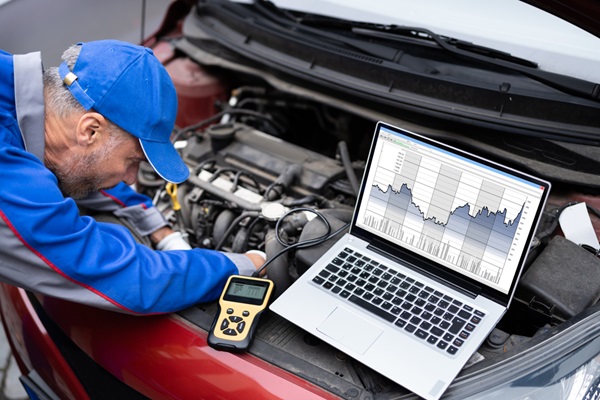 Downtime is one of the top factors Collective Data is trying to reduce. Many of our tools assist with that by helping manage your preventative maintenance schedules. However, one of the key factors is knowing which vehicles can or should be replaced at any particular time. We are capturing a lot of information that helps with that–the frequency of coming in for repairs, the cost of repairs, the miles on the vehicle, the vehicle’s age, and the service class–and using it to create a score.
Then, a report will show the scores for each vehicle and recommend which ones need to be replaced. This will reduce downtime by helping you replace the correct vehicles. It will also free up more resources that could be spent on better-performing vehicles instead of ones that should probably be removed from the fleet.
Do you have a success story you can share?
We’ve worked with a suburban city for several years to manage all the vehicles within an agency. Their challenges have evolved through the years as they bring in new vehicles of different types. We worked closely with them to understand their workflows and processes so  we could adjust the system to tailor it to their needs better. That significantly reduced the warehouse space they needed to house their parts by reducing or removing many parts that had been on the shelf for years, parts that they’d forgotten were there and were for vehicles they no longer operated.
Our system highlighted those parts so they could remove them, saving them thousands of dollars in warehousing costs. It also improved the preventative maintenance schedules for their vehicles, ensured everything was coming in on time, and ensured that the shop was prepared for the vehicles as they came due.
How does Collective Data differentiate itself from its competitors?
One of our most significant advantages is the ability to understand the needs of agencies and adjust our system to fit those particular needs. It isn’t a one-size-fits-all environment out there. Every culture is different, expectations are different, and the way technicians want to interact with the system is different. We can understand those needs, and through our implementation and client success teams, we can make sure our system fits those needs. Whether it be additional reporting, delivery to key stakeholders within the city, or integration with other systems, we can provide those things at a level you don’t see from other companies.
Much of our focus has been on agencies beyond just the vehicles. We have a significant presence in law enforcement, whose vehicles require many radios and computers to operate well. We can manage and track those extra assets to know who was issued what, when it was issued, and when it needs to be inspected and returned. If a company’s needs are more significant than just a typical PM schedule, that’s where we shine.

Do you have a sweet spot regarding the size and mix of fleets you work with?
We work with a wide range of fleets. Government is the most significant industry, but we also work with trucking, construction, and utility companies. You have to have a lot of vehicles, preferably with a good mix of different vehicles. If you have a hundred passenger cars, there are probably better systems for you because that’s pretty easy to manage.
Our sweet spot is between a couple hundred vehicles and 10,000. When it’s more than just a vehicle, think of construction equipment, utility equipment, or high-profile/high-demand vehicles. Again, with law enforcement, there are many extra components. There’s a lot of upfitting to get the light bars on and ensure it’s ready to be a police cruiser. Our system can shine in the extra work and the extra detail.