Truemag

  • Newsletters
  • Thought Leadership
  • Mobility
  • Safety
  • Work Trucks
  • Videos
  • Home
  • Subscribe
  • Contact Us
  • Media Kit
  • Who We Are

The Road Ahead: Self-Driving Cars on the Brink of a Revolution in California

The Guardian

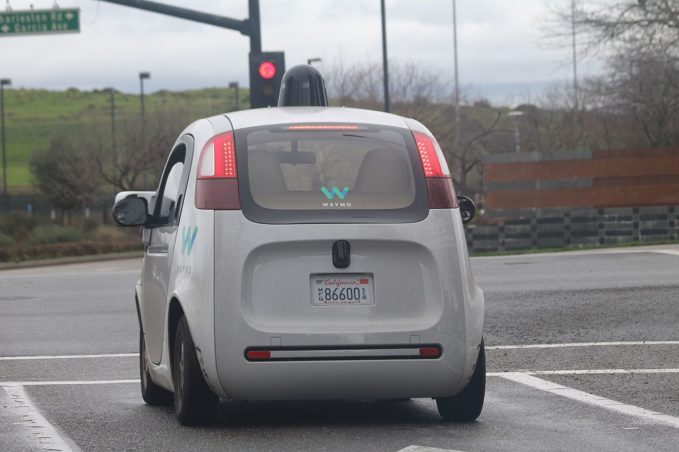
Autonomous vehicles are already a common sight on the streets of Silicon Valley, an international hub for self-driving technology.

But this month, California set the stage for the next phase of innovation that could dramatically alter transportation and mobility across the globe.

The state has proposed regulations to allow fully autonomous vehicles to drive on public roads – meaning empty cars with no steering wheels and no backup driver inside.

The new rules are a game-changer for the nascent industry, opening the doors to a host of complex questions about legality, ethics and safety. The regulations, which could go into effect this year, pave the road for a deployment that could revolutionize modern society.

“This is like the smartphone transition times 10 as far as the potential to change our existence on the planet,” said Karl Brauer, senior analyst with Kelley Blue Book, an automotive research company. “There’s a sense of almost panic and certainly a frantic pace that all these industries are going through to try to position themselves in this new world.”

The race to dominate the market is rapidly accelerating in California, where major technology corporations, traditional automakers and artificial intelligence startups are engaged in aggressive competition. In an industry that could be worth $26bn by 2025, with potentially millions of vehicles on the road in just a few years, there’s a lot at stake.

‘It will be life-changing’

California recently overtook the UK to become the fifth largest economy in the world, and there are a total of 27 companies that now have permits to test autonomous cars on the road, though current rules require a human behind the wheel. With a total of 180 vehicles approved for operation, there are already six times as many vehicles permitted on public streets here compared with 2014 – and probably more than the rest of the US combined.

“The technology itself will perform a lot better than we perform now as humans,” said Bernard Soriano, deputy director of the Department of Motor Vehicles. “We needed to provide a clear path to completely driverless vehicles, because of the safety benefits.”

Waymo is Google’s recently renamed self-driving car operation. Seated in the passenger seat of a Waymo on a sunny afternoon in Mountain View, Jaime Waydo, head of systems engineering, recited a string of alarming statistics – 1.2 million people die on the road each year, equivalent to a 737 plane falling out of the sky every hour. In 94% of the cases, the cause is human error.

“It’ll be life-changing once we get this technology,” she said, after the push of a button in the car prompted a voice inside to declare “auto driving”, leading the car to maneuver itself out of the Google parking lot.

Read more of the original article at The Guardian.

Mar 20, 2017connieshedron
Register Today for WIFM Webinar: Quality of LifeLeaked Internal Uber Documents Show Rocky Self-Driving Car Progress
Recent Posts
  • Aging Fleets Are Forcing a New Approach to Maintenance
  • It’s All Downhill from Here!
  • AFLA Announces New Board Members
  • Fuel Spend, Fraud and More: Is Your Fleet Data Working Hard Enough
  • GM Has Found a More Profitable Way to Make Money from Your Car
  • Amazon Added 10,000 Rivian Electric Vans In Just Six Months
  • What Are You Going to Do If the Gas Runs Out?
  • Driver Death Rates Remain High for Small Cars, Models with Powerful Engines
  • Distracted Driving Enforcement Is Expanding. The Cost to Fleets Goes Far Beyond the Ticket.
  • Why Fleet Maintenance Costs Keep Rising – And What the Data Reveals
ASSOCIATION NEWS
AFLA Announces New Board Members
The Hourglass Foundation Named AFLA’s Charity of the Year for the Third Consecutive Year
AFLA Membership Growth: Mary Saunders on Engagement and the Value of Connection
How AFLA Is Positioning Itself for the Future of Fleet Mobility
Last Chance to Save: Register for NAFA’s Maintenance Workshop
‘Raise Your Hand and Get Involved’
NAFA Names 2026 Class of Fellows, Honoring Leaders in Fleet Management
TECHNOLOGY
Fleetio Customers Reject $41.6M in Unnecessary Repair Costs as AI-Powered Maintenance Scales
ServiceUp Launches Agentic Platform to Fully Automate Fleet Repair and Maintenance
America’s First UL-Certified Plug-In Balcony Solar Microinverter Is Here
As Fleet Tech Enthusiasm Tempers, New Study Reveals Path to Reactivate Adoption
The Fleet Manager’s Breaking Point: Why AI Must Do More Than Advise
All New Cars in the EU Now Need to Have a Camera Aimed at the Driver’s Face in the Latest Privacy Nightmare
The Grid Was Melting Down in Last Week’s Heat – Until EVs Came to the Rescue
CONFERENCES & WEBINARS
AFLA 2026: Keynote Speakers You Won’t Want to Miss!
Motus Webinar: One Platform for U.S. & Canada Employee Drivers
NETS 2026 Conference: Keynotes Confirmed; Road Safety Award Nominee Deadline
For The Leaders In The Room
2026 NETS Strength IN Numbers Conference: Early Bird Rates!
AFLA 2026 – Keynotes Announced!
Private Fleets Flex at National Private Truck Council Conference
INDUSTRY ANNOUNCEMENTS
Fleets: Preparing for Natural Disasters
Union Leasing Becomes Moventum Fleet Management as 70-Year Company Accelerates into Next Phase
Fleetio Wins Innovations Award at NAFA’s 2026 Institute & Expo
WIFM is heading to NAFA!
Cox Automotive Unveils Cox Fleet, Setting a New Standard for Fleet Uptime Nationwide
AFLA Canadian Fleet Professional of the Year Award: Nominations Open!
NAFA Webinar: Kickoff the 2026 100 Best Fleets Contest on December 4!

Fleet Management Weekly Newsletter Archive
Access to back issues of the FMW newsletter.

FMW Mobility
How mobility is rapidly changing the fleet management landscape.

Newsletter

Subscribe

FMW Fleet Videos
Video clips of industry leaders speaking on a variety of engaging hot topics in fleet.

2014-2020 © Fleet Management Weekly