Truemag

  • Newsletters
  • Thought Leadership
  • Mobility
  • Safety
  • Work Trucks
  • Videos
  • Home
  • Subscribe
  • Contact Us
  • Media Kit
  • Who We Are

Autonomous Cars Will Need To Interact With Pedestrians: Here’s How

MotorAuthority

The technology that’s required to guide and pilot autonomous (self-driving) vehicles—keeping them on the road and on their route—is only one challenge.

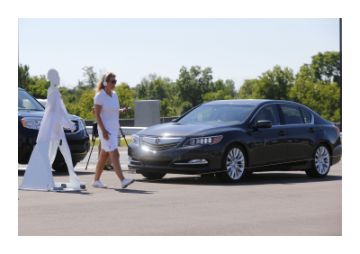
The even greater challenge is that on city streets, for the foreseeable future, autonomous vehicles will be mixing on the roadways, not just with normal piloted vehicles but with pedestrians, bicyclists, and those on motorcycles and mopeds.

­­­­­­Identifying pedestrians and other vehicles, visually and perhaps with the help of their smartphones, is part of the challenge. But it’s what happens with this traffic mix that will have a major role in how quickly autonomous vehicles catch on, and whether they’re seen as a harmonious, accident-reducing net positive for society, or just mercurial bots that could inflict injury or death.

An autonomous message…with Leaf hints

Giving autonomous cars the right social cues is an important theme and concern for Nissan’s concept car from the Tokyo Motor Show. The IDS Concept may give hints of the direction of the next Nissan Leaf; and it might be a formal nod that Nissan is seriously considering inductive charging and a much larger battery pack. But some of the most important themes in the IDS might be how it gets us thinking about how an autonomous car will need to communicate with the environment around it.

As announced at the Tokyo show, Nissan aims to provide Piloted Drive 1.0 (essentially hands-off smart cruise control for the highway) beginning in 2016 in Japan, with other markets including the U.S. soon to follow, while Piloted Drive 2.0, incorporating full support for automated lane changes on the highway, plus some city-driving functionality, will be ready around 2018. Version 3.0, with full Intelligent Driving (real autonomous) capability such as automatic intersection negotiation and remote piloted park, will be ready around 2020 but contingent on governments allowing such features.

In order to minimize the chances of accidents, that means autonomous vehicles have to communicate clearly outward; and it requires making sure that autonomous vehicles drive in “socially acceptable” ways—meaning that they can maintain the flow of traffic, in the absence of painted lane guides, when drivers around them are behaving erratically, or when passengers (or deer) dart across in the street ahead.

They can’t be overly aggressive, unpredictable, or hesitant, as that might result in mishaps, or at the very least a lack of trust in piloted vehicles.

The when and where of very different driving styles

Complicating things even more, social expectations on how drivers should behave will be dramatically different from place to place—and even depend on the time of day.


Read more of the original article in MotorAuthority.

Nov 5, 2015connieshedron
Autonomous Vehicles Involved in High Number of CrashesTransitions
Recent Posts
  • GM Has Found a More Profitable Way to Make Money from Your Car
  • Amazon Added 10,000 Rivian Electric Vans In Just Six Months
  • What Are You Going to Do If the Gas Runs Out?
  • Driver Death Rates Remain High for Small Cars, Models with Powerful Engines
  • Distracted Driving Enforcement Is Expanding. The Cost to Fleets Goes Far Beyond the Ticket.
  • Why Fleet Maintenance Costs Keep Rising – And What the Data Reveals
  • AFLA 2026: Keynote Speakers You Won’t Want to Miss!
  • WEX Brings Standard Fleet’s Connected Vehicle Platform to Fleet Customers
  • Motus Webinar: One Platform for U.S. & Canada Employee Drivers
  • Fleetio Customers Reject $41.6M in Unnecessary Repair Costs as AI-Powered Maintenance Scales
ASSOCIATION NEWS
The Hourglass Foundation Named AFLA’s Charity of the Year for the Third Consecutive Year
AFLA Membership Growth: Mary Saunders on Engagement and the Value of Connection
How AFLA Is Positioning Itself for the Future of Fleet Mobility
Last Chance to Save: Register for NAFA’s Maintenance Workshop
‘Raise Your Hand and Get Involved’
NAFA Names 2026 Class of Fellows, Honoring Leaders in Fleet Management
Award Winners Honored at NAFA I&E
TECHNOLOGY
Fleetio Customers Reject $41.6M in Unnecessary Repair Costs as AI-Powered Maintenance Scales
ServiceUp Launches Agentic Platform to Fully Automate Fleet Repair and Maintenance
America’s First UL-Certified Plug-In Balcony Solar Microinverter Is Here
As Fleet Tech Enthusiasm Tempers, New Study Reveals Path to Reactivate Adoption
The Fleet Manager’s Breaking Point: Why AI Must Do More Than Advise
All New Cars in the EU Now Need to Have a Camera Aimed at the Driver’s Face in the Latest Privacy Nightmare
The Grid Was Melting Down in Last Week’s Heat – Until EVs Came to the Rescue
CONFERENCES & WEBINARS
AFLA 2026: Keynote Speakers You Won’t Want to Miss!
Motus Webinar: One Platform for U.S. & Canada Employee Drivers
NETS 2026 Conference: Keynotes Confirmed; Road Safety Award Nominee Deadline
For The Leaders In The Room
2026 NETS Strength IN Numbers Conference: Early Bird Rates!
AFLA 2026 – Keynotes Announced!
Private Fleets Flex at National Private Truck Council Conference
INDUSTRY ANNOUNCEMENTS
Fleets: Preparing for Natural Disasters
Union Leasing Becomes Moventum Fleet Management as 70-Year Company Accelerates into Next Phase
Fleetio Wins Innovations Award at NAFA’s 2026 Institute & Expo
WIFM is heading to NAFA!
Cox Automotive Unveils Cox Fleet, Setting a New Standard for Fleet Uptime Nationwide
AFLA Canadian Fleet Professional of the Year Award: Nominations Open!
NAFA Webinar: Kickoff the 2026 100 Best Fleets Contest on December 4!

Fleet Management Weekly Newsletter Archive
Access to back issues of the FMW newsletter.

FMW Mobility
How mobility is rapidly changing the fleet management landscape.

Newsletter

Subscribe

FMW Fleet Videos
Video clips of industry leaders speaking on a variety of engaging hot topics in fleet.

2014-2020 © Fleet Management Weekly