Truemag

  • Newsletters
  • Thought Leadership
  • Mobility
  • Safety
  • Work Trucks
  • Videos
  • Home
  • Subscribe
  • Contact Us
  • Media Kit
  • Who We Are

You’re Not Your Car’s Boss Anymore

Slate.com

The modern automobile can be traced back more than 100 years to 1886, when Karl Benz created the Benz slightly more than 10 mph.

It’s easy to chuckle at that today, when our cars are made from a variety of composite materials that were likely developed by aerospace engineers and can easily reach speeds in excess of 100 mph. But the primary goal of the automobile hasn’t changed: to move us from point A to B. A second goal is to provide mobility in a way that does not harm people and will not result in property damage.

Simply stated, we want to drive safe.

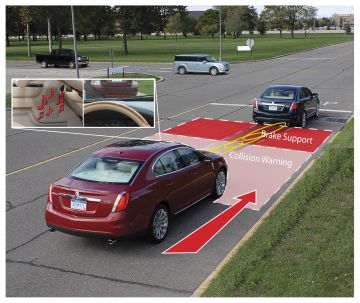
Human-machine interface researchers have long recognized that mobility and safety can only be achieved through a partnership between driver and vehicle. The partnership can be thought of as a dance in which each partner must complete at least some tasks—you tap the brakes when you see a pedestrian and the car slows down.

Traditionally, achieving these goals of safety and mobility has largely been your responsibility as a driver. You make sure that you are well-rested and sober, you check the fuel level so you don’t run out of gas, and make sure that the car is operational so it doesn’t break down.

While driving, you provide all the vehicle control inputs: You decide the steering wheel, accelerator pedal , and brake pedal positions. And of course you have to stay constantly aware of the vehicle’s operation and driving situation, and coordinate your responses accordingly. Most drivers are great dance partners because they constantly monitor and attend to what’s going on.

The automobile, on the other hand, has long been a terrible dance partner. Historically, the car hasn’t been able to monitor itself (besides, say, offering an infuriatingly vague “check engine” light), the driver, or the environment—and it certainly hasn’t been able to use this information in a partnership with you to achieve greater mobility and safety. It’s like your little cousin standing on your feet while you boogie: You’re the one doing all the work, but it still looks like a dance.

Regardless of the awkward imbalance, we nevertheless manage to make this partnership work. The Federal Highways Administration estimated that Americans alone drove a staggering 3.1 trillion miles in 2015, which, by any standards, suggests a highly mobile society.

But what about the other goal: How safe were we? Well, that depends on your perspective. As a researcher in the field of transportation safety, I would say that we sacrificed safety for mobility. According to the National Highway Traffic Safety Administration, in 2015 in the U.S. approximately 35,000 people died and more than 2.4 million people were injured in automobile crashes.

Read more of the original article at Slate.com.

 

Feb 6, 2017connieshedron
Humans and Autonomous Cars Need Time to Adapt to Each Other, Report SaysThe Car Hackers of Fremont
Recent Posts
  • IMPROVLearning: How Comedy, Behavioral Science and AI Improve Fleet Safety
  • Improving Productivity with AI: Turning Fleet Data into Faster Decisions
  • National Safety Council Projects Increased Traffic Crash Risk during Fourth of July Weekend
  • Keep Every Heavy-Duty Maintenance Inspection on Track — Free Fullbay Checklist
  • Gain Data-Driven Insights into Commercial Vehicle Market Trends at Executive Leadership Summit
  • Last Chance to Save: Register for NAFA’s Maintenance Workshop
  • License Plate Cameras Are About to Start Tracking a Lot More Than Just Your Car
  • America’s Heavy EV Problem May End with Drivers Paying More
  • Trends in U.S. Drivers’ Perceptions and Attitudes Toward Vehicle Automation, 2019–2025
  • 2026 NETS Strength IN Numbers Conference: Early Bird Rates!
ASSOCIATION NEWS
Last Chance to Save: Register for NAFA’s Maintenance Workshop
How AFLA Is Positioning Itself for the Future of Fleet Mobility
‘Raise Your Hand and Get Involved’
NAFA Names 2026 Class of Fellows, Honoring Leaders in Fleet Management
Award Winners Honored at NAFA I&E
2026 NAFA I&E Seeks to Change Perceptions, Invigorate Fleets
NAFA Announces Lineup for Media Day at I&E 2026: Industry Leaders to Showcase the Latest Innovations
TECHNOLOGY
Improving Productivity with AI: Turning Fleet Data into Faster Decisions
Fleet Operations Are Changing – The Industry Needs to Evolve With Them
AI-Powered Vehicle Inspections Move Beyond the Checklist
Motive’s New Workforce Capabilities Aim to Improve Performance, Automate Rewards
AI + Human Insight: Why Fleet Leaders Need Both to Win in 2026
NTSB Finds Automation Overreliance Contributed to Two Fatal Ford BlueCruise Crashes
New AI Assistants Automate Fleet Data Analysis, Decision Making and More
CONFERENCES & WEBINARS
2026 NETS Strength IN Numbers Conference: Early Bird Rates!
AFLA 2026 – Keynotes Announced!
Private Fleets Flex at National Private Truck Council Conference
Free NAFA Webinar: Manage Your Fuel Cost Volatility
Registration Now Open for NETS Annual Conference
Early Bird Pricing for AFLA 2026 – Ending June 1
NAFA Online Seminar: Essentials of Fleet Management
INDUSTRY ANNOUNCEMENTS
Union Leasing Becomes Moventum Fleet Management as 70-Year Company Accelerates into Next Phase
Fleetio Wins Innovations Award at NAFA’s 2026 Institute & Expo
WIFM is heading to NAFA!
Cox Automotive Unveils Cox Fleet, Setting a New Standard for Fleet Uptime Nationwide
AFLA Canadian Fleet Professional of the Year Award: Nominations Open!
NAFA Webinar: Kickoff the 2026 100 Best Fleets Contest on December 4!
Join NAFA’s Free Fleet 101 Live Course

Fleet Management Weekly Newsletter Archive
Access to back issues of the FMW newsletter.

FMW Mobility
How mobility is rapidly changing the fleet management landscape.

Newsletter

Subscribe

FMW Fleet Videos
Video clips of industry leaders speaking on a variety of engaging hot topics in fleet.

2014-2020 © Fleet Management Weekly