Truemag

  • Newsletters
  • Thought Leadership
  • Mobility
  • Safety
  • Work Trucks
  • Videos
  • Home
  • Subscribe
  • Contact Us
  • Media Kit
  • Who We Are

Trump Threatens to Undo NAFTA’s Auto Alley

Bloomberg

In his first week in office, President Trump made good on his campaign promise to overhaul U.S. trade policy.

On Jan. 23 he signed a memorandum to pull out of the Trans-Pacific Partnership and made clear his desire to renegotiate the North American Free Trade Agreement with Canada and Mexico.

The next day Trump summoned executives from the Big Three U.S. automakers, Ford, Fiat Chrysler, and General Motors, to the White House. He set the tone with a tweet saying he wants “new plants to be built here for cars sold here.”

It’s impossible to know what benefits may have been lost with TPP, which died before it ever came into force. What is certain, however, is that NAFTA has benefited the auto industry in North America, and unraveling it may cut more jobs than it brings back.

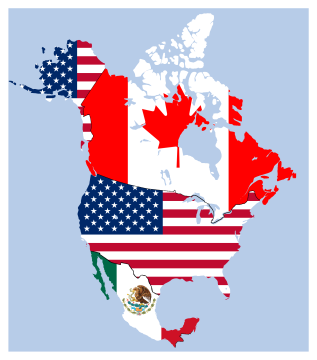
Under NAFTA’s common market, a supply chain of automotive assembly lines and parts makers has developed over the past 20 years, stretching some 2,500 miles, from Toronto through Detroit and the U.S. Midwest and south to the Mexican border states. This auto alley employs more than 1.5 million people; and though it encompasses three countries, it functions as one integrated production region, says Thomas Klier, an economist at the Federal Reserve Bank of Chicago.

There’s been so much investment in Mexico, intertwining both assembly lines and parts suppliers with U.S. and Canadian operations, that bringing final assembly back to the U.S. would be like taking eggs out of an omelet. A new car can contain upwards of 10,000 parts, says Klier, many of which move back and forth across borders as they’re combined into dashboards or transmissions, before being installed as a car rolls off the line. Labor-intensive parts such as a wiring harness or seats can be made in lower-cost Mexico, while more complex parts are made in the U.S.Big

As carmakers have standardized their operations, using the same chassis for multiple models, it’s become easier to shift production. If Trump levies a big tax on Mexican-made cars, it’s not completely certain that assembly and parts production will return to Michigan. Carmakers may instead shift production to a cheaper offshore site. “Then you have to play whack-a-mole with every low-cost country,” says Bernard Swiecki, senior analyst with the Center for Automotive Research in Michigan.

If that happens, the U.S. could lose about 31,000 jobs, according to CAR. Here’s why: About 40 percent of the parts in all Mexican-made products come from U.S. plants. The share is even more pronounced for the U.S. carmakers. GM gets more than 70 percent of its parts from the U.S. for its Mexican factories, says Alan Batey, the company’s North America president. Start building those cars in low-cost Asian plants to avoid tariffs, and the parts would likely follow, Swiecki says.

Crucially, it’s not only GM, Ford, and Fiat Chrysler that make cars in Mexico for the U.S. market. Volkswagen, Nissan, Honda, and Toyota do, too. If they all move production to their home countries, they’d have less reason to buy U.S. parts.

Read more of the original article at Bloomberg.

 

Jan 30, 2017connieshedron
Selling for PerformanceHow to Avoid ‘Gotcha’ Toll Fees From Your Rental-Car Company
Recent Posts
  • IMPROVLearning: How Comedy, Behavioral Science and AI Improve Fleet Safety
  • Improving Productivity with AI: Turning Fleet Data into Faster Decisions
  • National Safety Council Projects Increased Traffic Crash Risk during Fourth of July Weekend
  • Keep Every Heavy-Duty Maintenance Inspection on Track — Free Fullbay Checklist
  • Gain Data-Driven Insights into Commercial Vehicle Market Trends at Executive Leadership Summit
  • Last Chance to Save: Register for NAFA’s Maintenance Workshop
  • License Plate Cameras Are About to Start Tracking a Lot More Than Just Your Car
  • America’s Heavy EV Problem May End with Drivers Paying More
  • Trends in U.S. Drivers’ Perceptions and Attitudes Toward Vehicle Automation, 2019–2025
  • 2026 NETS Strength IN Numbers Conference: Early Bird Rates!
ASSOCIATION NEWS
Last Chance to Save: Register for NAFA’s Maintenance Workshop
How AFLA Is Positioning Itself for the Future of Fleet Mobility
‘Raise Your Hand and Get Involved’
NAFA Names 2026 Class of Fellows, Honoring Leaders in Fleet Management
Award Winners Honored at NAFA I&E
2026 NAFA I&E Seeks to Change Perceptions, Invigorate Fleets
NAFA Announces Lineup for Media Day at I&E 2026: Industry Leaders to Showcase the Latest Innovations
TECHNOLOGY
Improving Productivity with AI: Turning Fleet Data into Faster Decisions
Fleet Operations Are Changing – The Industry Needs to Evolve With Them
AI-Powered Vehicle Inspections Move Beyond the Checklist
Motive’s New Workforce Capabilities Aim to Improve Performance, Automate Rewards
AI + Human Insight: Why Fleet Leaders Need Both to Win in 2026
NTSB Finds Automation Overreliance Contributed to Two Fatal Ford BlueCruise Crashes
New AI Assistants Automate Fleet Data Analysis, Decision Making and More
CONFERENCES & WEBINARS
2026 NETS Strength IN Numbers Conference: Early Bird Rates!
AFLA 2026 – Keynotes Announced!
Private Fleets Flex at National Private Truck Council Conference
Free NAFA Webinar: Manage Your Fuel Cost Volatility
Registration Now Open for NETS Annual Conference
Early Bird Pricing for AFLA 2026 – Ending June 1
NAFA Online Seminar: Essentials of Fleet Management
INDUSTRY ANNOUNCEMENTS
Union Leasing Becomes Moventum Fleet Management as 70-Year Company Accelerates into Next Phase
Fleetio Wins Innovations Award at NAFA’s 2026 Institute & Expo
WIFM is heading to NAFA!
Cox Automotive Unveils Cox Fleet, Setting a New Standard for Fleet Uptime Nationwide
AFLA Canadian Fleet Professional of the Year Award: Nominations Open!
NAFA Webinar: Kickoff the 2026 100 Best Fleets Contest on December 4!
Join NAFA’s Free Fleet 101 Live Course

Fleet Management Weekly Newsletter Archive
Access to back issues of the FMW newsletter.

FMW Mobility
How mobility is rapidly changing the fleet management landscape.

Newsletter

Subscribe

FMW Fleet Videos
Video clips of industry leaders speaking on a variety of engaging hot topics in fleet.

2014-2020 © Fleet Management Weekly