By Alain Samaha, President, Teletrac Navman
April 22, 2026
Social inflation isn’t a new term to the insurance industry, but it’s becoming an urgent one for U.S. fleet operators. Unlike general economic inflation, which is tied to fuel prices, parts costs, and labor rates, social inflation is driven by legal and societal forces: shifting jury attitudes, the explosion of litigation funding, nuclear verdicts, and prolonged claims battles. And by nearly every measure, it’s accelerating.

Alain Samaha – Teletrac Navman
A U.S. Crisis With a Trucking Bull’s-Eye
The numbers are stark. In 2024, there were 135 lawsuits resulting in nuclear verdicts (jury awards exceeding $10 million) against corporate defendants, a 52% increase over 2023, according to research tracked by Marathon Strategies. The total value of those awards: $31.3 billion, more than double the prior year. Commercial auto claims are widely identified as the epicenter of this trend.
For fleet operators, the exposure is compounding. The Insurance Information Institute reports that social inflation and nuclear verdicts together have driven a $30 billion surge in commercial auto claim costs since 2012, with claim severity up 64% since 2015. The commercial auto combined ratio has exceeded 100% for 12 of the past 13 years, meaning insurers are paying out more in claims and expenses than they collect in premiums. That math gets passed directly to policyholders.
 In practical terms: auto liability premiums are rising between 10% and 30%. Physical damage coverage is up 20% to 25%. Umbrella liability has climbed 10% to 30%. Fleets with large vehicle counts, poor loss histories, or operations in what the American Tort Reform Foundation calls “judicial hellholes” – plaintiff-friendly jurisdictions like parts of California, Florida, Georgia, and New York – are seeing double-digit rate hikes and, in some cases, coverage restrictions and some carriers exiting the market entirely.
What’s Fueling Social Inflation
Three forces are driving social inflation into overdrive, and all three are U.S.-specific phenomena that fleet managers need to understand.
Third-party litigation funding (TPLF) has transformed the claims landscape. Outside investors now finance plaintiffs’ lawsuits in exchange for a cut of any settlement, a $16.1 billion industry in 2024, with 82% of U.S. law firm attorneys reporting use of litigation finance, up from just 9% in 2012. This capital removes the financial pressure on plaintiffs to settle early and extends litigation timelines, driving up defense costs for fleets and their insurers.
 Shifting jury attitudes are amplifying verdicts. Swiss Re research found that 76% of U.S. consumers now believe damage awards are too low, up from 58% in 2016. Among adults under 40, 83% believe jury damages are either too low or merely fair. As younger demographics increasingly populate jury pools, the environment for commercial defendants, especially trucking companies with perceived “deep pockets,” is becoming more hostile.
Fraudulent claims are a parallel problem. Research shows that 34% of fleets globally believe they’ve been impacted by fraudulent claims. While hard to quantify precisely, this feeds directly into the litigation ecosystem, inflating severity data and emboldening the plaintiff’s bar to pursue borderline cases.
The Fleet Manager’s Dilemma
Most U.S. fleet managers didn’t get into the business to track litigation trends. Yet 77% of fleets now cite rising litigation and legal costs as a direct concern. The insurance cost pressures they’re managing – such as premium hikes, tighter coverage terms, and higher deductibles – are downstream effects of a legal environment few have visibility into.
 Experts have all reported on how nuclear verdicts and commercial auto market hardening are forcing operators to rethink risk strategy from the ground up. The consensus: passive risk management–renewing coverage and hoping for the best– is no longer viable.
The Most Effective Defense: Video Evidence
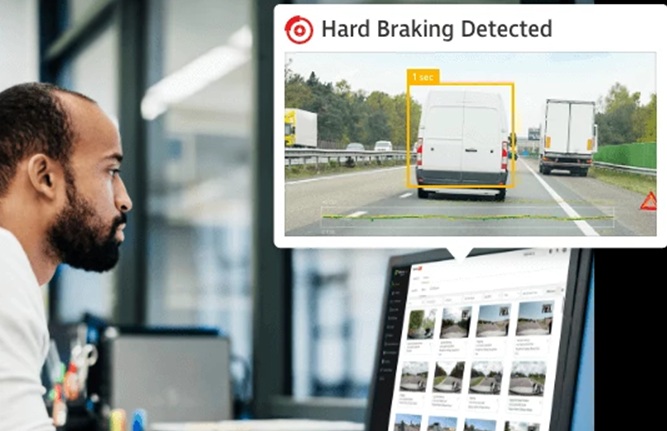
Dash cameras and AI-powered video telematics are now widely acknowledged by insurers as the single most effective tool for combatting social inflation at the fleet level.
The logic is straightforward: you cannot argue indefinitely against clear video evidence. When a plaintiff’s attorney or a third-party litigation funder evaluates whether a case is worth financing, the existence of exonerating footage fundamentally changes the calculus. False claims become untenable. Incorrect fault assignments, a core driver of inflated liability costs, can be challenged with precision.
 But the value of video evidence extends beyond claim defense. Forward-looking fleet operators are using the same footage internally, identifying risky behaviors before they result in an incident, delivering real-time in-cab coaching, and structuring tailored training programs around documented events. This dual use – exoneration when things go wrong, prevention so they go wrong less often – makes the ROI case compelling.
Insurers are increasingly validating this with usage-based insurance (UBI) models. Fleets using telematics and safety analytics can earn discounts of 15% to 25% by demonstrating consistently low-risk driving scores, according to industry data from 2025.
A Pivotal Moment for the Industry
The commercial auto insurance market is not going to self-correct in the short term. As long as litigation funding remains largely unregulated across most states, nuclear verdicts continue to climb, and jury attitudes remain skeptical of large corporate defendants, fleet insurance costs will remain elevated. State-level tort reforms – Georgia enacted litigation funding transparency legislation in April 2025, with other states considering similar measures – could provide some relief over time, but the industry cannot wait for legislative solutions.
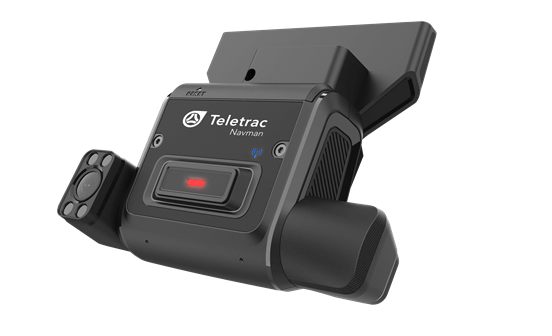
Teletrac Navman IQ Camera
What fleet operators can control is their own risk profile. Video evidence reduces incorrect fault assignment. It shortens claims resolution timelines. It deters fraudulent filings and supports driver coaching that lowers accident frequency. Each of these outcomes reduces exposure across the insurance ecosystem: fewer claims, smaller claims, faster claims, which is ultimately how premium pressure moderates.
The fleets that invest in evidence-based accountability now won’t just manage costs better in the near term. They’ll build the loss history and risk profile that gives them leverage with insurers when it counts. In a market where coverage availability itself is becoming a concern for high-risk operators, that leverage matters.
With nuclear verdicts at record levels, litigation funding institutionalized, and commercial auto remaining unprofitable for carriers, fleet operators face a straightforward question: what’s the cost of not having video evidence when the next claim lands?
To find out how Teletrac Navman can help your fleet fight social inflation, click here.