Truemag

  • Newsletters
  • Thought Leadership
  • Mobility
  • Safety
  • Work Trucks
  • Videos
  • Home
  • Subscribe
  • Contact Us
  • Media Kit
  • Who We Are

Tesla Adds High-Speed Autonomous Driving to Its Bag of Tricks

The New York Times

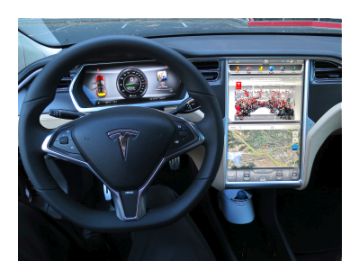
It is not every day you get to open a door and step into the future. But to pull the handle on a newly updated Tesla Model S this week and slide into the driver’s seat was to catch a glimpse of the auto industry’s plans to soon let cars drive us, rather than the other way around.

The updated Tesla, an already high-tech electric car that starts at about $75,000, was equipped with what the company calls Autopilot — a semiautonomous feature that allows hands-free, pedal-free driving on the highway under certain conditions. The car will even change lanes autonomously at the driver’s request (by hitting the turn signal) and uses sensors to scan the road in all directions and adjust the throttle, steering and brakes.

It is the first time that a production vehicle available to consumers will have such advanced self-driving capabilities. Or more to the point, the first time they will be unleashed for driving 70 miles per hour along twisty, though clearly marked, highways for long stretches. (Other manufacturers like Volvo and Mercedes-Benz recently introduced their own semiautonomous features, but limit the functions to lower speeds or require the driver to constantly touch the wheel.) And it’s perfectly legal. Among the states, only New York has any law prohibiting hands-free driving.

Thursday morning, Tesla owners woke up to discover that their vehicles can wirelessly download the new autopilot feature as a software update. That means the next time you see a Model S cruising next to you on the interstate, look closely: It may be driving itself. Autopilot is not free (the download costs $2,500), and it is not yet perfected (clear lane markings are needed, and bad weather can affect its abilities), but it works remarkably well under normal circumstances.

The feeling of gliding autonomously through highway traffic initially feels a bit unnerving, especially on the Washington area’s notoriously congested roads. But on a recent afternoon while testing Tesla’s autopilot, that feeling faded as I began to trust the car to keep its lane along the twisty highway that hugs the Potomac River in Virginia.

One of the most soothing aspects of the system was how natural the steering felt through the turns. To mimic a human driver is one of the big challenges automakers face in designing self-driving cars. That is because computers can be so perfect that they may constantly adjust to stay exactly in the middle of a lane, resulting in a lot of little jerky motions of the wheel that feels unnatural. Not the Tesla. It was silky smooth.

That does not mean, of course, that drivers can simply relax and let their minds wander. The car is skilled at keeping its lane, but when lane markings disappear or are significantly faded, you have to take over.

Read more of the original article in The New York Times.

Oct 21, 2015connieshedron
How Driverless Cars Will Radically Change Every Aspect of Our LivesWebinar: Fleet Planning 101
Recent Posts
  • Why Case Studies Close More Deals Than Product Brochures
  • California Just Became the Best Place to Buy a Brand-New EV
  • AFLA Membership Growth: Mary Saunders on Engagement, Volunteerism, and the Value of Connection
  • The Fleet Manager’s Breaking Point: Why AI Must Do More Than Advise
  • Four More Models Take Home Top Safety Pick+ Awards in Latest IIHS Ratings
  • Ford Can Now Stop Some Vehicles Starting, Even with the Key
  • All New Cars in the EU Now Need to Have a Camera Aimed at the Driver’s Face in the Latest Privacy Nightmare
  • WEX Grows EV Charging Network with Greenlane, Synop, and QuickCharge CPO Integrations
  • Moventum Fleet Management is Here!
  • WEX DriverDash Adds CITGO to Mobile Fuel Payments for Fleets
ASSOCIATION NEWS
AFLA Membership Growth: Mary Saunders on Engagement, Volunteerism, and the Value of Connection
How AFLA Is Positioning Itself for the Future of Fleet Mobility
Last Chance to Save: Register for NAFA’s Maintenance Workshop
‘Raise Your Hand and Get Involved’
NAFA Names 2026 Class of Fellows, Honoring Leaders in Fleet Management
Award Winners Honored at NAFA I&E
2026 NAFA I&E Seeks to Change Perceptions, Invigorate Fleets
TECHNOLOGY
The Fleet Manager’s Breaking Point: Why AI Must Do More Than Advise
All New Cars in the EU Now Need to Have a Camera Aimed at the Driver’s Face in the Latest Privacy Nightmare
The Grid Was Melting Down in Last Week’s Heat – Until EVs Came to the Rescue
Improving Productivity with AI: Turning Fleet Data into Faster Decisions
Hyundai Unveils New ‘Plasma Care UVC’ Cabin Sanitizer
Fleet Operations Are Changing – The Industry Needs to Evolve With Them
AI-Powered Vehicle Inspections Move Beyond the Checklist
CONFERENCES & WEBINARS
For The Leaders In The Room
2026 NETS Strength IN Numbers Conference: Early Bird Rates!
AFLA 2026 – Keynotes Announced!
Private Fleets Flex at National Private Truck Council Conference
Free NAFA Webinar: Manage Your Fuel Cost Volatility
Registration Now Open for NETS Annual Conference
Early Bird Pricing for AFLA 2026 – Ending June 1
INDUSTRY ANNOUNCEMENTS
Union Leasing Becomes Moventum Fleet Management as 70-Year Company Accelerates into Next Phase
Fleetio Wins Innovations Award at NAFA’s 2026 Institute & Expo
WIFM is heading to NAFA!
Cox Automotive Unveils Cox Fleet, Setting a New Standard for Fleet Uptime Nationwide
AFLA Canadian Fleet Professional of the Year Award: Nominations Open!
NAFA Webinar: Kickoff the 2026 100 Best Fleets Contest on December 4!
Join NAFA’s Free Fleet 101 Live Course

Fleet Management Weekly Newsletter Archive
Access to back issues of the FMW newsletter.

FMW Mobility
How mobility is rapidly changing the fleet management landscape.

Newsletter

Subscribe

FMW Fleet Videos
Video clips of industry leaders speaking on a variety of engaging hot topics in fleet.

2014-2020 © Fleet Management Weekly