By Linxup
March 11, 2026
If you’re managing a fleet, every dollar spent on fuel and every hour of maintenance makes a big difference to the bottom line. Sustainable fleet management is more than just an eco-friendly strategy — it’s a cost-saving technique that optimizes performance while reducing your fleet’s environmental impact.
Telematics and AI are the best tools to help fleets reach their sustainability goals, especially smaller fleets that need scalable and cost-effective solutions. These tools give you real-time data that turns abstract numbers into clear, measurable improvements. Here’s how the right technology and key strategies can help you build a more sustainable fleet.
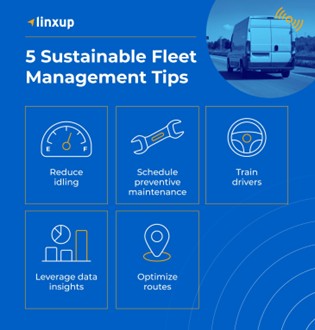
Core strategies for sustainable fleet management
The first step to a sustainable fleet solution is understanding and addressing the main areas where your fleet uses resources and generates emissions. These core strategies act as the foundation for an effective sustainability program.
Idling reduction
Excessive idling is one of the most significant but most preventable sources of fuel waste. The average long-haul truck burns a whole gallon of fuel while idling, generating unnecessary emissions for no productive work. For fleet operations with dozens of vehicles and sustainable fleet management goals, that adds up fast.
 Idle monitoring technology, like Linxup’s solutions, helps fleets cut unnecessary idling by giving managers real-time insights into driver habits. “We found that our customers idled 373,000 hours less from July 2024 to July 2025, which in turn means about 186,000 gallons… that’s over 1,650 metric tons of carbon dioxide,” notes Naeem Bari, co-founder of Linxup.
This major reduction shows just how important technology-enabled idle monitoring is by creating immediate sustainability improvements.
Preventive maintenance
Another fleet management best practice is keeping up with preventive maintenance. Well-maintained vehicles burn fuel more efficiently, produce fewer emissions, and help fleets avoid the expense of early vehicle replacement. Regular maintenance also prevents the environmental impacts of breakdowns, like towing, higher fuel use, and unexpected part replacements.
Driver coaching and training
Driver behavior is a major factor in safety and environmental impact. Aggressive driving habits like rapid acceleration, harsh braking, and excessive speeding can increase fuel consumption by up to 30%. By training and coaching drivers, you not only lower the environmental impact, but also improve their safety.
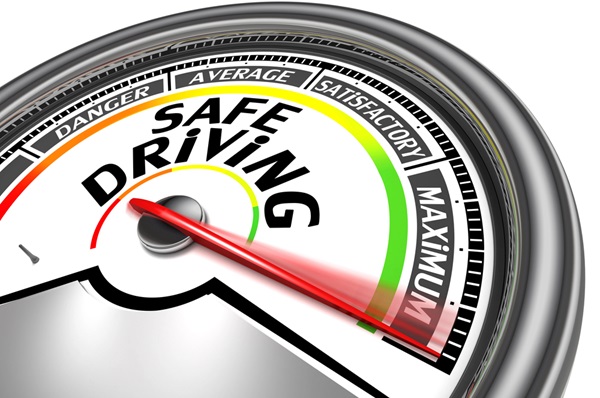 Bari explains that people often view safety and sustainability as separate goals. The truth is that safe driving naturally supports both by reducing harsh braking, speeding, and unnecessary fuel use, which leads to lower emissions and operating costs. “It not only reduces the risk profile of that company, but it also increases the sustainability profile as well,” Bari says.
Accountability reduces unsafe and inefficient driving habits as drivers work to change their poor behavior. The key to effectively implementing change that doesn’t overwhelm and annoy drivers is by focusing on one area at a time to improve. From there, you can work toward using a driver scorecard that combines multiple factors into an easy-to-understand grade. For example, a driver might see “Tom has an A because he idled less and did not tailgate.” This simplicity makes sustainability and safety something attainable for drivers who previously had no visibility into their performance.
Telematics and data-driven management
 Real-time tracking, telematics systems, and fleet analytics make it easier for fleet managers to identify any and all hurdles to sustainability goals. For example, your telematics system might automatically flag issues like idling or an inefficient route, making it much easier to spot and fix common fleet management challenges.
Route optimization
Adjusting routes is the best (and also probably the easiest) way to cut back on unnecessary driving miles, which means lower fuel consumption and emissions. Even small adjustments add up to real savings over time.
Considering real-time factors like weather, road closures, traffic conditions, and even static variables such as distance and job priority can help managers choose the most efficient path. Drivers can avoid poor road conditions or being stuck in traffic, which means more jobs and lower fuel costs.
Technology for sustainable fleets
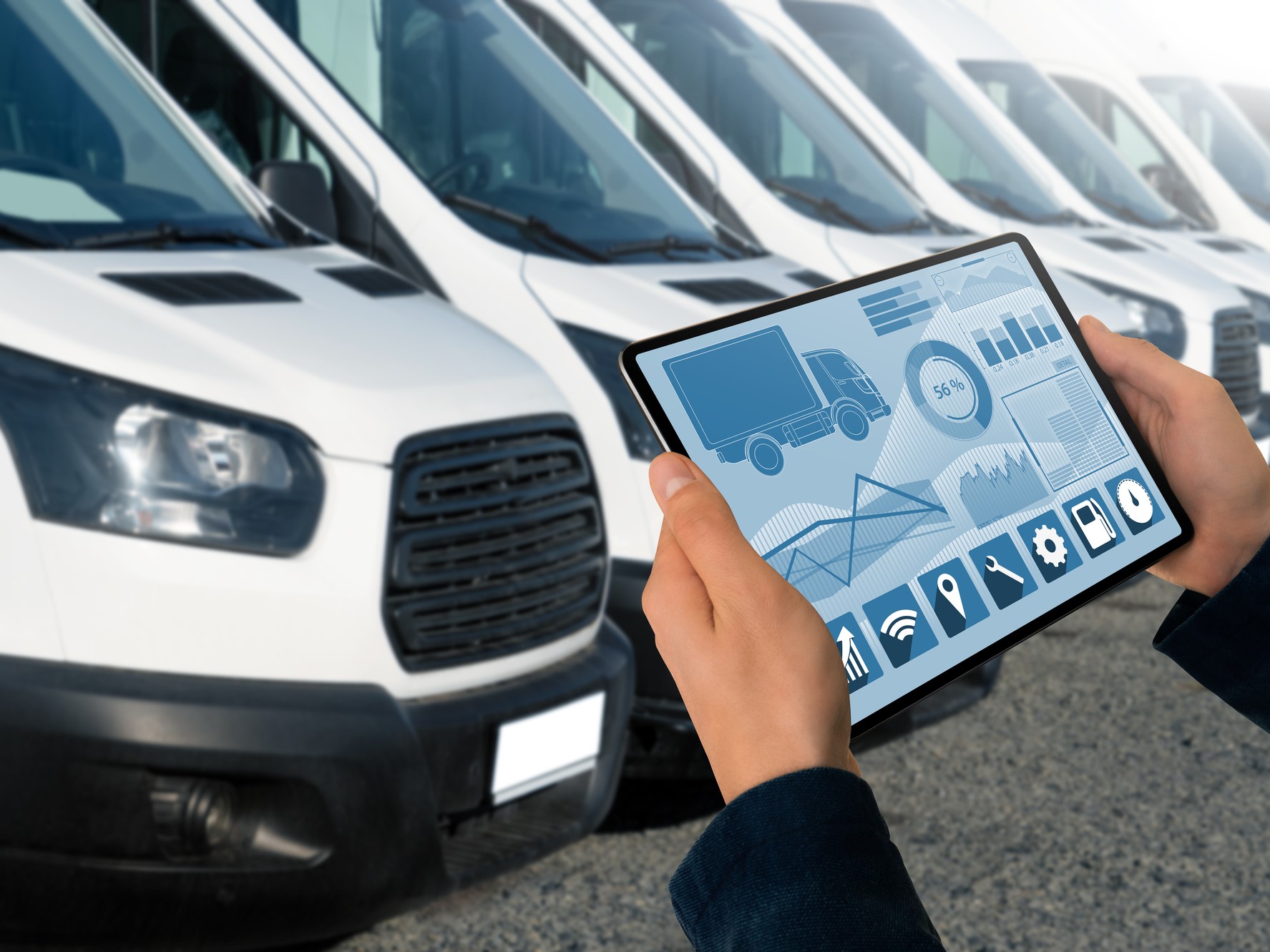 Tools that measure and provide real-time monitoring make it easier to track sustainability progress. Features like customizable alerts and driver feedback turn goals from quarterly aspirations into measurable results.
Telematics and real-time tracking
Telematics solutions made for small to medium fleets focus on accessibility, real-time tracking, and ease of use. The learning curve is typically low, making them accessible to anyone.
Key data points monitored include:
- Engine on/off and idle time: Monitors exactly when vehicles run and identifies unnecessary idling
- Speeding and posted speed compliance: Monitors excessive speeding and metrics that can improve fuel efficiency
- Harsh driving events: Captures hard braking, tailgating, and jackrabbit starts that increase accident risk and waste fuel
This real-time visibility prepares fleet managers to respond to issues as they happen, rather than discovering them days or weeks later when corrective actions become more difficult and expensive.
The future of fleet sustainability
 Fleet sustainability continues to change as businesses look for new ways to reduce their environmental impact and improve operational efficiency.
AI and generative insights
With the help of artificial intelligence systems and alerts, fleet managers can anticipate needs and automate routine decisions based on patterns in the data.
Automated action takes this a step further by having AI potentially act on fleet managers’ behalf. “We [want to] get to a point where we can solve two problems. One is we [want to] be able to anticipate the exceptions you would set up, and set those up for you. And when possible, solve it for you in the manner that you will solve it,” explains Bari. This includes automatically rewarding improved driver habits or adjusting maintenance schedules.
The shift to EVs
 Commercial EV batteries cost 30% less than they did in 2020, making EV fleets more realistic and accessible. EVs are already making big changes for sustainability for fleets that have started using them, cutting back on tailpipe emissions, and reducing fuel consumption.
This transition means managers need to pay more attention to fleet limitations, changing maintenance needs, and total cost of ownership. You can use telematics to maximize EV efficiency through optimized routing that considers charging station locations and real-time range calculations.
Global initiatives
 Global sustainability and safety initiatives like Vision Zero are pushing fleets to rethink how they operate with a goal of eliminating traffic deaths and serious injuries. It supports fleet sustainability because safer drivers naturally use less fuel and drive more efficiently.
One way to implement these practices is by using context-aware speed limits. For example, instead of treating 45 mph zones all the same, use context-aware systems to recognize that some roads allow for higher speeds, while others require more caution because of curves, intersections, or common traffic patterns. This promotes driver alertness and situational awareness.
Driving fleet sustainability
Sustainable fleet management is both an environmental goal and a business opportunity for fleets that use data to make smarter decisions. The strategies outlined above, like idling reduction and preventive maintenance, work together to create a thorough sustainability program that delivers measurable results.
To find out how Linxup can help you improve your fleet’s sustainability, click here.