Truemag

  • Newsletters
  • Thought Leadership
  • Mobility
  • Safety
  • Work Trucks
  • Videos
  • Home
  • Subscribe
  • Contact Us
  • Media Kit
  • Who We Are

Stuck in Traffic, Polluting the Inside of Our Cars

The New York Times

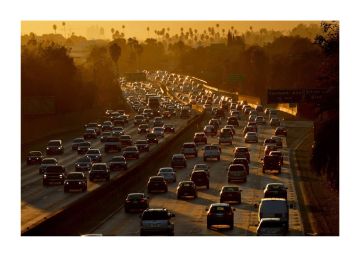
The average American commuter spent 50 hours in traffic last year. As a nation, we spent eight billion hours sitting in our cars, waiting for lights to change, for the driver ahead to sneak into that parking spot, for an accident to be cleared.

That’s not much more time than many Europeans spend in cars. According to Inrix, a roadway and traffic analytics company, drivers and passengers in Belgium spent 44 hours in traffic last year; in Germany, 39 hours.

Wherever it happens, new research suggests that all that sitting and waiting is exposing us to more pollutants than we’d take in if were we cruising along.

According to a study published Thursday in Environmental Science: Processes & Impacts, pollution levels inside cars at red lights or in traffic jams are up to 40 percent higher than when traffic is moving.The scientists took their measurements inside a car as it traveled on a six-kilometer loop, passing through 10 traffic intersections. They tracked the concentrations of different-size particles of air pollution — ranging from course to fine — at each intersection.

Air quality is already a problem outside of cars: More than 80 percent of people living in cities where pollution is tracked are exposed to air quality levels below World Health Organization limits. The W.H.O. has estimated that poor air quality is responsible for the deaths of 3.7 million people younger than 60 in 2012.

Researchers at the University of Surrey in England took to the streets of Guildford, “a typical English town,” to look at the effects of traffic on concentrations of polluting particles. They also analyzed how ventilation settings changed those concentrations inside of cars.

In a car stuck in traffic, shutting all the windows and turning off the fan or heat reduced concentration doses of the smallest, most hazardous particles by up to 76 percent.

The researchers also found an increase in smaller particles inside the vehicle compared with larger ones when the heat was off and fans were on full blast, drawing in air from outside. Those findings suggest that the ventilation system was more effective at filtering out larger particles than smaller ones while stopped at intersections, reducing the concentration doses of those particles up to 68 percent, they said.

And while they were only at traffic intersections for about 7 percent of total commuting time on average, the time accounted for as much as 10 percent of their exposure to harmful particles. The exposure was more than six times greater in cars with open windows than for pedestrians at three- or four-way intersections.

So when you’re stopped at an intersection, roll up the windows, and breathe easier.

 

Aug 31, 2016connieshedron
Michael Dolan Named Chief Information Security Officer at ElementYour Decisions Drive Your Safety -- and Your Career
Recent Posts
  • Why the Traditional Vehicle Ordering Cycle No Longer Works
  • DASH Breaks Ground on DC Metro Region’s First On-Route Electric Bus Chargers
  • IMPROVLearning: How Comedy, Behavioral Science and AI Improve Fleet Safety
  • Improving Productivity with AI: Turning Fleet Data into Faster Decisions
  • National Safety Council Projects Increased Traffic Crash Risk during Fourth of July Weekend
  • Keep Every Heavy-Duty Maintenance Inspection on Track — Free Fullbay Checklist
  • Gain Data-Driven Insights into Commercial Vehicle Market Trends at Executive Leadership Summit
  • Last Chance to Save: Register for NAFA’s Maintenance Workshop
  • License Plate Cameras Are About to Start Tracking a Lot More Than Just Your Car
  • America’s Heavy EV Problem May End with Drivers Paying More
ASSOCIATION NEWS
Last Chance to Save: Register for NAFA’s Maintenance Workshop
How AFLA Is Positioning Itself for the Future of Fleet Mobility
‘Raise Your Hand and Get Involved’
NAFA Names 2026 Class of Fellows, Honoring Leaders in Fleet Management
Award Winners Honored at NAFA I&E
2026 NAFA I&E Seeks to Change Perceptions, Invigorate Fleets
NAFA Announces Lineup for Media Day at I&E 2026: Industry Leaders to Showcase the Latest Innovations
TECHNOLOGY
Improving Productivity with AI: Turning Fleet Data into Faster Decisions
Fleet Operations Are Changing – The Industry Needs to Evolve With Them
AI-Powered Vehicle Inspections Move Beyond the Checklist
Motive’s New Workforce Capabilities Aim to Improve Performance, Automate Rewards
AI + Human Insight: Why Fleet Leaders Need Both to Win in 2026
NTSB Finds Automation Overreliance Contributed to Two Fatal Ford BlueCruise Crashes
New AI Assistants Automate Fleet Data Analysis, Decision Making and More
CONFERENCES & WEBINARS
2026 NETS Strength IN Numbers Conference: Early Bird Rates!
AFLA 2026 – Keynotes Announced!
Private Fleets Flex at National Private Truck Council Conference
Free NAFA Webinar: Manage Your Fuel Cost Volatility
Registration Now Open for NETS Annual Conference
Early Bird Pricing for AFLA 2026 – Ending June 1
NAFA Online Seminar: Essentials of Fleet Management
INDUSTRY ANNOUNCEMENTS
Union Leasing Becomes Moventum Fleet Management as 70-Year Company Accelerates into Next Phase
Fleetio Wins Innovations Award at NAFA’s 2026 Institute & Expo
WIFM is heading to NAFA!
Cox Automotive Unveils Cox Fleet, Setting a New Standard for Fleet Uptime Nationwide
AFLA Canadian Fleet Professional of the Year Award: Nominations Open!
NAFA Webinar: Kickoff the 2026 100 Best Fleets Contest on December 4!
Join NAFA’s Free Fleet 101 Live Course

Fleet Management Weekly Newsletter Archive
Access to back issues of the FMW newsletter.

FMW Mobility
How mobility is rapidly changing the fleet management landscape.

Newsletter

Subscribe

FMW Fleet Videos
Video clips of industry leaders speaking on a variety of engaging hot topics in fleet.

2014-2020 © Fleet Management Weekly