Truemag

  • Newsletters
  • Thought Leadership
  • Mobility
  • Safety
  • Work Trucks
  • Videos
  • Home
  • Subscribe
  • Contact Us
  • Media Kit
  • Who We Are

Say Goodbye to the Steering Wheel

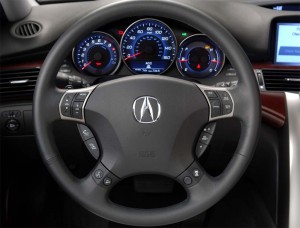
Google will soon begin rolling out the first of 100 self-driving microcars, most of which will have some familiar features missing, namely such traditional necessities as a steering wheel, brake and gas pedal.

And while the Google vehicles will just be prototypes designed to test the tech firm’s autonomous driving technology, a survey of industry experts anticipates that the basic design could soon become the norm, rather than the exception.

A separate study by Navigant Research  predicted about 95 million autonomous vehicles a year will be sold by 2035.

That figure is “reasonable to me,” said Alberto Broggi, a professor at the University of Parma, in Italy, a leading researcher on autonomous vehicles. But he questions whether all of those vehicles will be fully autonomous or still allow motorists to take control if they want – or need – to.

A question submitted to the experts by TheDetroitBureau.com found that fully half don’t see the Google prototype becoming a viable solution for at least the next 20 years, meaning steering wheels, horns and mirrors are likely here to stay – for awhile, anyway.

While experts might quibble over such specifics, there is an overwhelming consensus that autonomous vehicles are on their way. And they could arrive sooner than most had thought possible just a decade ago.

Nissan CEO Carlos Ghosn reiterated his company’s plans to have its first fully self-driving car – albeit still with driver controls – on the road by 2020. And Ghosn said that between now and then Nissan will roll out a number of semi-autonomous technologies. That includes a system that will be able to automatically maneuver a busy urban intersection without driver input.

Broggi cautions that “there are still a number of challenges that have not yet been solved,” and which will need to be dealt with before Nissan, or Google, or anyone else can deliver a fully autonomous vehicle that can completely take over driving duties from a human motorist. The biggest issue is “getting everything to work every single minute of the day.”

What will it take to get there? The critical breakthrough will come with the development of advanced sensors that will serve as the eyes and ears of tomorrow’s self-driving vehicles. The bigger challenge will be giving autonomous vehicles the sort of artificial intelligence needed to handle a situation that doesn’t fit into the rules.

Jul 20, 2014admin
GPS Tracking Solutions Provide Helpful Training ResourcesNAFA’s 2014 International Fleet Academy Touts Hard-Hitting Global Fleet Education
Recent Posts
  • Why Case Studies Close More Deals Than Product Brochures
  • California Just Became the Best Place to Buy a Brand-New EV
  • AFLA Membership Growth: Mary Saunders on Engagement, Volunteerism, and the Value of Connection
  • The Fleet Manager’s Breaking Point: Why AI Must Do More Than Advise
  • Four More Models Take Home Top Safety Pick+ Awards in Latest IIHS Ratings
  • Ford Can Now Stop Some Vehicles Starting, Even with the Key
  • All New Cars in the EU Now Need to Have a Camera Aimed at the Driver’s Face in the Latest Privacy Nightmare
  • WEX Grows EV Charging Network with Greenlane, Synop, and QuickCharge CPO Integrations
  • Moventum Fleet Management is Here!
  • WEX DriverDash Adds CITGO to Mobile Fuel Payments for Fleets
ASSOCIATION NEWS
AFLA Membership Growth: Mary Saunders on Engagement, Volunteerism, and the Value of Connection
How AFLA Is Positioning Itself for the Future of Fleet Mobility
Last Chance to Save: Register for NAFA’s Maintenance Workshop
‘Raise Your Hand and Get Involved’
NAFA Names 2026 Class of Fellows, Honoring Leaders in Fleet Management
Award Winners Honored at NAFA I&E
2026 NAFA I&E Seeks to Change Perceptions, Invigorate Fleets
TECHNOLOGY
The Fleet Manager’s Breaking Point: Why AI Must Do More Than Advise
All New Cars in the EU Now Need to Have a Camera Aimed at the Driver’s Face in the Latest Privacy Nightmare
The Grid Was Melting Down in Last Week’s Heat – Until EVs Came to the Rescue
Improving Productivity with AI: Turning Fleet Data into Faster Decisions
Hyundai Unveils New ‘Plasma Care UVC’ Cabin Sanitizer
Fleet Operations Are Changing – The Industry Needs to Evolve With Them
AI-Powered Vehicle Inspections Move Beyond the Checklist
CONFERENCES & WEBINARS
For The Leaders In The Room
2026 NETS Strength IN Numbers Conference: Early Bird Rates!
AFLA 2026 – Keynotes Announced!
Private Fleets Flex at National Private Truck Council Conference
Free NAFA Webinar: Manage Your Fuel Cost Volatility
Registration Now Open for NETS Annual Conference
Early Bird Pricing for AFLA 2026 – Ending June 1
INDUSTRY ANNOUNCEMENTS
Union Leasing Becomes Moventum Fleet Management as 70-Year Company Accelerates into Next Phase
Fleetio Wins Innovations Award at NAFA’s 2026 Institute & Expo
WIFM is heading to NAFA!
Cox Automotive Unveils Cox Fleet, Setting a New Standard for Fleet Uptime Nationwide
AFLA Canadian Fleet Professional of the Year Award: Nominations Open!
NAFA Webinar: Kickoff the 2026 100 Best Fleets Contest on December 4!
Join NAFA’s Free Fleet 101 Live Course

Fleet Management Weekly Newsletter Archive
Access to back issues of the FMW newsletter.

FMW Mobility
How mobility is rapidly changing the fleet management landscape.

Newsletter

Subscribe

FMW Fleet Videos
Video clips of industry leaders speaking on a variety of engaging hot topics in fleet.

2014-2020 © Fleet Management Weekly