Truemag

  • Newsletters
  • Thought Leadership
  • Mobility
  • Safety
  • Work Trucks
  • Videos
  • Home
  • Subscribe
  • Contact Us
  • Media Kit
  • Who We Are

For Some Safety Experts, Uber’s Self-Driving Taxi Test isn’t Something to Hail

The Washington Post

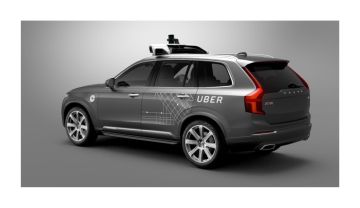
Uber’s decision to bring self-driving taxis to the streets of Pittsburgh this week is raising alarms among a swath of safety experts who say that the technology is not nearly ready for prime time.

The unprecedented experiment will launch even though Pennsylvania has yet to pass basic laws that permit the testing of self-driving cars or rules that would govern what would happen in a crash. Uber is also not required to pass along any data from its vehicles to regulators.

Meanwhile, researchers note, autonomous cars have been thrown off by bridges, a particular problem in Pittsburgh, which has more bridges than any other major U.S. city.

“They are essentially making the commuters the guinea pigs,” said Joan Claybrook, a consumer-protection advocate and former head of the National Highway Traffic Safety Administration. “Of course there are going to be crashes. You can do the exact same tests without having average citizens in your car.”

But advocates of autonomous vehicles say that the technology might never have happened if companies had to wait for governments to pass rules first. With nearly 37,000 Americans dying in car crashes every year, largely because of driver errors, technologists have stressed the critical need to push forward on testing driverless cars on public roads.

In many ways, these competing views, brought into stark relief by Uber’s Pittsburgh project, reflect the wider tension over how innovation in America should take place.

Pittsburgh might be the exact environment that innovators love to leap into — a legal void that can be defined by technologists, not bureaucrats. The question is how fast, and under what conditions, should the testing of a life-changing technology occur. While many companies, including Google and General Motors, are conducting trials of automatic vehicles on public roads, Uber is the first to bring everyday commuters along for the ride.

“We’ve seen that this is coming — faster than anyone had imagined, ” said Roger Cohen, policy director for Pennsylvania’s Department of Transportation, who said that Uber was not legally required to ask for regulators’ permission before its launch. “Current law, in its silence, is permitting it by not prohibiting it.”

Uber’s Pittsburgh project isn’t only the most high-stakes test of a promising, nascent technology. It is also a test of a belief that runs deep in the Silicon Valley DNA. That ethos holds as an article of faith that innovation will always be far ahead of the rules. It sees the world as a laboratory in which life can be made better when innovators are afforded the freedom to experiment.

To read more of the original article go to The Washington Post.

Sep 11, 2016connieshedron
Autonomous Vehicles May Reduce US Motor Premiums by More Than 40 Percent by 2050Q&A with Mercury COO, Kathe Carter: Objective, Unbiased Advice and Service
Recent Posts
  • Why the Traditional Vehicle Ordering Cycle No Longer Works
  • DASH Breaks Ground on DC Metro Region’s First On-Route Electric Bus Chargers
  • IMPROVLearning: How Comedy, Behavioral Science and AI Improve Fleet Safety
  • Improving Productivity with AI: Turning Fleet Data into Faster Decisions
  • National Safety Council Projects Increased Traffic Crash Risk during Fourth of July Weekend
  • Keep Every Heavy-Duty Maintenance Inspection on Track — Free Fullbay Checklist
  • Gain Data-Driven Insights into Commercial Vehicle Market Trends at Executive Leadership Summit
  • Last Chance to Save: Register for NAFA’s Maintenance Workshop
  • License Plate Cameras Are About to Start Tracking a Lot More Than Just Your Car
  • America’s Heavy EV Problem May End with Drivers Paying More
ASSOCIATION NEWS
Last Chance to Save: Register for NAFA’s Maintenance Workshop
How AFLA Is Positioning Itself for the Future of Fleet Mobility
‘Raise Your Hand and Get Involved’
NAFA Names 2026 Class of Fellows, Honoring Leaders in Fleet Management
Award Winners Honored at NAFA I&E
2026 NAFA I&E Seeks to Change Perceptions, Invigorate Fleets
NAFA Announces Lineup for Media Day at I&E 2026: Industry Leaders to Showcase the Latest Innovations
TECHNOLOGY
Improving Productivity with AI: Turning Fleet Data into Faster Decisions
Fleet Operations Are Changing – The Industry Needs to Evolve With Them
AI-Powered Vehicle Inspections Move Beyond the Checklist
Motive’s New Workforce Capabilities Aim to Improve Performance, Automate Rewards
AI + Human Insight: Why Fleet Leaders Need Both to Win in 2026
NTSB Finds Automation Overreliance Contributed to Two Fatal Ford BlueCruise Crashes
New AI Assistants Automate Fleet Data Analysis, Decision Making and More
CONFERENCES & WEBINARS
2026 NETS Strength IN Numbers Conference: Early Bird Rates!
AFLA 2026 – Keynotes Announced!
Private Fleets Flex at National Private Truck Council Conference
Free NAFA Webinar: Manage Your Fuel Cost Volatility
Registration Now Open for NETS Annual Conference
Early Bird Pricing for AFLA 2026 – Ending June 1
NAFA Online Seminar: Essentials of Fleet Management
INDUSTRY ANNOUNCEMENTS
Union Leasing Becomes Moventum Fleet Management as 70-Year Company Accelerates into Next Phase
Fleetio Wins Innovations Award at NAFA’s 2026 Institute & Expo
WIFM is heading to NAFA!
Cox Automotive Unveils Cox Fleet, Setting a New Standard for Fleet Uptime Nationwide
AFLA Canadian Fleet Professional of the Year Award: Nominations Open!
NAFA Webinar: Kickoff the 2026 100 Best Fleets Contest on December 4!
Join NAFA’s Free Fleet 101 Live Course

Fleet Management Weekly Newsletter Archive
Access to back issues of the FMW newsletter.

FMW Mobility
How mobility is rapidly changing the fleet management landscape.

Newsletter

Subscribe

FMW Fleet Videos
Video clips of industry leaders speaking on a variety of engaging hot topics in fleet.

2014-2020 © Fleet Management Weekly