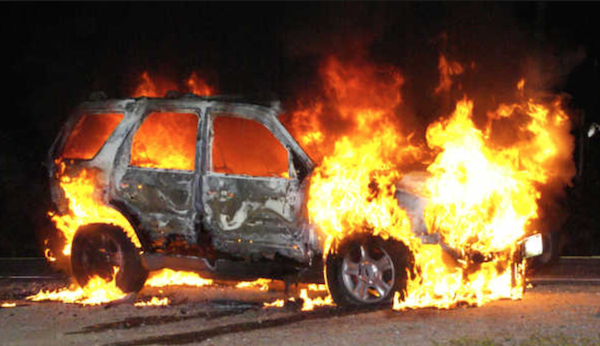
As terror attacks around the world, the Brexit vote in the UK, and often-strident attacks on globalization make clear, discussion of a riskier world is not a media invention. For all sorts of reasons, the pillars of the post-World War II global order, including ever freer trade and investment, are under stress.
While individual companies can do little to impact these geopolitical trends, they can—and should—take steps to minimize the growing risks they pose to employees, property and operations.
Employee compensation is usually an organization’s largest expense. Right behind it is vehicle fleets. As global political risk and even violence increases, so do the threats to vehicles, their drivers and passengers and their cargo.
A recent study of two years of fleet claims identifies specific risks and suggests methods by which organizations can manage them. The claims ranged from $2.68 to $65,747.59 in 2014-15 and from $20.80 to $119,555.22 in 2015-16.
Fatalities and Attendant Risks Can be Reduced
While most claims are for collisions (see below), a significant percentage of claims include a fatality or injury – 16% in 2014-15 and 14% in 2015-16. There is anecdotal evidence that injuries may be significantly under-reported. This likely has to do with reputational factors. Top countries for injuries and fatalities include the Democratic Republic of Congo (DRC), Uganda, Chad, Iraq, and South Sudan.
Injuries, and particularly fatalities, represent the potential for sizeable liability claims. They also carry large reputational risks, including negative media and public attention. This, in turn, can negatively impact key relationships with partners, governments, investors, donors and others.
Effective risk management strategies include comprehensive approaches to reduce injuries and fatalities, including tailored driver training, assistance with route determination and other measures. Many incidents are happening in situations with overcrowding – such as refugee camps and may involve children. Understanding how to adapt to these conditions is critical for drivers.
Local Policies Not Enough
As noted earlier, and might be expected, the majority of claims are collisions– simple road accidents. Importantly, five percent to 11 percent of those claims include third parties, who may be obligated to pay the claim. Many countries require local third party liability coverage. However, these local policies often have limited coverage with low limits. For example, some local policies only cover bodily injuries and do nothing for property damage. Coverage limits may be fairly low and inadequate in the event a foreign national is injured.
In addition, local policies often cover limited jurisdiction or territories and may not cover suits brought outside the local jurisdiction. This can have significant implications for organizations operating in multiple areas.
The easiest way to address these shortfalls is to purchase additional global excess liability coverage that protects a company from claims brought against them anywhere in the world at the necessary limits.
Political Violence Includes Many Things
Claims on vehicles due to political violence (12% in 2014-15 and 8% in 2015-16) are significant. As important, they represent high dollar value amounts (17% of all dollar claims in 2014-15 and 16% in 2015-16). They are also concentrated. Forty-two percent of all claims filed in 2014-15 and 39% in 2015-16 originated in 22 countries.
While the study indicates collisions greatly outweigh the number of political violence claims, the cost of political violence claims is greater than the average claim. Yet even with the prevalence of these claims, and their elevated cost, many organizations still do not purchase political violence coverage.
The popular image of political violence in regard to fleets is an IED exploding under a truck. The reality is much broader. Political violence claims are frequently attributed to strikes, terrorism, riots, civil disobedience, malicious damage, sabotage—anything that can damage something that affords safe travel for employees.
An additional element associated with political unrest is confiscation and forced abandonment. There is an increased concerns related to government or non-state actors confiscating vehicles or companies having to abandon vehicles to evacuate a country on short notice.
As these events unfortunately become more common, political violence coverage can be a cost-effective way to minimize the risks posed by “just the way things are” in much of the world now, but must be purchases through an experienced insurance solution provider The scope of political violence coverage is broad and a policy should cover your specific needs based on type of operations and geographic location.
Vehicle fleets are a large and, for many companies, growing cost. This is the result of more vehicles operating in more places, and more expensive vehicles. Taking into account the “new normal” of increased political risk and even violence can reduce vehicle fleet risk. The prudent move is to make certain one’s risk management strategy, including insurance, reflects the world’s current realities.
Written by Smita Bhargava, who is vice president of special programs and risks at Clements Worldwide.