|
|
 |
There’s a clear ceiling to the notion that bigger is safer, new research from the Insurance Institute for Highway Safety shows.
For vehicles that weigh less than the fleet average, the risk that occupants will be killed in a crash decreases substantially for every 500 pounds of additional weight. But those benefits top out quickly. For vehicles that weigh more than the fleet average, there’s hardly any decrease in risk for occupants associated with additional poundage.
“For American drivers, the conventional wisdom is that if bigger is safer, even bigger must be safer still,” IIHS President David Harkey said. “These results show that isn’t true today. Not for people in other cars. And — this is important — not for the occupants of the large vehicles themselves.”
via IIHS
|
Some of America’s bestselling vehicles will see their manufacturing costs soar if President Trump follows through on his threat to slap 25% tariffs on goods made in Canada and Mexico. For the time being, tariffs remain merely a looming threat.
Of the top 25 bestselling vehicles in the U.S. market last year, nine were manufactured in Canada or Mexico, including the Ram 1500, Toyota RAV4, Honda Civic, Chevrolet Equinox, Toyota Tacoma, and Nissan Sentra, among others.
Even if your car is not made north or south of the border, parts of it, including engines, transmissions, and other components, are likely made there.
via autoblog
|
NAFA Fleet Management Association (NAFA) is thrilled to announce the addition of a new Indoor EV Test Track, alongside the return of the popular Ride & Drive Experience, at its 2025 Institute & Expo (I&E), taking place April 28-30, 2025, in Long Beach, California.
“We’re excited to offer these experiences to our attendees, providing them with different ways to interact with the latest in fleet technology,” said Bill Schankel, CAE, CEO of NAFA. “These events give fleet professionals the chance to experience cutting-edge vehicles up close, from indoor EV ride-alongs in the Expo Hall to the dynamic outdoor test drives that showcase vehicle performance in real-world conditions.”
Read the Press Release
|
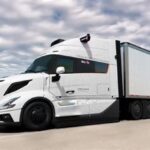
Self-driving truck startup Waabi is partnering with Volvo Autonomous Solutions to jointly develop and deploy autonomous trucks, an important milestone as it gets closer to a commercial launch.
“We now have everything we need to scale our product,” Raquel Urtasun, founder and CEO of Waabi, told TechCrunch. “We have the next-generation AV 2.0 technology, we have an approach that is much more capital efficient, and a much faster path to market.”
Waabi plans to launch commercial pilots with the Volvo-built trucks in Texas over the next couple of months, with a product-ready driverless demonstration on public roads planned for the end of 2025.
via TechCrunch
|
|
|
|
|

Tariffs for Canada and Mexico may be temporarily delayed, but uncertainty remains. According to the latest S&P Global Mobility analysis, if these tariffs are implemented, a 25% duty on the average $25,000 landed cost of a vehicle from Mexico and Canada could add up to $6,250 to the price of a new vehicle.
“The automotive industry is at a critical juncture,” said Michael Robinet, vice president of forecasting at S&P Global Mobility. “The proposed tariffs could not only inflate vehicle prices but also disrupt production schedules, with estimates suggesting a potential 30% decrease in production for high-exposure vehicles once tariffs are enacted, even if only for the short-term. This will lead to ripple effects across the supply chain, impacting OEMs, suppliers and, ultimately, consumers.”
READ MORE
|
|

By Bill Bishop, SVP of Sales and Marketing, FLD Remarketing
When I say that the white metal market found “familiar” patterns in 2024, that was a good thing. And something I frankly think we’ll see more of in 2025.
As we pointed out in our 2024 year-end review, many of the talking heads that cover asset remarketing believe 2025 could be the breakout year we’ve all been waiting for since the pandemic cut short what was at the time a stable – and for the most part profitable – market.
Fleets have normalized in size, have the assets they need, and vehicle availability has improved, so I’m not expecting any huge expansion in 2025.
READ MORE
|
|

By Jay Horak, CTO, Opus IVS
The fleet industry is experiencing significant changes, particularly with the increasing prevalence of advanced driver-assistance systems (ADAS) in modern vehicles. While electric vehicles (EV) have captured headlines, it’s ADAS that is presenting the most immediate challenges for fleet operators.
The intricate technologies behind ADAS—such as lane-keeping assistance, collision avoidance, and automated braking—are pushing fleets to invest heavily in advanced diagnostic solutions and technician training to stay ahead.
Fleet operators must adopt a forward-thinking approach, leveraging partnerships with solution providers and accessing the latest repair protocols to stay ahead.
READ MORE
|
|
|
|