By Michael Quimby, Chief Operating Officer at TFS, an OnPoint Group Company
April 4, 2022
When it comes to managing, optimizing and maintaining our material handling equipment fleet, such as the forklifts relied upon by our nation’s largest manufacturers and distributors, our approach is still stuck in the 1990s.
The fleet management playbook for on-road trucks and commercial vehicles has matured rapidly over the last 25 years. We’ve made great strides when it comes to operational productivity, vehicle and equipment safety, and the environmental footprint we leave behind. The progress we’ve made as a fleet management industry has been inspiring to watch, and it gets me excited to see what’s next for the industry in the years ahead.
But for some reason, the ways in which we monitor and manage our other important fleet – our material handling equipment vehicles – still mirror the tactics utilized by fleet managers decades ago. Systems and processes are incredibly outdated, lacking in investment and efficiency, and rarely if ever evaluated for potential improvement.
It’s a major missed opportunity for our manufacturing and distributing facilities, especially because material handling equipment is a top 15 spend category, and the demand for it has never been greater. In fact, according to North American ITA statistics, more forklift chassis were ordered in 2021 than in any other year in history.
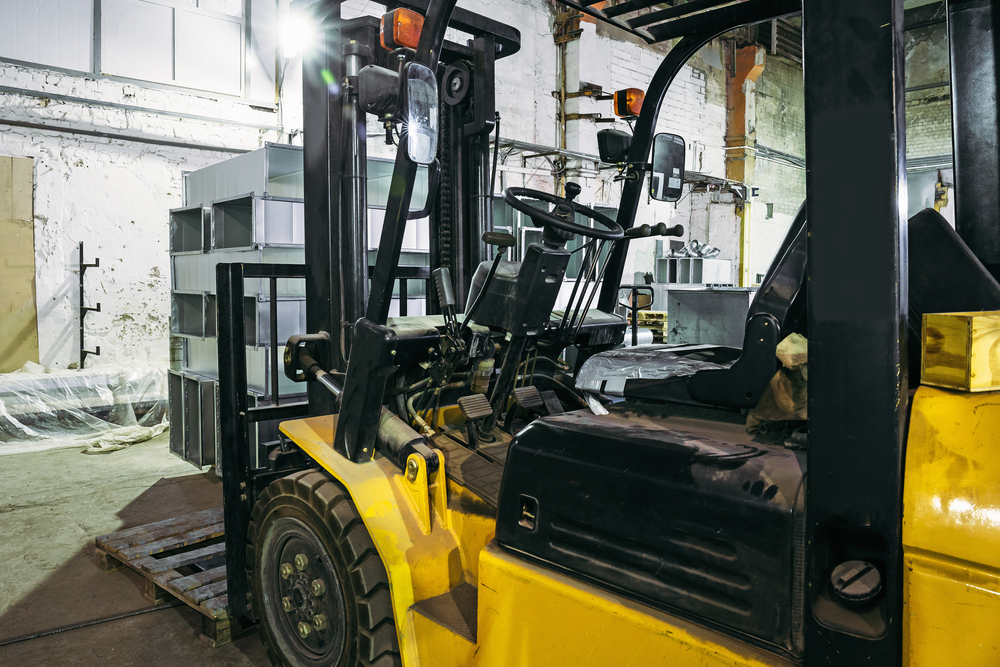 With the forklift demand rising and the incredible stress on today’s supply chain, there’s never been a better moment to rethink our approach to managing our material handling equipment fleet. Why not bring the same expertise, investment and resources to the table that made us so successful in fleet management?
Not only could we lower spend and increase productivity, we could also improve safety metrics. Forklift safety is critical to safety operations at facilities nationwide – approximately 34,900 serious workplace injuries happen per year due to forklift misuse. As OSHA notes, 70 percent of those injuries are avoidable with standard safety measures.
With greater oversight, investment, time, energy and expertise – we have a terrific opportunity to transform the material handling equipment we rely on every day. If we bring the same fleet management tactics we’ve used successfully for decades to bear for our management of forklift operations and other material handling equipment, we can powerfully turn the tide of our productivity, safety and cost structure across the board.
But before we can change our approach to material handling, we have to be cognizant of the reasons this problem went unaddressed for so long. And we have to have a simple, actionable plan that considers those reasons, but allows us to get the important work started.
What have the barriers been when it comes to managing material handling equipment in the way we manage our fleets?
• Forklifts and other equipment costs are one fifth to one tenth the cost of on-road truck spend for most organizations. The efforts required to tag these assets and track relevant spend have been – at times – very difficult to justify to senior leadership.
• The sheer variety of mobile equipment types has made procurement (sometimes across hundreds of potential manufacturers) very difficult to organize
• Equipment decisions are often made locally, as needs are usually facility-based rather than national or regional in scope. Organizations have struggled to get corporate and facility objectives aligned when buying, servicing and dis-positioning equipment
• Finally, the vast majority of equipment spend (roughly 70%) goes to maintenance and battery (EV) power or propane, which proves very difficult to coordinate and execute across many different equipment types, brands, facilities and service providers
These are the realities we’ve faced in material handling for decades, and it’s easy to see why we haven’t rectified this issue before now. The industry is desperately in need of a solution that addresses these problems, while providing a streamlined process that comes closer to what we’re currently doing in our modern fleet management operations.
The path to transformation begins with three simple steps:
1. Pick the pain you want to fix first – Don’t try to do it all at once, and don’t try to make it perfect. Instead, choose one problem to focus on and put your investment and intention behind that. Is it aligning corporate expectations to facility objectives? Improving safety and operator wellness? Streamlining equipment types and operations? Choose one area to begin to optimize, leveraging the existing fleet management playbook to do so.
2. Find a niche material handling fleet management partner – Don’t try to do it all yourself, and don’t fool yourself into thinking you can transform an antiquated system without expert help. Ideally, this partner will come equipped with a tech-driven platform that is intuitive and service oriented, to make the whole change process easier.
3. Build up to a sophisticated system for tracking spend and data – Don’t attempt to perfectly track and tag all assets, spend and data from the launch. Instead, in concert with your expert partner, begin to build a platform and a plan for incorporating these metrics and monitoring them over time.
With a plan like this one in place, your organization can begin to reap the ample and measurable results we’ve seen from the fleet management industry in recent years – but for the benefit of your material handling operations instead. By applying tried and true practices we’ve seen work well in another field, we can meaningfully change our metrics when it comes to safety, productivity and cost.
About the Author
 Mike Quimby is the Chief Operating Officer for TFS & OnPoint Capital. Prior to OnPoint Group, Mike worked with PHH Arval (now Element Fleet Management), where he was the Senior Vice President of Sales and General Manager. Over the course of his career in transportation management services, logistics and finance, he gained leadership experience at Ryder System where he worked for 15 years in roles of increasing responsibility, ultimately becoming the Vice President of Sales & Marketing. Mike also served 10 years in leadership positions at General Electric, achieving the level of Executive Band for GE Commercial Finance, working in both the Direct & Vendor leasing businesses.