Truemag

  • Newsletters
  • Thought Leadership
  • Mobility
  • Safety
  • Work Trucks
  • Videos
  • Home
  • Subscribe
  • Contact Us
  • Media Kit
  • Who We Are

Low Gas Prices Expose Flaw In U.S. Fuel Economy Standards, As Gains Fall Short Of Expectations

Forbes

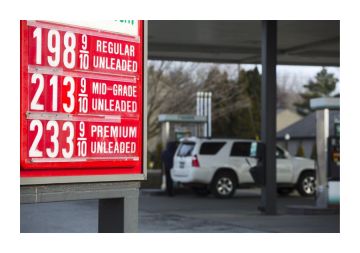
Last week, Americans paid an average $2.08 a gallon to fill up their cars and trucks at the gas pump.  That’s a far cry from the $3.52 a gallon paid this time in 2014, or the $3.87 a gallon paid back in 2012.

The drop in prices has largely been good news for American consumers, pumping an extra $95 billion into their pockets in 2015 compared to 2014. To put that in context, the 2011 payroll tax cut netted consumers a total of about $109 billion.

But $2 gas is also having some less beneficial effects, as others have noted. For U.S. policymakers seeking to reduce oil consumption and carbon emissions, plunging fuel prices have created a real challenge as Americans pile back into relatively inefficient pick-up trucks and sport-utility vehicles in record numbers.

This, in turn, has undermined the effectiveness of the federal government’s signature policy for regulating vehicle efficiency: fuel economy standards.

New federal fuel standards finalized in 2010 and 2011 were projected to nearly double the efficiency of the cars and trucks sold in the United States between 2012 and 2025, cutting U.S. gasoline demand by 3.2 million barrels per day by 2030—a roughly 33% reduction from today’s levels.

This reduction has become a kind of dogma in oil and transportation discussions. It underpins everything from ideas about peak U.S. oil demand to bearish oil price forecasts from major investment banks. It is also an important part of U.S. climate policy.

As regulators kick-off their mid-term review of the standards this year, we now have enough data to evaluate their real-world impact during their initial phase, from model years 2012 to 2016. The good news is that the standards will save 40 billion gallons of gasoline and 400 million tons of carbon dioxide (CO2) over the lifetime of vehicles sold in this period.

So, clearly the rules are an important part of U.S. climate policy. But there is also room for improvement: when the federal government first released the rules back in 2010, they projected that the standards would save 61 billion gallons of gasoline and 655 million tons of CO2 over the lifetime of vehicles sold from 2012 to 2016.

Why are the standards falling short of projections? The current standards are designed to require different levels of annual improvements from vehicles of different sizes—their footprint—and performance is determined annually based on sales. Therefore, the makeup of annual sales has a big impact on performance. A fleet weighted more heavily toward cars will be more efficient than one weighted more heavily toward trucks.

Read more of the original article in Forbes.

Apr 11, 2016connieshedron
A Trusted Option for Vehicle RelocationForget Stereotypes; Millennials in a Car-Buying Frenzy
Recent Posts
  • IMPROVLearning: How Comedy, Behavioral Science and AI Improve Fleet Safety
  • Improving Productivity with AI: Turning Fleet Data into Faster Decisions
  • National Safety Council Projects Increased Traffic Crash Risk during Fourth of July Weekend
  • Keep Every Heavy-Duty Maintenance Inspection on Track — Free Fullbay Checklist
  • Gain Data-Driven Insights into Commercial Vehicle Market Trends at Executive Leadership Summit
  • Last Chance to Save: Register for NAFA’s Maintenance Workshop
  • License Plate Cameras Are About to Start Tracking a Lot More Than Just Your Car
  • America’s Heavy EV Problem May End with Drivers Paying More
  • Trends in U.S. Drivers’ Perceptions and Attitudes Toward Vehicle Automation, 2019–2025
  • 2026 NETS Strength IN Numbers Conference: Early Bird Rates!
ASSOCIATION NEWS
Last Chance to Save: Register for NAFA’s Maintenance Workshop
How AFLA Is Positioning Itself for the Future of Fleet Mobility
‘Raise Your Hand and Get Involved’
NAFA Names 2026 Class of Fellows, Honoring Leaders in Fleet Management
Award Winners Honored at NAFA I&E
2026 NAFA I&E Seeks to Change Perceptions, Invigorate Fleets
NAFA Announces Lineup for Media Day at I&E 2026: Industry Leaders to Showcase the Latest Innovations
TECHNOLOGY
Improving Productivity with AI: Turning Fleet Data into Faster Decisions
Fleet Operations Are Changing – The Industry Needs to Evolve With Them
AI-Powered Vehicle Inspections Move Beyond the Checklist
Motive’s New Workforce Capabilities Aim to Improve Performance, Automate Rewards
AI + Human Insight: Why Fleet Leaders Need Both to Win in 2026
NTSB Finds Automation Overreliance Contributed to Two Fatal Ford BlueCruise Crashes
New AI Assistants Automate Fleet Data Analysis, Decision Making and More
CONFERENCES & WEBINARS
2026 NETS Strength IN Numbers Conference: Early Bird Rates!
AFLA 2026 – Keynotes Announced!
Private Fleets Flex at National Private Truck Council Conference
Free NAFA Webinar: Manage Your Fuel Cost Volatility
Registration Now Open for NETS Annual Conference
Early Bird Pricing for AFLA 2026 – Ending June 1
NAFA Online Seminar: Essentials of Fleet Management
INDUSTRY ANNOUNCEMENTS
Union Leasing Becomes Moventum Fleet Management as 70-Year Company Accelerates into Next Phase
Fleetio Wins Innovations Award at NAFA’s 2026 Institute & Expo
WIFM is heading to NAFA!
Cox Automotive Unveils Cox Fleet, Setting a New Standard for Fleet Uptime Nationwide
AFLA Canadian Fleet Professional of the Year Award: Nominations Open!
NAFA Webinar: Kickoff the 2026 100 Best Fleets Contest on December 4!
Join NAFA’s Free Fleet 101 Live Course

Fleet Management Weekly Newsletter Archive
Access to back issues of the FMW newsletter.

FMW Mobility
How mobility is rapidly changing the fleet management landscape.

Newsletter

Subscribe

FMW Fleet Videos
Video clips of industry leaders speaking on a variety of engaging hot topics in fleet.

2014-2020 © Fleet Management Weekly