By Jason S. Hicks, CAFM
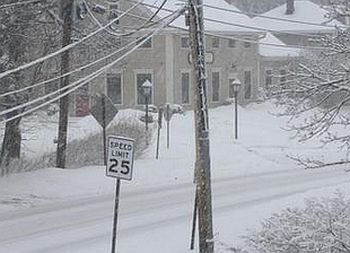
It’s a Sunday afternoon and the snow starts falling. Then the wind starts howling, and then the power goes out. It’s a blizzard that’s going to paralyze your region for days.
As fleet managers, we know that someday we may be required to operate and manage our fleet during a blizzard, hurricane, earthquake or any of a number of different kinds of disasters. And while you may well have developed a plan to keep your fleet running, it’s important to ask yourself: just how well-prepared are you? Have you fully thought through all that could go wrong to disrupt your fleet and how you would address each kind of challenge so you can help your government organization deliver the emergency services your citizenry will depend upon?
To answer those questions, you need to know what a sound and complete emergency plan looks like and needs to cover.
Guiding Principles
NAFA’s Emergency Operations Manual (2012) does a good job of outlining three major guiding principles that a fleet manager should consider in preparing to respond to an emergency:
- Survivability – Does your plan actually work and can it operate in a disaster? Do you test your plan regularly, and make changes from lessons learned? Does your plan protect your supply chain?
- Adaptability – Is it flexible? Is there room to adapt to the changes of the disaster? Does it spell out who’s in charge of what if one or more key persons is unavailable? What if staff are on vacation, out sick, injured or out of touch? Who has the authority to make decisions if you are out of town?
- Sustainability – Can you survive beyond 1-2 days? How do you provide fuel for days, weeks, months? How will you staff your shops after 3-4 days? How long could you be fully independent of the world (supply chain, fuel providers, etc.)? Are there things you can do to increase your independence?
As you develop your response plans, using these guiding principles will help you to develop the most robust plan possible. Once your plan is complete, seek approval from the highest level possible. The higher the approval level, the more support and resources you can get to plan, prepare and train to respond to the emergency.
The final step is to train, train and then train some more. Test the things that you will be doing, and do them in a similar environment. Imagine no cell service. What if the power is out, how will your fuel pumps work? Can you hook up a generator to operate the fuel pumps? Then do it and see if it actually works. After you test your plans, complete an after-action report with the people involved, and prepare a list of improvements to make the plans better.
Where does fleet fit into overall emergency management?
In my interactions with fleet managers, I constantly encourage them to take Incident Command System (ICS) training, to serve on their organization’s emergency planning team and participate in emergency management exercises. But in response, all too often I hear that “they are a waste of time” or that the fleet manager is “too busy to take on something else.” Of all the reasons I hear for not participating in exercises my favorite is the simple assertion that fleet is confident that in any kind of emergency “we are going to do what we do best, keep the fleet running!”
Yes. True. Correct. But then I ask one simple question, “Who do YOU want making the decisions about YOUR fleet in an emergency?” This question usually draws a long pause from my fleet manager colleagues.
The real-life scenario is that during an emergency, staff in the Emergency Operations Center (EOC), Department Operations Center (DOC) or Incident Command Post (ICP) are making decisions based on needs that emerge in the moment with the limited information that is available to them. In these evolving and unpredictable circumstances, it’s imperative that the fleet manager be at the same table with the officials from other departments to provide input for the decisions being made. Being a part of the emergency command team is an opportunity to steer the fleet’s response before, during and after the emergency, so that the priorities of the emergency are met and the fleet is able to maximize its strengths to the best of their ability.
Five phases of emergency management
In emergency management, there are five phases: prevention, mitigation, preparedness, response, and recovery. I have found that when it comes to how they will manage their own department in an emergency, most fleet managers, do a good job with two of those phases: preparedness and response. But as to the other three, fleet managers need to collaborate more fully with their organization’s emergency management department.
During the prevention and mitigation phases of emergency management, fleet needs to work together to try to reduce or eliminate the impacts of the emergency, not only to the fleet itself but to the entire organization as well. For example, if the emergency creates obstacles for personnel to gain access to their vehicles, fleet could work to create alternate staging locations so employees can respond quicker in an emergency. Perhaps the fleet policy should be rewritten to allow employees to take home vehicles before an anticipated disaster, to better disperse the fleet. For protection in a forecasted hail storm, fleet might enter into a contract with area warehouses to store the vehicles to reduce or eliminate hail damage.
The fleet manager’s emergency command post
The prudent fleet manager has developed a great response plan and is prepared to respond to the emergency when it happens – but from where? When the emergency hits, many fleet managers want to stay in their office to manage the fleet. This is a comfortable area to work from because all the fleet files and staff are there. But instead, I encourage fleet managers to get out of the office and go sit in the EOC/DOC, and be a part of the process. In an emergency, there will be things that come up that may not be “fleet” related, but could be handled by your fleet. Step up and get them done.
Fleets fit best into the Incident Command System model in two of its primary sections: the operations and logistics. As a fleet manager, you will have staff responding to the field, fixing vehicles, fueling equipment and keeping things going. Serving in the operations section with the responders allows for the fastest response and communications. In the logistics section, fleet can rent more equipment, relocate equipment, and make other equipment available, working directly with your purchasing staff to rent or buy equipment for the emergency.
After any major emergency, best practice is to complete an “After Action Report and Improvement Plan.” This process includes brainstorming meetings to discuss all that went well during the incident, as well as those things that did not go so well. Show up! Make your voice heard, and make sure you are working to get the support and resources you need for the fleet. If you do not have a voice at the table, then it will be assumed that you have no issues or needs.
Emergency management is about collaboration and communication. As a fleet manager, if you choose not to participate in either, decisions will still be made about the fleet; they will just be made without you.
About the Author:
Jason Hicks, CAFM, currently serves at the Manager of Security & Emergency Preparedness for the Turlock Irrigation District in Stanislaus County, California, and runs JSH Consulting, which specializes in fleet and emergency management consulting. Before this, Jason served for 12 years as a Fleet Manager and Fleet Analyst for the Turlock Irrigation District. He can be reached at [email protected] or 209-580-5984.