By Mark Boada, Senior Editor
At the SmartDriving Summit at Princeton University this past month, host Professor Alain Kornhauser asked why Americans weren’t buying more hybrid vehicles: “Their fuel efficiency and their resale values are better, so where are all the hybrids?”
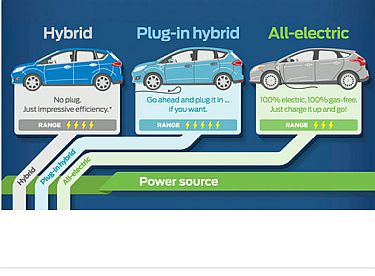
The question is justified. Since they were introduced into the U.S. market in 1999, hybrid vehicles have accounted for a bit more than 2 percent of the passenger cars sold. This is despite the fact that for the consumer who keeps his or her new car for 6.5 years (the national average), a hybrid makes financial sense. Its better fuel economy can save the owner thousands of dollars over that period compared to a gasoline-fueled car, and hybrids retain their value better when resold. Combined, these factors more than offset a hybrid’s higher initial price.
But for sedan fleets, it’s a different story. The average vehicle holding period of three to four years isn’t long enough to generate fuel cost savings sufficient to offset the higher acquisition cost of a hybrid, especially with gasoline prices as low as they are. What’s more, hybrid’s resale advantages have diminished. And where the price of gasoline appears headed, hybrids aren’t likely to become much more popular among U.S. fleets.
Tricia Stecklair, senior business consultant at Element Fleet, the largest fleet management company in North America, says that this math is the reason hybrids are in the fleets of just fourteen percent of Element’s customers and make up only 2 percent of all of the fleet vehicles they lease.
“For our customers, hybrids don’t make sense in terms of total cost of ownership until gasoline costs more than four dollars a gallon,” Ms. Stecklair noted. She added that while used hybrids once commanded prices some $2,000 or so above a comparable gas-powered vehicle, “now it’s down to about $1,000,” she said.
If the dollars don’t make sense for fleets, why do any of them employ hybrids? Ms. Stecklair said the major reason is a commitment to the environment. “Some organizations have made it a priority to limit their carbon footprint,” she said, which opens the door not just to hybrids, but to far more expensive all-electric vehicles as well, despite the financial disadvantage.
The popularity of hybrid vehicles has risen and fallen with the price of gasoline. Hybrids accounted for 3.2 percent of U.S. new car sales in 2013 when the average price for a gallon of regular was $3.53. Last year, the price fell to an average of $2.11 and hybrid sales fell to just under 2.0 percent of car sales. With regular gasoline now just below $2.40, hybrid sales aren’t poised to gain, either among consumers or fleets.
This isn’t the case in Europe, though, where in all but four of 42 countries regular gasoline costs the equivalent of more than $4 a gallon, and where governments are enacting tougher rules on CO2 emissions. Norway, for example, is moving to ban fossil fuel-powered vehicles as soon as 2025. At the equivalent of $6.93 a gallon, Norway’s gasoline price is second only to Iceland ($7.08). It’s not surprising, then, that Norway leads the world with half of all newly registered vehicles being all-electric or hybrid, and offers convenient access to charging stations for 96 percent of car owners across the country.
In addition to government policy tilting the table toward hybrids and electric vehicles in Europe, the continent’s greater urban density favors hybrids and all-electric vehicles. All-electrics are best for short trips, and hybrids get their optimum fuel efficiency in stop-and-go urban traffic.
To a limited extent, those characteristics contribute to the adoption of hybrids here. Ms. Stecklair said that Element sees more hybrids in use by U.S. fleets in dense metropolitan areas. But will U.S. fleets ever see more than a limited role for hybrids?
Not if you believe the long-range forecasts for the price of crude oil, which correlates closely to the price of gasoline. The World Bank’s view is typical: it sees crude oil rising steadily from its current level of about $51 a barrel to $80 by 2030. While a hefty increase, it corresponds to U.S. regular of about $3.80 a gallon, still short of the $4 threshold Ms. Stecklair sees for a leap in fleet hybrid numbers.
Back in 2008, crude prices peaked at $147 a barrel, and gasoline did break $4 a gallon. Since then, the global oil market has seen an enormous expansion in supply and reduced demand, the latter in part because of increases in automobile fuel efficiency. Those conditions are likely to remain in place for the foreseeable future.
What will change the calculus? Technology and infrastructure. Electric vehicles have captured the market’s imagination, and carmakers and high-tech technology firms alike are working on improving their range, decreasing the cost of electric powertrains and creating the charging infrastructure to make them mainstream. The world is overflowing with anticipation for those advances to occur.