By Fleet Management Weekly Staff
July 23, 2025
Charging has always been one of the most challenging aspects of electrification. While a driver can easily pull an ICE vehicle into any gas station to refuel, electric vehicles must sit and charge for longer periods at designated spots. It takes some planning to decide which vehicles in a fleet are suitable for conversion to electric and which charging solutions will keep them running throughout their routes.
Companies like WEX offer fleet managers an EV charging and payment solution that simplifies charging in two ways:
- First, WEX’s all-in-one charging platform consolidates data from various chargers and fueling stations, providing managers with complete visibility into all their charging
- Second, the WEX Fleet Card enables drivers to charge at depots, public stations, and at home, reducing fraud and ensuring no driver is stranded without a charge. Lastly, the company’s recent acquisition of Sawatch Labs allows it to collaborate with customers to evaluate EV suitability, facilitating a smooth transition to electric vehicles.
 We had a discussion with Jay Collins, SVP and General Manager of Energy Transition at WEX Inc., to hear his thoughts on WEX’s new EV Depot Solution, its acquisition of Sawatch Labs, and their perspectives on upcoming EV technology trends.
You recently launched the WEX EV Depot Solution. Can you tell us more about that?
We’re excited to launch our Depot solution because it enhances our comprehensive offerings for fleet managers. Charging differs from fueling. Vehicles should charge while sitting idle, but occasionally you’ll need to charge them when they’re out during the day. We call this our En Route solution. We offer our Home charging option, and now we also provide our Depot/Private Site solution, which gives fleet managers and business owners complete visibility into all their charging activities.
What problem does the EV Depot solution solve?
The biggest problem it solves is providing that final piece of the puzzle, allowing fleet managers or business owners to see all their charging. Historically, you have 100% visibility when fueling a vehicle at a traditional station. As fleets shift to battery-electric vehicles, we found that although they might have some visibility into en route and home charging, they had to gather data from multiple sources and compile it into a single view.
 Our solution consolidates all that data in one place, near your ICE vehicles, which is another component WEX offers. You can manage a mixed fleet with both ICE vehicles and EVs, and we can assist you in determining the right time for that transition. This is the final component that gathers all that data in one location, removing the need for extra steps to access it.
What are the benefits of having WEX EV Depot available to customers?
What we hear from our customers is that they don’t want drivers to have to use multiple cards or apps. For a fleet manager or business owner, that means managing multiple invoices, credit lines, and interfaces, and ultimately, multiple data sets. That’s where the Depot piece provides the final piece: giving you a 360° view of all your activity.
With our toolkit available, drivers can easily find the best place to charge, whether at home, work, or on the go. So, we never leave a driver stranded. We aim to make the process as simple as possible, so the driver knows exactly where to go and which tool to use, while the fleet manager receives all the information in one place.
Where do you see technology around EVs heading in the next few years?
The technology is advancing very quickly. The infrastructure is also improving, though not quite as fast. We commissioned a survey with Frost & Sullivan last year, which showed 80% of mixed-energy fleet operators intend at least 25% of their fleets to be electric vehicles by 2030. Whether from a sustainability or total cost of ownership perspective, businesses see the benefits of switching to battery EVs. As technology gets better, we’re noticing a steady decrease in total cost of ownership. This helps offset the traditionally high upfront costs, which have been a barrier. Both technological and infrastructure improvements will create more use cases.
 There’s a great opportunity in the energy transition that will help solve many of the challenges fleet managers face. We previously discussed the driver’s experience of having to carry multiple apps or cards. Plug and charge eliminates the need for a driver, automating the process so that when you plug in the vehicle, it knows exactly what to do. Then we help the driver find the right location to plug in, and it takes it from there.
Electric vehicles are digitally native, and the technology found in EVs will also be present in ICE vehicles. For example, our customers have always wanted to know the odometer readings at each fueling. Now, we no longer need to enter an odometer reading—when you plug in the vehicle, it automatically captures that information. You also know that it was the fleet’s vehicle that was charged, how much charge it took, and more. This helps solve several challenges for fleet managers.
From there, we can push it even further. I’m excited about what we call Level 3 data, where we capture more than just the date and time of a sale. In the future, we’ll record details like the octane level, a job code, or any other information our customers may want to track as part of that transaction. Ultimately, what we are doing is creating a commercial experience on a payment platform. The key difference is that this commercial experience carries data for interested third parties, such as fleet managers or business owners.
What are some of the learnings of customers that have been successful in transitioning EVs into their fleets?
The learnings have been extensive. Of course, they’re quieter, less costly to maintain, and usually cleaner. But there’s also a fun aspect to driving an EV. They have greater torque, people enjoy driving them, and range anxiety tends to diminish. We’ve seen that when you get these three things right–the right vehicle, use case, and charging strategy—you get a really good experience with EVs. If you get one of them wrong, it can become quite challenging and frustrating.
 The other aspect is that they require less maintenance than traditional ICE vehicles. Once you have experience driving an EV, range anxiety decreases, and if you put the vehicle in the right use case, you have a very positive experience with a lower total cost of ownership. So, while you may initially have entered it to meet sustainability goals, you end up discovering many positives in the long run.
I believe some customers with sustainability goals have made the mistake of replacing every vehicle with EVs, and that has resulted in a poor experience. The customers who are doing this now are asking, “Is this the right vehicle to convert at this time? What is the right use case to convert it in that way?” They end up having a much better experience, and we receive a lot of positive feedback on these vehicles.
What are the biggest challenges facing mixed-use fleets? What are the solutions you would offer?
One of the bigger challenges is doing the initial work needed to get it right. You can’t think of an EV the same way as an ICE vehicle, where you charge it while driving. Instead, they need to charge while sitting idle in the evening, so they’re full and ready to go in the morning. By shifting your focus to the idea that the vehicle should charge, rather than on-demand fueling, you set the right expectations from the start and have a better experience.
 Another challenge is gaining access to data so you have a complete view of the vehicle’s activity. You want to have visibility on whether the vehicle is being charged, where, and when you want it to be charged. That way, you can course-correct if needed to get the best performance out of the electric vehicle. Once that happens, we see range anxiety disappear very quickly. When drivers get into a fully charged vehicle every morning, they only need to charge it occasionally en route, which we can assist with. But the reality is that those are limited cases, and the driver is never stranded.
Tell us about Sawatch Labs. What part of WEX is that? What does it mean for fleets and EVs?
Sawatch Labs is located in Denver, Colorado, and is named after the nearby Sawatch Mountain Range. We recognized the importance of helping our customers get it right, which led us to discover Sawatch Labs and the excellent work they do in the market. They assist our customers in identifying the best use cases for EVs and selecting the right vehicle for each purpose. Additionally, they help determine the appropriate battery range and charging strategy for each vehicle. We acquired them a year ago, and they have been leaders in helping our customers get everything right from the start, then monitoring that performance afterward. They can track their progress toward sustainability goals and compare it with WEX fuel data.
To tell a funny story, we received an email from an old customer that was titled “Help.” They had extension cords hanging out of their windows, and the vehicles weren’t charging quickly enough. They had purchased several EVs without understanding how to charge them. That was in the early days. I believe people are well beyond that now, but our Sawatch solution helps you identify those use cases. Instead of installing telematics units in all your vehicles, you can use fuel data to figure out which vehicles might be good candidates for conversion. We aim to lower the barrier to entry and reduce the cost of that assessment.
How should fleets approach their broader charging strategies? How does At-Home and Depot charging play into that?
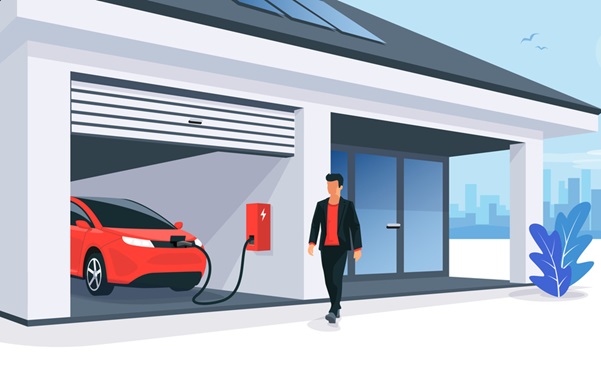 First and foremost, fleets should determine the vehicle’s charging strategy before purchasing it. You get the best results when the vehicle charges while sitting idle, whether that’s in a residential home in the evening or at a workplace. En route charging is essentially a backup on an as-needed basis since the vehicles start each day with a full charge. We can help guide our customers to the right charging solution at the right time, so the driver never gets stranded, and you get the most efficient en route charging. Over time, however, we’re seeing fewer vehicles charge en route as more of them charge at private sites.
How do you see fraud being addressed in an EV charging environment?
Fuel card products effectively combat fraud, particularly with EVs. Due to the digital nature of electric vehicles, you can identify which vehicle is being charged and where, whenever you plug it in. This prevents card skimming because you can be sure that the charge is going to your vehicle. Additionally, you can’t charge another vehicle in between because you can track the odometer reading at the time of the charge.
What are your thoughts on the current trend toward electrification?
There’s a lot of noise happening in the industry right now. A few years ago, it seemed like every vehicle was going to be electric, and now the opposite is true. However, we’re seeing steady progress – it’s a marathon, not a sprint. The race goes on, and businesses that see the adoption of EVs this way are gaining a strategic advantage.
 We have one customer who converted six of their vehicles to electric. They bring them home every night to charge, and they’ve saved an estimated two-thirds on their fuel costs, which is significant. In an industry where we typically save around 15-20 cents per gallon, we’re now seeing savings in dollars if done correctly. That’s only if you have the right use case, vehicle, and charging strategy.
The market is functioning well. There were many incentives to encourage people to adopt battery electric vehicles, but now that they’ve tried them, they’re recognizing all the benefits that come with them. I believe the market will manage itself from this point onward. Incentives will always be helpful, especially as the infrastructure needs improvement. However, technology is progressing and prices are dropping quickly enough that the market will handle itself.