Truemag

  • Newsletters
  • Thought Leadership
  • Mobility
  • Safety
  • Work Trucks
  • Videos
  • Home
  • Subscribe
  • Contact Us
  • Media Kit
  • Who We Are

For Driverless Cars, a Moral Dilemma: Who Lives or Dies?

The Chicago Tribune

Imagine you’re behind the wheel when your brakes fail. As you speed toward a crowded crosswalk, you’re confronted with an impossible choice: veer right and mow down a large group of elderly people or veer left into a woman pushing a stroller.

Now imagine you’re riding in the back of a self-driving car. How would it decide?

Researchers at the Massachusetts Institute of Technology are asking people worldwide how they think a robot car should handle such life-or-death decisions.

Their findings so far show people prefer a self-driving car to act in the greater good, sacrificing its passenger if it can save a crowd of pedestrians. They just don’t want to get into that car.

The findings present a dilemma for car makers and governments eager to introduce self-driving vehicles on the promise that they’ll be safer than human-controlled cars.

“There is a real risk that if we don’t understand those psychological barriers and address them through regulation and public outreach, we may undermine the entire enterprise,” said Iyad Rahwan, an associate professor at the MIT Media Lab. “People will say they’re not comfortable with this. It would stifle what I think will be a very good thing for humanity.”

After publishing research last year surveying U.S. residents, Rahwan and colleagues at the University of Toulouse in France and the University of California, Irvine, are expanding their surveys and looking at how responses vary in different countries.

They also are using a website created by MIT researchers called the Moral Machine , which allows people to play the role of judging who lives or dies. A jaywalking person or several dogs riding in the driverless car? A pregnant woman or a homeless man?

Preliminary, unpublished research based on millions of responses from more than 160 countries shows broad differences between East and West. More prominent in the United States and Europe are judgments that reflect minimizing the total harm, Rahwan said.

But to those focused on how the vehicles act in ordinary situations, the research scenarios are too unrealistic.

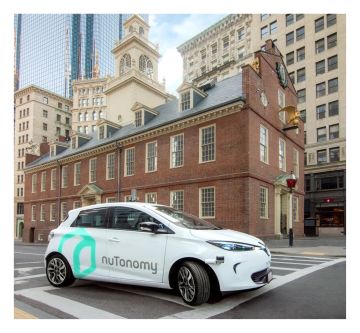
Just 5 miles from the lab in Cambridge, the first self-driving car to roll out on Massachusetts public roads began testing this month in Boston’s Seaport District.

“We approach the problem from a bit more of a practical, engineering perspective,” said NuTonomy CEO Karl Iagnemma, whose Cambridge-based company has also piloted self-driving taxis in Singapore.

Iagnemma said the study’s moral dilemmas are “vanishingly rare.” Designing a safe vehicle, not a “sophisticated ethical creature,” is the focus of his engineering team as they tweak the software that guides their electric Renault Zoe past Boston snowbanks.

“When a driverless car looks out on the world, it’s not able to distinguish the age of a pedestrian or the number of occupants in a car,” Iagnemma said. “Even if we wanted to imbue an autonomous vehicle with an ethical engine, we don’t have the technical capability today to do so

Read more of the original article at The Chicago Tribune.

Jan 23, 2017connieshedron
The Content GapHere are the First 10 Official U.S. Proving Grounds for Autonomous Vehicle Testing
Recent Posts
  • IMPROVLearning: How Comedy, Behavioral Science and AI Improve Fleet Safety
  • Improving Productivity with AI: Turning Fleet Data into Faster Decisions
  • National Safety Council Projects Increased Traffic Crash Risk during Fourth of July Weekend
  • Keep Every Heavy-Duty Maintenance Inspection on Track — Free Fullbay Checklist
  • Gain Data-Driven Insights into Commercial Vehicle Market Trends at Executive Leadership Summit
  • Last Chance to Save: Register for NAFA’s Maintenance Workshop
  • License Plate Cameras Are About to Start Tracking a Lot More Than Just Your Car
  • America’s Heavy EV Problem May End with Drivers Paying More
  • Trends in U.S. Drivers’ Perceptions and Attitudes Toward Vehicle Automation, 2019–2025
  • 2026 NETS Strength IN Numbers Conference: Early Bird Rates!
ASSOCIATION NEWS
Last Chance to Save: Register for NAFA’s Maintenance Workshop
How AFLA Is Positioning Itself for the Future of Fleet Mobility
‘Raise Your Hand and Get Involved’
NAFA Names 2026 Class of Fellows, Honoring Leaders in Fleet Management
Award Winners Honored at NAFA I&E
2026 NAFA I&E Seeks to Change Perceptions, Invigorate Fleets
NAFA Announces Lineup for Media Day at I&E 2026: Industry Leaders to Showcase the Latest Innovations
TECHNOLOGY
Improving Productivity with AI: Turning Fleet Data into Faster Decisions
Fleet Operations Are Changing – The Industry Needs to Evolve With Them
AI-Powered Vehicle Inspections Move Beyond the Checklist
Motive’s New Workforce Capabilities Aim to Improve Performance, Automate Rewards
AI + Human Insight: Why Fleet Leaders Need Both to Win in 2026
NTSB Finds Automation Overreliance Contributed to Two Fatal Ford BlueCruise Crashes
New AI Assistants Automate Fleet Data Analysis, Decision Making and More
CONFERENCES & WEBINARS
2026 NETS Strength IN Numbers Conference: Early Bird Rates!
AFLA 2026 – Keynotes Announced!
Private Fleets Flex at National Private Truck Council Conference
Free NAFA Webinar: Manage Your Fuel Cost Volatility
Registration Now Open for NETS Annual Conference
Early Bird Pricing for AFLA 2026 – Ending June 1
NAFA Online Seminar: Essentials of Fleet Management
INDUSTRY ANNOUNCEMENTS
Union Leasing Becomes Moventum Fleet Management as 70-Year Company Accelerates into Next Phase
Fleetio Wins Innovations Award at NAFA’s 2026 Institute & Expo
WIFM is heading to NAFA!
Cox Automotive Unveils Cox Fleet, Setting a New Standard for Fleet Uptime Nationwide
AFLA Canadian Fleet Professional of the Year Award: Nominations Open!
NAFA Webinar: Kickoff the 2026 100 Best Fleets Contest on December 4!
Join NAFA’s Free Fleet 101 Live Course

Fleet Management Weekly Newsletter Archive
Access to back issues of the FMW newsletter.

FMW Mobility
How mobility is rapidly changing the fleet management landscape.

Newsletter

Subscribe

FMW Fleet Videos
Video clips of industry leaders speaking on a variety of engaging hot topics in fleet.

2014-2020 © Fleet Management Weekly