Truemag

  • Newsletters
  • Thought Leadership
  • Mobility
  • Safety
  • Work Trucks
  • Videos
  • Home
  • Subscribe
  • Contact Us
  • Media Kit
  • Who We Are

Should Your Driverless Car Hit a Pedestrian to Save Your Life?

The New York Times

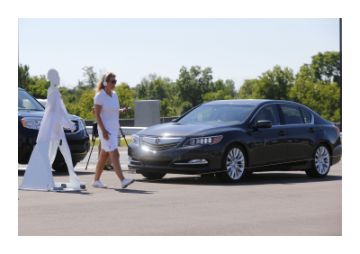
People say that one day, perhaps in the not-so-distant future, they’d like to be passengers in self-driving cars that are mindful machines doing their best for the common good.

Merge politely. Watch for pedestrians in the crosswalk. Keep a safe space.

A new research study, however, indicates that what people really want to ride in is an autonomous vehicle that puts its passengers first. If its machine brain has to choose between slamming into a wall or running someone over, well, sorry, pedestrian.

In this week’s Science magazine, a group of computer scientists and psychologists explain how they conducted six online surveys of United States residents last year between June and November that asked people how they believed autonomous vehicles should behave. The researchers found that respondents generally thought self-driving cars should be programmed to make decisions for the greatest good.

Sort of. Through a series of quizzes that present unpalatable options that amount to saving or sacrificing yourself — and the lives of fellow passengers who may be family members — to spare others, the researchers, not surprisingly, found that people would rather stay alive.

This particular dilemma of robotic morality has long been chewed on in science fiction books and movies. But in recent years it has become a serious question for researchers working on autonomous vehicles who must, in essence, program moral decisions into a machine.

As autonomous vehicles edge closer to reality, it has also become a philosophical question with business implications. Should manufacturers create vehicles with various degrees of morality programmed into them, depending on what a consumer wants? Should the government mandate that all self-driving cars share the same value of protecting the greatest good, even if that’s not so good for a car’s passengers?

And what exactly is the greatest good?

“Is it acceptable for an A.V. (autonomous vehicle) to avoid a motorcycle by swerving into a wall, considering that the probability of survival is greater for the passenger of the A.V., than for the rider of the motorcycle? Should A.V.s take the ages of the passengers and pedestrians into account?” wrote Jean-François Bonnefon, of the Toulouse School of Economics in France; Azim Shariff, of the University of Oregon; and Iyad Rahwan, of the Media Laboratory at the Massachusetts Institute of Technology.

At the heart of this discussion is the “trolley problem.” First introduced in 1967 by Philippa Foot, a British philosopher, the trolley problem is a simple if unpleasant ethical thought puzzle.

Imagine a runaway trolley is barreling toward five workmen on the tracks. Their lives can be saved by a lever that would switch the trolley to another line. But there is one worker on those tracks as well.

What is the correct thing to do?

Read more of the original article in The New York Times.

Jun 26, 2016connieshedron
Newest IIHS Test Stymies AutomakersWhich Vehicles Hold Their Value Best? And Which Are Total Depreciation Disasters?
Recent Posts
  • IMPROVLearning: How Comedy, Behavioral Science and AI Improve Fleet Safety
  • Improving Productivity with AI: Turning Fleet Data into Faster Decisions
  • National Safety Council Projects Increased Traffic Crash Risk during Fourth of July Weekend
  • Keep Every Heavy-Duty Maintenance Inspection on Track — Free Fullbay Checklist
  • Gain Data-Driven Insights into Commercial Vehicle Market Trends at Executive Leadership Summit
  • Last Chance to Save: Register for NAFA’s Maintenance Workshop
  • License Plate Cameras Are About to Start Tracking a Lot More Than Just Your Car
  • America’s Heavy EV Problem May End with Drivers Paying More
  • Trends in U.S. Drivers’ Perceptions and Attitudes Toward Vehicle Automation, 2019–2025
  • 2026 NETS Strength IN Numbers Conference: Early Bird Rates!
ASSOCIATION NEWS
Last Chance to Save: Register for NAFA’s Maintenance Workshop
How AFLA Is Positioning Itself for the Future of Fleet Mobility
‘Raise Your Hand and Get Involved’
NAFA Names 2026 Class of Fellows, Honoring Leaders in Fleet Management
Award Winners Honored at NAFA I&E
2026 NAFA I&E Seeks to Change Perceptions, Invigorate Fleets
NAFA Announces Lineup for Media Day at I&E 2026: Industry Leaders to Showcase the Latest Innovations
TECHNOLOGY
Improving Productivity with AI: Turning Fleet Data into Faster Decisions
Fleet Operations Are Changing – The Industry Needs to Evolve With Them
AI-Powered Vehicle Inspections Move Beyond the Checklist
Motive’s New Workforce Capabilities Aim to Improve Performance, Automate Rewards
AI + Human Insight: Why Fleet Leaders Need Both to Win in 2026
NTSB Finds Automation Overreliance Contributed to Two Fatal Ford BlueCruise Crashes
New AI Assistants Automate Fleet Data Analysis, Decision Making and More
CONFERENCES & WEBINARS
2026 NETS Strength IN Numbers Conference: Early Bird Rates!
AFLA 2026 – Keynotes Announced!
Private Fleets Flex at National Private Truck Council Conference
Free NAFA Webinar: Manage Your Fuel Cost Volatility
Registration Now Open for NETS Annual Conference
Early Bird Pricing for AFLA 2026 – Ending June 1
NAFA Online Seminar: Essentials of Fleet Management
INDUSTRY ANNOUNCEMENTS
Union Leasing Becomes Moventum Fleet Management as 70-Year Company Accelerates into Next Phase
Fleetio Wins Innovations Award at NAFA’s 2026 Institute & Expo
WIFM is heading to NAFA!
Cox Automotive Unveils Cox Fleet, Setting a New Standard for Fleet Uptime Nationwide
AFLA Canadian Fleet Professional of the Year Award: Nominations Open!
NAFA Webinar: Kickoff the 2026 100 Best Fleets Contest on December 4!
Join NAFA’s Free Fleet 101 Live Course

Fleet Management Weekly Newsletter Archive
Access to back issues of the FMW newsletter.

FMW Mobility
How mobility is rapidly changing the fleet management landscape.

Newsletter

Subscribe

FMW Fleet Videos
Video clips of industry leaders speaking on a variety of engaging hot topics in fleet.

2014-2020 © Fleet Management Weekly