On the evening of October 19, 2002, pediatrician Greg Gulbransen walked out his front door to move the family’s sport-utility vehicle into the driveway. Unbeknownst to him, his 2-year-old son Cameron followed. Gulbransen was backing up when he felt a small bump, discovering only after it was too late that he’d accidentally run over and killed the boy.
On March 31, 2014, the National Highway Transportation Safety Administration (NHTSA) finalized a long-delayed regulation meant to reduce back-overs, a key part of a 2007 driving safety act named for Cameron Gulbransen. The regulation sets a 2018 deadline for rearview monitoring technology to be standard on passenger vehicles sold or leased in the United States.
Drivers don’t have to wait until 2018, though, to get a car with a camera that shows them what’s behind their back bumper.
♦ Back-up camera systems will have to meet federal standards, but how they operate varies.
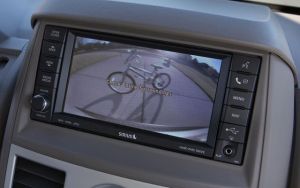
The button-size devices are positioned so drivers can see people or objects that are otherwise undetectable using a side or rearview mirror or by glancing over their shoulder. When NHTSA’s rear visibility regulation takes effect, it will require rearview technology to display a 10-by-20-foot area directly behind the vehicle. The rule also requires systems to show the driver an image of the area no more than 2 seconds after they put the vehicle into reverse.
♦ By several estimates, back-up cameras can help prevent accidents.
In one recent study, close to 57 percent of drivers in vehicles equipped with back-up cameras avoided backing over a stationary object that had been placed behind the vehicle when they weren’t looking. The March 2014 research report from the Insurance Institute for Highway Safety (IIHS) also found that three-quarters of drivers in vehicles with both rearview cameras and audible sensors avoided a back-over accident.
♦ Cameras can add big costs to new cars. But it’s not really their fault.
Initially, rearview cameras were part of optional bundles on vehicles’ costlier trim levels. One reason was that systems needed an in-dash display to work, and those screens only came on the most expensive models. Automakers know people like cameras, and so manufacturers have been attaching them to the highest trim levels.
♦ Cameras are migrating to less expensive models and trim levels.
Once they’re separated from other features, rearview camera systems aren’t that expensive. NHTSA estimates that adding back-up cameras and displays that comply with the new regulations will cost manufacturers $132-$142 more per vehicle, or $43-$45 for vehicles with an existing screen that can display the required image field.
♦ Adding a back-up camera is fairly easily.
You don’t need to buy a new car to get a back-up camera, though, or spend a lot to add one to an existing vehicle. Retailers sell aftermarket systems for less than $15 for a bottom-of-the-line stand-alone camera for vehicles that have existing in-dash displays. A complete setup with a camera, transmitter and display can run up to $300. Installing a back-up camera on an existing car isn’t difficult. Some require only a screwdriver, while others require a drill to mount the camera into a rear bumper cover.
♦ Grime, weather and time of day can affect how a camera functions.
Whether they’re factory installed or aftermarket equipment, rearview cameras don’t need much more maintenance than a periodic wipe-down to clear away accumulated grime from the camera lens. In heavy rain or snow, auto company representatives and aftermarket camera sellers suggest checking before you drive off to make sure the lens isn’t obscured.
♦ Back-up cameras may prevent accidents, but they might not lead to lower insurance rates.
NHTSA and IIHS may be convinced that rearview systems save lives, but auto insurers could take decades to adjust rates for customers who use them, and one insurance industry representative says even if rates drop, the decrease could be tiny.
♦ Back-up cameras are helpful for more than avoiding accidents.
Though intended to serve as safety devices, back-up cameras also can be used to help drivers do a better job of backing into a parking spot or hitching a trailer.
Wait until you see the camera technology that’s coming next.