Truemag

  • Newsletters
  • Thought Leadership
  • Mobility
  • Safety
  • Work Trucks
  • Videos
  • Home
  • Subscribe
  • Contact Us
  • Media Kit
  • Who We Are

As Head-Up Displays Become Common, Distraction Becomes an Issue

When Manish Undavia took delivery of the 2016 Audi A7 sedan — list price, about $71,000 — it came with technology rarely found in automobiles, even five years ago: collision avoidance systems, sensors to keep the car from drifting and, perhaps most baffling to Mr. Undavia, a head-up display.

“A what?” he asked the salesman.

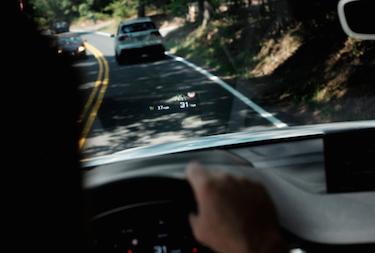
Richard Cardenas, a salesman at Biener Audi on Long Island, turned on the car and showed Mr. Undavia how it worked. From the driver’s seat, the car’s speed — “0 mpg” — appeared about six feet beyond the dashboard, floating in space, visible only to Mr. Undavia.

It’s the latest application of a technology that has been long established in other industries. Airplane pilots, for example, use it to land. Video gamers swear by it to target aliens.

Now, the head-up display, once mostly confined to performance cars like the Chevrolet Corvette, is migrating more broadly to the automobile world, mainly in premium-priced vehicles, and finding a consumer audience that is only vaguely aware that such a feature exists.

To automakers, the technology makes for safer driving because the driver does not need to look down for information. The illuminated graphics, which may be white or colored, are transparent, so that the driver actually looks through them onto the road ahead.

But to skeptics, head-up displays are yet another informational distraction for the already data-overloaded driver. No federal standards govern the use of head-up displays, and that concerns some safety advocates.

“It’s like the Wild West out there in terms of what’s being put into cars, and we’re expressing caution because there are no standards,” said Deborah Hersman, president of the independent National Safety Council near Chicago and a former chairwoman of the National Transportation Safety Board.

“If a head-up display can warn of a collision or a grade crossing ahead and a train coming, that may actually help,” she said. “But if it puts up an iPod playlist or sends a restaurant reservation, that may distract from the task of driving.”

While the National Highway Traffic Safety Administration routinely issues voluntary guidelines to automakers over driver distraction, there is no federal regulation governing head-up displays. The agency said it had begun to research the issue and expected to issue guidelines.

At the nonprofit Insurance Institute for Highway Safety, a spokesman, Russ Rader, acknowledged that the systems could offer useful information, but said that they had the potential to be a distraction as well.

READ MORE of the original article in The New York Times

Sep 11, 2015admin
“Tell Me What I Need to Know…”Fleet Industry Expected to Grow
Recent Posts
  • Why the Traditional Vehicle Ordering Cycle No Longer Works
  • DASH Breaks Ground on DC Metro Region’s First On-Route Electric Bus Chargers
  • IMPROVLearning: How Comedy, Behavioral Science and AI Improve Fleet Safety
  • Improving Productivity with AI: Turning Fleet Data into Faster Decisions
  • National Safety Council Projects Increased Traffic Crash Risk during Fourth of July Weekend
  • Keep Every Heavy-Duty Maintenance Inspection on Track — Free Fullbay Checklist
  • Gain Data-Driven Insights into Commercial Vehicle Market Trends at Executive Leadership Summit
  • Last Chance to Save: Register for NAFA’s Maintenance Workshop
  • License Plate Cameras Are About to Start Tracking a Lot More Than Just Your Car
  • America’s Heavy EV Problem May End with Drivers Paying More
ASSOCIATION NEWS
Last Chance to Save: Register for NAFA’s Maintenance Workshop
How AFLA Is Positioning Itself for the Future of Fleet Mobility
‘Raise Your Hand and Get Involved’
NAFA Names 2026 Class of Fellows, Honoring Leaders in Fleet Management
Award Winners Honored at NAFA I&E
2026 NAFA I&E Seeks to Change Perceptions, Invigorate Fleets
NAFA Announces Lineup for Media Day at I&E 2026: Industry Leaders to Showcase the Latest Innovations
TECHNOLOGY
Improving Productivity with AI: Turning Fleet Data into Faster Decisions
Fleet Operations Are Changing – The Industry Needs to Evolve With Them
AI-Powered Vehicle Inspections Move Beyond the Checklist
Motive’s New Workforce Capabilities Aim to Improve Performance, Automate Rewards
AI + Human Insight: Why Fleet Leaders Need Both to Win in 2026
NTSB Finds Automation Overreliance Contributed to Two Fatal Ford BlueCruise Crashes
New AI Assistants Automate Fleet Data Analysis, Decision Making and More
CONFERENCES & WEBINARS
2026 NETS Strength IN Numbers Conference: Early Bird Rates!
AFLA 2026 – Keynotes Announced!
Private Fleets Flex at National Private Truck Council Conference
Free NAFA Webinar: Manage Your Fuel Cost Volatility
Registration Now Open for NETS Annual Conference
Early Bird Pricing for AFLA 2026 – Ending June 1
NAFA Online Seminar: Essentials of Fleet Management
INDUSTRY ANNOUNCEMENTS
Union Leasing Becomes Moventum Fleet Management as 70-Year Company Accelerates into Next Phase
Fleetio Wins Innovations Award at NAFA’s 2026 Institute & Expo
WIFM is heading to NAFA!
Cox Automotive Unveils Cox Fleet, Setting a New Standard for Fleet Uptime Nationwide
AFLA Canadian Fleet Professional of the Year Award: Nominations Open!
NAFA Webinar: Kickoff the 2026 100 Best Fleets Contest on December 4!
Join NAFA’s Free Fleet 101 Live Course

Fleet Management Weekly Newsletter Archive
Access to back issues of the FMW newsletter.

FMW Mobility
How mobility is rapidly changing the fleet management landscape.

Newsletter

Subscribe

FMW Fleet Videos
Video clips of industry leaders speaking on a variety of engaging hot topics in fleet.

2014-2020 © Fleet Management Weekly