

By eDriving
July 9, 2025
Ask any fleet leader what keeps them up at night, and “preventing crashes” is almost always at the top of the list. But preventing crashes isn’t just about installing new technology or enforcing compliance. It’s about reshaping how your organization thinks about driving altogether.
At eDriving, we call this a Crash-Free Culture® — and it’s the focus of our new white paper, “The Road to Driver Safety.”
 What sets this approach apart? It’s not about catching mistakes. It’s about changing mindsets. A crash-free culture is one in which driver safety becomes a shared value, championed from the C-suite to the cab. It makes safe driving second nature — not just an obligation.
And the best part? You don’t need intrusive hardware or a massive budget to start building it.
What Does a Crash-Free Culture Look Like?
A crash-free culture doesn’t happen by accident. It’s built intentionally on five key elements that work together to shape behavior, build accountability, and create long-term impact:
- Commitment from Leadership
It all starts at the top. When executives visibly support and invest in road safety, it sends a powerful signal to the entire organization: safety matters here. We’ve seen the greatest success when companies form cross-functional safety implementation teams with representatives from Fleet, EHS, HR, Legal, Risk, and even drivers themselves. This collaboration ensures safety becomes embedded in policies, operations, and culture — it needs to exist beyond a line item on a checklist.
- Clear, Consistent Communication
Driving change requires more than policy documents and occasional reminders. A crash-free culture relies on ongoing, meaningful communication. That includes clear expectations, motivational messaging, and success stories that bring the purpose to life. When drivers understand why safety matters — not just what’s required — they’re more likely to internalize those values and act accordingly.
- Compliance Through Smart Measurement
To drive behavior change, you need insight — but not intrusion. A key component of a crash-free culture is tracking driver risk over time using ethical, privacy-conscious methods. That includes Motor Vehicle Record (MVR) checks, benchmarking, and scoring. At eDriving, we’ve designed our solution to give managers the visibility they need — while empowering drivers with personal feedback they can act on. No dashcams. No OBD devices. Just a smarter way to measure and manage risk.
- Coaching That Creates Change
This is where MentorSM by eDriving makes a real difference. Mentor transforms drivers’ smartphones into a real-time risk coach. It monitors key behaviors — acceleration, braking, cornering, speeding, and phone distraction — and delivers proactive driver risk scores with personalized training. It’s self-guided, easy to use, and designed to help drivers improve safely and steadily over time. Instead of enforcing compliance through surveillance, Mentor builds awareness and supports drivers with practical best practices they can apply every day.
- Continuous Improvement
Safety is never “done.” The most successful organizations continually raise the bar — updating goals, recognizing milestones, and evaluating performance. They celebrate individual progress, reward team efforts, and adjust strategy based on results. This keeps the program fresh, engaging, and focused on long-term change.
Why It Pays to Go Crash-Free
Building a crash-free culture isn’t just good ethics — it’s good business. Companies that commit to this approach consistently see significant gains across multiple dimensions of fleet performance. Based on eDriving client outcomes and industry benchmarks, benefits include:
- 10–20% reduction in collision-related costs per year
- 67% decrease in absenteeism, leading to higher productivity
- Up to 30% savings on insurance premiums, driven by lower claims
- 3–7% improvement in fuel efficiency, with less idling and harsh driving
- 4–5% annual reduction in maintenance costs, thanks to smoother driving
- Lower vehicle emissions and energy usage, especially with EV adoption
- Reduced driver turnover, saving on recruitment and onboarding
- Enhanced brand reputation, as safety becomes part of your identity
These aren’t short-term wins — they’re ongoing advantages fueled by a culture where safety is everyone’s business.
A Human-Centered, Privacy-First Approach
Too often, road safety programs fail because they rely on surveillance rather than support. Drivers feel monitored instead of empowered, and trust breaks down.
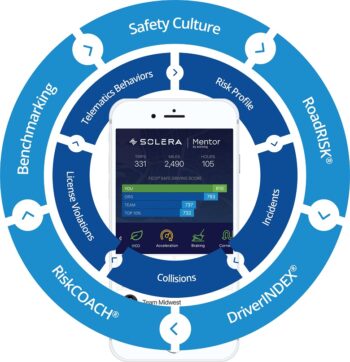 That’s why Mentor is designed with privacy in mind. It uses the smartphone your drivers already carry — no extra hardware required — and collects only the data necessary to assess risk and deliver value. Drivers have visibility into their own performance and own their journey toward improvement. Managers get the insights they need to support — not micromanage — their teams.
In a world of growing privacy concerns and shifting regulations, this approach isn’t just safer — it’s smarter.
Ready to Begin the Journey?
If you’re ready to stop chasing compliance and start building something stronger — a culture where everyone owns safety — “The Road to Driver Safety” is your first step.
In this free white paper, we outline the full blueprint for building a crash-free culture in your organization: one that’s measurable, motivational, and sustainable.
Download the white paper and discover how to make safety a way of life in your fleet.
Safe driving.
