
By David Glines, Director of Product Management, Wheels
August 13, 2025
Fleet safety should be a top priority for organizations. But building a robust, proactive driver safety program doesn’t happen overnight. It requires clear policies, strategic planning, and the right tools to keep drivers safe and operations running smoothly.

David Glines, Wheels
Unlock the six essential components of a successful fleet safety program and take your organization’s safety strategy to the next level. These best practices will help you reduce risks, enhance driver behavior, and leverage technology to protect your drivers and your business.
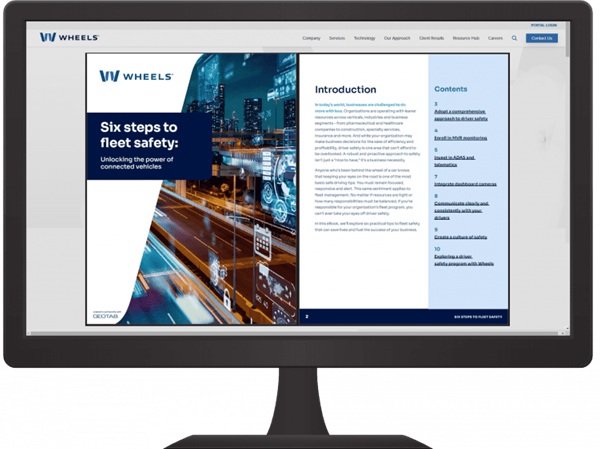
- Adopt a comprehensive approach to driver safety. In other words, you need a multifaceted policy that includes up-to-date vehicle safety features, performance monitoring, a data-driven system for evaluating real-world driving behavior, and both proactive and reactive training for fleet managers and drivers.
- Enroll in Motor Vehicle Record (MVR) monitoring. These records can alert you to patterns of traffic incidents and infractions that you can address before more serious accidents occur. Transparency between fleet managers and individual drivers is key here, empowering them to correct high-risk patterns of behavior and improve overall safety together.
- Invest in Advanced Driver Assistance Systems (ADAS) and telematics. ADAS technologies like lane departure warnings, collision avoidance systems, and adaptive cruise control help drivers behave more safely on the road. Telematics from companies like Geotab can collect data from these systems. And advanced analytics, like those developed by Wheels, raise the value of all these technologies by providing essential insights to enable rapid improvements.
- Integrate dashboard cameras. Combine front-facing and driver-facing dash cams with in-cab messaging and you can both foster better driver behavior and support safe drivers with crucial evidence in the event of a traffic incident.
- Communicate clearly and consistently with your drivers. It should go without saying that communication with your drivers is important to safety. But prioritizing communication not only encourages awareness – it also can drive a shared commitment to the fact that every driver is responsible for safety.
- Create a culture of safety. Safety policies and protocols are only effective when team members follow them. By prioritizing and rewarding safety, you increase awareness, motivate better decisions on the road, reduce accidents, and inspire an organization-wide sense of accountability.
By implementing these proven strategies, you can unlock the full potential of your fleet’s safety performance — reducing risk, boosting efficiency, and protecting what matters most: your drivers.
To learn more, download the free Wheels eBook, Six Steps to Fleet Safety: Unlocking the Power of Connected Vehicles, and take a deeper dive into these essential best practices.