
By Bill Bishop, SVP of Sales and Marketing, FLD Remarketing
May 6, 2026
A few years back, during the height of the pandemic, I was fond of using what I call my “crystal ball” analogy when preparing this quarterly White Metal Market Report. You know, the one where the “situation” you’re analyzing is so hard to read that you simply throw up your hands and say that your “crystal ball” is a little murky…fuzzy…hard to read (feel free to fill in the blank).
Well guess what?
 Just when you thought things might be returning to some semblance of a normal, predictable order…bam!
Global conflict. $6 diesel. See-saw inflation. Unfulfilled rate cuts.
It’s enough to make a market analyst cry if not for the fact that the underlying tone of the economy seems solid.
Unsettling for sure, but so far not fatal – at least not in our neck of the woods. Perhaps uncomfortable would be a better way to say it. But, unfortunately, we’re in for more of the overarching current we’ve been swimming against the past 5-6 years.
In an effort to bring a little clarity to the current situation, let’s take a look not only at the current state of the used wholesale vehicle market, but how we got here and where we might be headed for the rest of 2026.
Cruising Along and Then…
As I mentioned earlier, for the most part, the wholesale used vehicle market has been stable and predictable in the last couple of years. Hardly magnetic but workable. Boring some might say. Not a bad thing in that it imparted an air of welcomed comfort, something I noted in my last WMMR – our look back at 2025 and ahead to 2026.
 And then…the war happened and for the last two months, my crystal ball has been more like staring into a dark abyss.
Uncertain. Unnerving. And perhaps more than anything – unpredictable. Even more unsettling? Everything is apt to change on a dime and as we’ve seen in the last few weeks, the state of perpetual not knowing may be the best we can hope for.
We’re Not in Kansas Anymore…
For regular readers of this publication, you might remember that just a few short months ago our team of market experts was feeling comfortable – if not confident – about the state of the used wholesale vehicle market.
A quick look back at our 2025 WMMR Year in Review/2026 Year Ahead issue – released in the second week of January – has us extolling yet another “predictable” year in 2025, one similar to 2024. At the same time, we were also suggesting that – sans global strife -we expected 2026 to proceed much the same.
In fact, I had all my notes ready to write this issue early in Q2, confident that the market would continue performing much as we had predicted in our previous issue.
Predictable. Stable. Calm.
 Unfortunately, that confidence disappeared when the war with Iran escalated from a 2-week mission to what has turned into a 2-month conflict – and counting. And while the economic fallout has been somewhat minimal, the effects of the war are definitely being felt and the lasting reverberations – even if it were to stop today – will be felt for a while. Perhaps nowhere more than in the cost of fuel, which is up 60% since before the war. This is an economic reality with an extremely long tail that reaches into every corner of the economy and American way of life.
This bad news aside, the wholesale used vehicle market has shown some resiliency in the first quarter, peaking in early to mid-March, including an 8% increase over the previous 10 weeks.
No huge divergence. No running away from itself or dropping off a cliff. Just normal price and demand action and fairly much what we predicted.
 One trend we saw in Q1 was that used retail vehicle prices are high, while at the same time inventory is weak. The reasons for this are different than during the pandemic:
- Driven by the fact that there weren’t a lot of vehicles manufactured in 2021, 2022 and the first half of 2023, a period when new vehicle production fell off a cliff.
- Driven by uncertainty, a weak supply chain and the fact many OEMs had pivoted to an EV-centric model. Something they’ve pivoted back away from as EVs fall out of favor with consumers and fleets hold off given continued issues around range and charging infrastructure.
Fast forward to today – a time when most of these non-existent vehicles – had they been made – would typically be coming off lease. But, since they were never built, fleets have had to hold on to the vehicles they do have longer, leading to an overabundance of high mileage, low quality vehicles and putting a premium on well maintained assets. Because of this, the majority of vehicles we’re buying today are from 2019 or before, not the kind of environment we can sustain forever.
Vehicles by Class: Little Changes, Big Challenges
 How does all this global strife and economic uncertainty affect the actual price, quality, and availability of used wholesale vehicles – something we analyze every quarter in the WMMR?
In our opinion, used vehicles are still a better value than new, an important distinction.
That is unless you need to – or have the allocation for – new vehicles. That said, it appears that orders for new vehicles are generally forecast to be down 3-4% year-over-year and we believe some of that is simply related to the fact that a lot of fleets jumped into allocation as vehicle availability loosened up over the last 2 years.
Essentially, we underbuilt then overbuilt and now we’re dealing with the fallout.
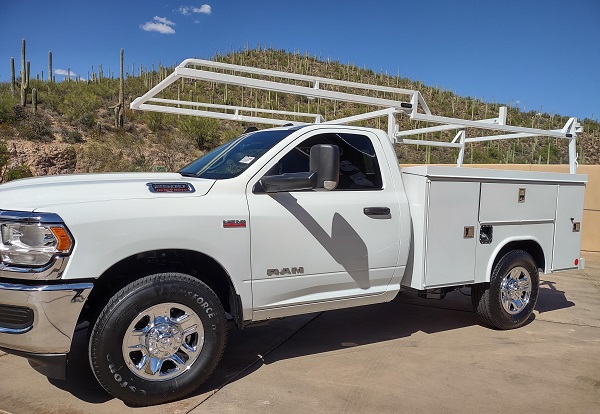 We’re also seeing a lot of upfitters who were forced to take vehicle allocation for units with dwindling demand leading to a glut of vehicles that, just a few short years ago, were hard to come by.
All in all, this was basically what we prognosticated in our Year End/Year Ahead issue, and while hardly a cause for celebration, nothing is flashing huge concern, other than the fact that given tariffs and increases in materials and labor, new vehicles will simply cost more – which is a good thing for the used wholesale vehicle market.
Class 3-5
For the most part the price and availability of smaller used vehicles – especially passenger cars – has held steady in Q1. A theme we’ve repeated the past few years and one we suspect will continue throughout 2026, as consumer demand for many of these used vehicles will remain high and new vehicle purchases prohibitive due to tariffs and scarcity. The call for light delivery units will also continue as final mile and home service providers remain in high demand.
Class 6
 With freight activity still strong in most parts of the country, we have seen stability in both price and demand for this class, which makes sense. This pattern will likely continue as long as consumer sentiment doesn’t make a massive move downward, which is always possible in such a tenuous environment. Price and demand for vocational units in this class have been robust and we expect that to continue.
Class 7
Like class 6, both price and demand for vocational units in this class not only stays high but holds steady. This is due in good part to the often cost prohibitive nature and high interest rate loans necessary to purchase new units. Otherwise, this class has remained flat with negligible demand for units like box trucks in Q1, with little indication that situation will change markedly anytime soon.
Class 8
 After several stagnant years, we’ve seen some recent interest in day cabs. Unfortunately, it’s been hard to tell if this is just an anomaly or if interest will continue. A bit of a head scratcher and something that has many experts scanning the horizon for better intel – our team included. For now, my gut tells me we’re likely still in for some back and forth in this class.
Economic Indicators Remain Murky, Unpredictable
As even casual readers of the WMMR – now in its 10th year we’re proud to say – know, our team tracks a basket of economic indicators to take a reading on the current state of the used wholesale vehicle market, as well as predict where things might be headed over the coming quarters and years.
These include:
- The strength of the US dollar
- US housing starts
- The unemployment rate
- Consumer spending
The problem? These days there’s a virtual boatload of economic and global factors driving the economy. Chief among these factors is the current price of diesel.
 It is without question the single biggest data point driving fleet (and arguably the entire economy). It affects every sector of business and unfortunately – in our opinion – it’s going to be a long time before it returns to anywhere near $3 a gallon. This is due to the simple fact that we’ve already gone beyond the point of no return and, even if the war ended today, it would likely take well into 2027 before prices drifted back towards $3. That’s going to put a lot of pressure on the economy and especially the fleet and automotive industries.
With this in mind, just what are these economic bellwethers telling us?
Overall, the economy is strong, and surprisingly resilient given the current environment.
 The stock market is high. Consumer sentiment – sans the war – has been solid the last year. Given this, one wonders if the current environment could even lead to stagflation?
Right now, we’re seeing a softening of the job market, and that’s never great for the used vehicle market. The longer that persists, the longer it may take to bounce back – so that’s more uncertainty heaped on the mountains we already have.
The used wholesale vehicle market has also suffered from high interest rates the past few years. And while borrowing rates have remained steady, we likely won’t see a highly anticipated rate reduction again for another 9 to12 months, as economic indicators seem to make that prohibitive. Again, not ideal for the used wholesale vehicle market.
 Housing starts seem to be steady for now and will likely stay that way as the country builds more rental units and works its way out of a lack of available housing. This should keep demand steady for the many white metal vehicles needed to deliver, build, and ferry service providers.
Borrowing costs have stayed steady but our forecast is that rates won’t drop for likely 9-12 months. This is understandable given the Fed seems to be stuck in neutral, providing more roadblocks for small and medium businesses looking to purchase vehicles
Luckily, the unemployment rate has remained steady around 4%. But the flow of consistent downward revisions has made that number suspect and left many experts – us included – wondering if that’s the true measure. Should this number rise to 5% or higher, things could become more urgent – we won’t say panic, but…
One indicator we don’t talk enough about a lot is the SAAR, the number of vehicles made by American auto manufacturers in a given year, a number that has been slowly dropping in recent years.
 According to recent data from sources like Cox Automotive and JD Power, OEMs produced just 15.8 million vehicles in 2025, down roughly 3%. A stark contrast to a year ago when many talking heads were predicting that OEMs would possibly churn out 18 million vehicles in 2025 – a whopping 12% higher prognostication than where they actually ended up. Meanwhile, overall lease volume is down 12% with lease penetration down to 22%.
Not an encouraging picture, and likely a sign of things to come, but hard to say in such a climate of abject uncertainty. For now, it’s more of the same wait and see attitude we’ve been dealing with for the past 18 months, and while not fatal, it certainly has been unsettling for most.
Note about Tariffs
 Here’s a thought about perhaps the biggest economic factor of the past year – tariffs. This was an economic boogie man that unsettled every corner of the economic landscape. After all the handwringing, tariffs have been declared unconstitutional by the Supreme Court and we’re seeing over $100 billion go back to affected companies. Problem is, this pain has already been normalized so there is little chance of it finding its way back to the American people – much less to the used wholesale vehicle market.
Hands on the Wheel, Eyes on the Horizon
Where does all of this mass quantity of information leave us as we head into the teeth of the year?
Well, I’d love to say that going forward we’re going to see much of the same predictability that characterized 2024 and 2025 but that would be naive.
Instead, I’m going to lament the fact that for every step forward, we seem to have taken two steps back in the past 5-6 years and that’s unfortunate:
- The pandemic and all of the things that came with it
- A largely abandoned shift towards electrification that consumed a lot of energy
- Industry disruption like FMC consolidation, new technologies
That’s a lot for sure, even if it’s only a few of the challenges facing fleet.
The good thing is that for the most part the industry has managed to avoid a fatal hit and – in some ways – has emerged better than before. In our opinion, it is an encouraging sign that once we can get a little good news – and clear runway – that fleet could hum. For now, while that seems a little improbable, the factors that underpin the industry remain strong. And with that in mind, here’s hoping there’s an end to hostilities soon, and that we can all get back to the business of fleet and vehicles soon.

Bill Bishop
 Thanks for reading everyone and remember, we at FLD are always here to help. You can reach me anytime at [email protected].