By Bill Bishop, SVP of Sales and Marketing, FLD Remarketing
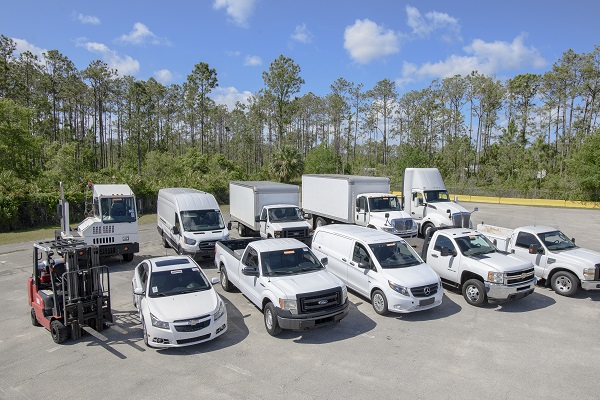
Hi and welcome to our Q3 installment of FLD’s White Metal Market Report. This is our 9th year of sharing news, views, and predictions on the used white metal wholesale market – which I must say has been pretty active since we last weighed in with our Q2 report in late May. An oddity for a marketplace that usually experiences what can best be described as a “dole drummy,” type summer.
In fact, the past couple of summers have followed fairly predictable patterns.
A bottom late in June followed by an orderly drop of a couple points a month until we end up somewhere near 10% off for the summer come September. And while we did put in the usual late June low, a funny thing happened on our way to the usual beach trips and backyard BBQs.
 The wholesale used work truck market didn’t make any drastic moves south. Instead, it experienced far more moderate depreciation than in the past few years, a (pleasantly) surprising development. And while I said in the Q2 issue that if this happened it would concern me, that hasn’t been the case.
Of course, several other factors came into play to make me feel this way – and we’ll get into those later – but with a scant 4 months left to the year, let’s take a look at what’s been going on since we last touched base.
COMFORTABLE, MILDLY UNPREDICTABLE (BUT A GOOD UNPREDICTABLE)
As we suggested in our 2024 end-of-year and look ahead to 2025 issue, this year started off in a fairly comfortable and predictable pattern for the commercial wholesale market with a normal if somewhat boring first 5 months highlighted by consistent – though hardly over the top – demand and normalized depreciation.
But unlike the past couple of summers – when prices fell gradually until roughly the first week of September like clockwork– the appetite for used white metal remained solid and since then has continued in a positive direction.
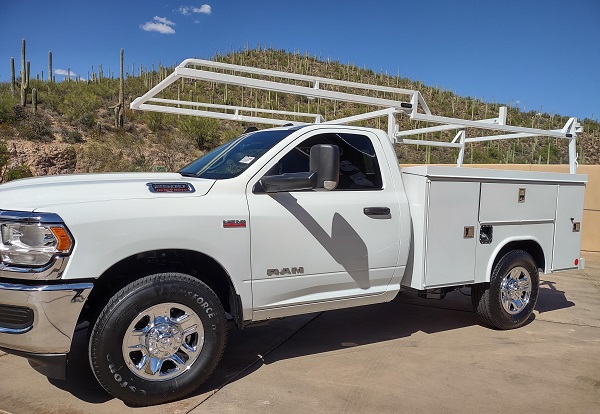 As proof, we cruised through the heart of August – traditionally the slowest point of the year – and prices have held steady and, in my opinion, likely will for the next few weeks. By the end of September, it’s likely we’ll only be down 5-6% from June to September instead of the usual 10-12%. Given demand, I think used wholesale work trucks have put in a bottom and are as inexpensive as they’re going to get, especially given the highs of 2022 and 2023 vs what they were worth in 2019.
As we teased earlier in this report, there are a lot of factors keeping used work trucks in high demand, none bigger than the scarcity of high-quality assets, a problem that’s persisted since late 2023. At this point, there are just a lot of old units, many with 600k or 700k miles, especially box trucks and day cabs.
Why?
The simple fact is that the industry didn’t make many units in 2021and 2022, the used assets we’d normally be seeing come out of service today.
 Instead, we’re seeing highly “seasoned” 2017/18 units with high miles and the kind of normal issues one would expect in vehicle with 7 or 8 years of service. In fact, fleets seem to have learned how to run so well with older assets that we’re just now starting to see 2019s beginning to creep into the used wholesale market.
This situation is putting a huge premium on good spec, low mileage assets to the point where those who want to and can afford these kind of quality assets can’t find them. It’s something the whole industry saw coming when this whole mess got started 5 years ago. The problem is, no one knows when it will end. Nor – given the arbitrary nature of OEMs the last few years – how things will proceed. For the time being it seems like vehicles are readily available – something we’re seeing in our quarterly Fleet Manager Sentiment Index as well – but fleets aren’t going overboard purchasing them.
High interest rates have certainly not helped this situation and have cast a negative pall across the industry, leaving many buyers holding off on new purchases in hopes that Fed cuts may bring a little relief. Today, it seems like most fleets don’t have the desire to purchase the same number of vehicles they have in the past, nor are small businesses anxious to take on payments on used assets that are generally 30 to 50% more than they were just a few short years ago.
One curious development we have noted over the past few months is the availability of a large number of unsold and unregistered 2023 chassis – a unit that was in high demand when they were manufactured in 2023 and 2024 but apparently went unsold.
 Tariffs – the economic boogieman of the first half of 2025 – have certainly remained an unknown but gone are the hand wringing and fear that had been so prevalent when last we weighed in. Instead, fleets seem content to let the tariff game play out before reacting, stung by starts and stops that burned valuable time and induced sleepless nights at the beginning of Q2.
ECONOMIC INDICATORS SHOWING STRENGTH, FLASHING RESILIENCE
As we have since the early days of the White Metal Market Report, we are keeping an eye on four bellwether economic indicators that paint a solid picture of what’s happening in the wholesale used vehicle market. That said, I must admit that compared to their almost uncanny power they possessed when we started this franchise, they’re only a part of – albeit a big part – what’s going on in the market these days.
That’s because frankly, explaining the past – and predicting the future – of the used white metal market has gotten more complicated the past couple of years. For a whole slew of reasons, “we’re not in Kansas anymore” folks.
 That said, while there is undoubtedly some volatility in the market — and while challenges like tariffs — cross border conflict and the threat of sanctions are always present, nothing about the economy is screaming red flag to me – or even yellow for that matter. In fact, if you ignore the stock market and the chatter out of Washington, the economy is pretty level these days and that has translated to a consistent need for used white metal.
For instance, we’ve always kept a keen eye on the unemployment rate, and the truth is, if someone wants a job, they’re out there.
And the price of diesel, which has always been a key indicator, has remained consistent for over a year.
New home starts have been consistent, although we did start to see some fading last month. Years ago, that would have been concern on its own, but it seems like homebuilders are pivoting to in-demand multi-family dwellings, driving new construction and the need for white metal.
 As of this writing, the US dollar remains stable, so essentially all good there.
That said, there are some things that are mildly concerning including continued downward revisions in the job numbers, something we’ve seen every month for over a year. Thus far the impact hasn’t been overly negative but the fact that it has been so consistent for so long has us training a keen eye on this stat. And while new home builders are having to chip in to help homeowners strapped by high interest rates, demand for services like landscaping, cable/fiber, and pool services remains high, keeping the price of used work vehicles healthy.
All in all, a pretty consistent economic picture the last few months and barring a major downturn, the lack of an interest rate cut, or a major global catastrophe, we expect things to stay that way through the end of the year.
INDIVIDUAL CLASSES GENERALLY STRONG
Over the last few years, our team here at the White Metal Market Report has joked about the number of times we have described the state of demand and pricing for used work vehicles as a “mixed bag” because – for the most part – they were. In fact, wild variances from one class to another have been the norm.
These days – while there are definitely differences – the gaps have narrowed and even some wildly underperforming classes have stepped up their game. That’s not to say that every class is killing it, but for the most part, the majority are holding their own or better:
CLASS 1-2
 Pickups, SUVs, and mid-size cars have all shallowed a bit. As with commercial assets, there’s just not a lot of availability, although people seem to have gotten what they wanted if they want a vehicle. Interest rates will continue to be a drag on this group, and the retail side of the used biz will stay essentially the same with no big dip in price. Despite all this, it’s important to remember this class is still priced on average 35% higher than in 2019, not bad considering the ups and downs of the last 5 years.
CLASSES 3, 4 and 5
These classes tend to go as unemployment and housing go, and while we didn’t get an infrastructure bill, demand for these kind of services at both the commercial and consumer levels remains strong. That could be because of re-building from weather-related projects in the Southeast (many of which are finishing up) or the drive to build multi-unit housing. As of now, we’ve yet to seen active buying out west where fires were expected to drive construction demand.
As it has the past few years, demand, and pricing for under CDL units remains high and likely will through Q4 and into 2026.
CLASSES 6 and 7
Demand for Class 6 units remained high, with high quality, low mileages assets performing as well as any class of vehicles. Especially vocational units, which has also carried over to demand for Class 7 vocational units as well. Both demand and pricing for box trucks has fallen steadily throughout the year, so there has been some notable correction in certain areas of this group.
One interesting dynamic is that due to changing government regulations, both price and demand for this class has often been determined by engine configurations, with some units significantly degraded for their inability to meet new government standards.
CLASS 8
Ok, we said we wouldn’t say, but this class truly does present a “mixed bag” – and a crazy one at that. Especially when one considers what we’ve seen over the past few years.
 For starters, sleeper cabs – which were hard to give away a year ago – have crept up the value chain and are garnering interest, especially low mileage units. On the other hand, low mileage day cabs are not rising in price, but remain easy to sell. A good sign overall.
Unfortunately, given that these units often drive upwards of a million miles during their years in service we’re seeing a lot of high mileage, distressed assets, a situation we suspect will continue. It’s also noteworthy that prices remain under pressure because these units are so finance dependent – and interest rates high – it can be hard to find buyers.
CALM SEAS, CONSISTENT PRICE and DEMAND AHEAD, BUT…
It’s been a long time since I summarized my thoughts on the state of the used wholesale market as “confident” (or even used the two words “white metal” and “confident” in the same sentence for that matter).
In fact, a tertiary search through our WMMR archives found that it was late 2019 when I last used those words to characterize the wholesale used white metal market. That was just before Covid appeared and changed everyone’s world for good.
That said, I am going to go out on the proverbial limb and admit that I see a lot of consistency and stability in many aspects of the used wholesale marketplace.
Frankly, things just seem to be opening up.
 Here’s what I’m predicting for the rest of 2025 and into early 2026. We’ve still got one more WMMR to come – our annual look back at the year that was and look ahead to what will be – so we’ll check my progress then.
- It’s hard to understate the importance of the looming interest rate cuts and the effect they could have on both fleets and the used truck markets. Right now, pundits are predicting as many as two cuts by the end of the year, but I think even if we only get one, it would likely wipe out excess new home inventory and push the used truck market well into 2026. Unfortunately, if that doesn’t happen by November or December, there’s a good chance sentiment will sour with many naysayers proclaiming we’re headed in the wrong direction. After all, how anxious will plumbers, drywallers and HVAC folks be to rush out and buy vehicles when interest rates make monthly payments prohibitive?
- While tariffs will be top of mind they won’t cripple fleets – nor will the uncertainty – as people need to move on to the day to day business of business (and seemingly have). When more is known, I think the industry will react accordingly but not with the resounding fervor we saw in the first few months of this year. I suspect we’ll have some clarity by Q1 2026.
- Speaking of tariffs, I feel like OEMs are blaming tariffs for many things – including price increases – but the truth is margins are up, and they have a lot of competition from Europe, which has seemingly been blunted by tariffs. We’ll see if that’s the case for Mexico, Canada, and Japan.
- Right now, fuel prices seem stable, but any volatility with Russia, India or on the world stage – the Mideast is always a flashpoint – could change that so we’ll be keeping an eye on global tensions.
- New vehicles prices will likely rise slightly, but given how much they’ve increased in recent years, there’s not a lot more room for them to go higher (and certainly not without rate cuts).
- Finally, I will be keeping a close eye on what comes out of the current administration, some of which has removed regulations and roadblocks on trucking. While much of this has been warmly received by the industry, not everything being proposed would have a positive effect, like a current effort to remove regulations on emissions that would essentially downgrade the value of millions of used vehicles that were forced to install this equipment over the last decade by as much as 25%. It’s unclear how receiving 20% of the residual value for a vehicle that has already been recorded on the balance sheet at 45% of its residual value would affect the industry and American businesses without causing negative consequences.
How that kind of troubling math plays on Main Street is anyone’s guess, but government mandates like these could have a chilling effect on the fleet and trucking industries.
EYES AHEAD, HANDS ON THE WHEEL
As always, we appreciate the opportunity to keep you informed and consider it an honor to give you our thoughts on this great industry that we all share. It’s an exciting time in fleet and trucking, and it’s an exciting time at FLD as we work to ensure the fastest, easiest, and most hassle-free remarketing experience possible. Thanks for stopping in and see you next quarter for our big end of year look ahead!
 About the author
Bill Bishop is SVP of Sales and Marketing at FLD Remarketing and with over 35 years of experience in fleet, a recognized expert in the used wholesale vehicle market. He has been authoring FLD’s quarterly White Metal Market Report for the past 9 years and can be reached with questions or comments at [email protected].