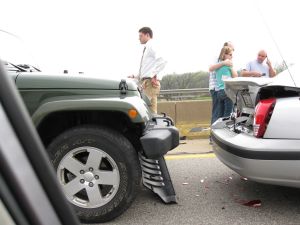
Four out of five (84%) people think more drivers should be trained in the skills needed to deal with the aftermath of a road traffic collision, according to a new survey from the Institute of Advanced Motorists (IAM) and Driver First Assist (DFA).
The majority of people, 79%, said that they would stop and help if they arrived at a road traffic collision (RTC) before the emergency services, and 44% have done so already, with a further 10% saying they would if they had received the correct training.
Of the 2,198 respondents:
• 50% said they would like to participate in such training themselves, and 34% were interested in finding out more.
• A quarter answered that although they hadn’t received any training they still felt they knew enough to make a difference and save someone’s life
• Half of respondents had received some level of training and felt they would be confident enough to put in into practice
• 75% would consider stopping to give medical assistance to someone who was injured.
• 18% answered that they wouldn’t get involved in first aid because they’d be afraid of not knowing what to do or doing the wrong thing
The survey went on to explore whether people’s hypothetical responses to scenarios matched up with best practice on emergency responses and findings here were mixed:
• 78% of the respondents knew that finding a safe place to stop and assess the scene was the most important first step, before dialing 911 or ensuring all those involved are grouped together.
• Similarly, 73% knew that the only time they should park their vehicle to protect a collision was to protect life
• 39% of respondents believing that the emergency services would be able to trace their mobile using GPS to pinpoint their geographical locations, which isn’t the case.
DFA founder David Higginbottom said, “Having a network of volunteers on the road, trained in the skills needed to correctly report a crash to the emergency services, or even to deliver life-saving first aid, has the potential to reduce road deaths by up to 46%.”
“First aid and giving an accurate report to the emergency services will save lives. Drivers will be much more useful in this role if they are trained,” said IAM chief executive Simon Best.